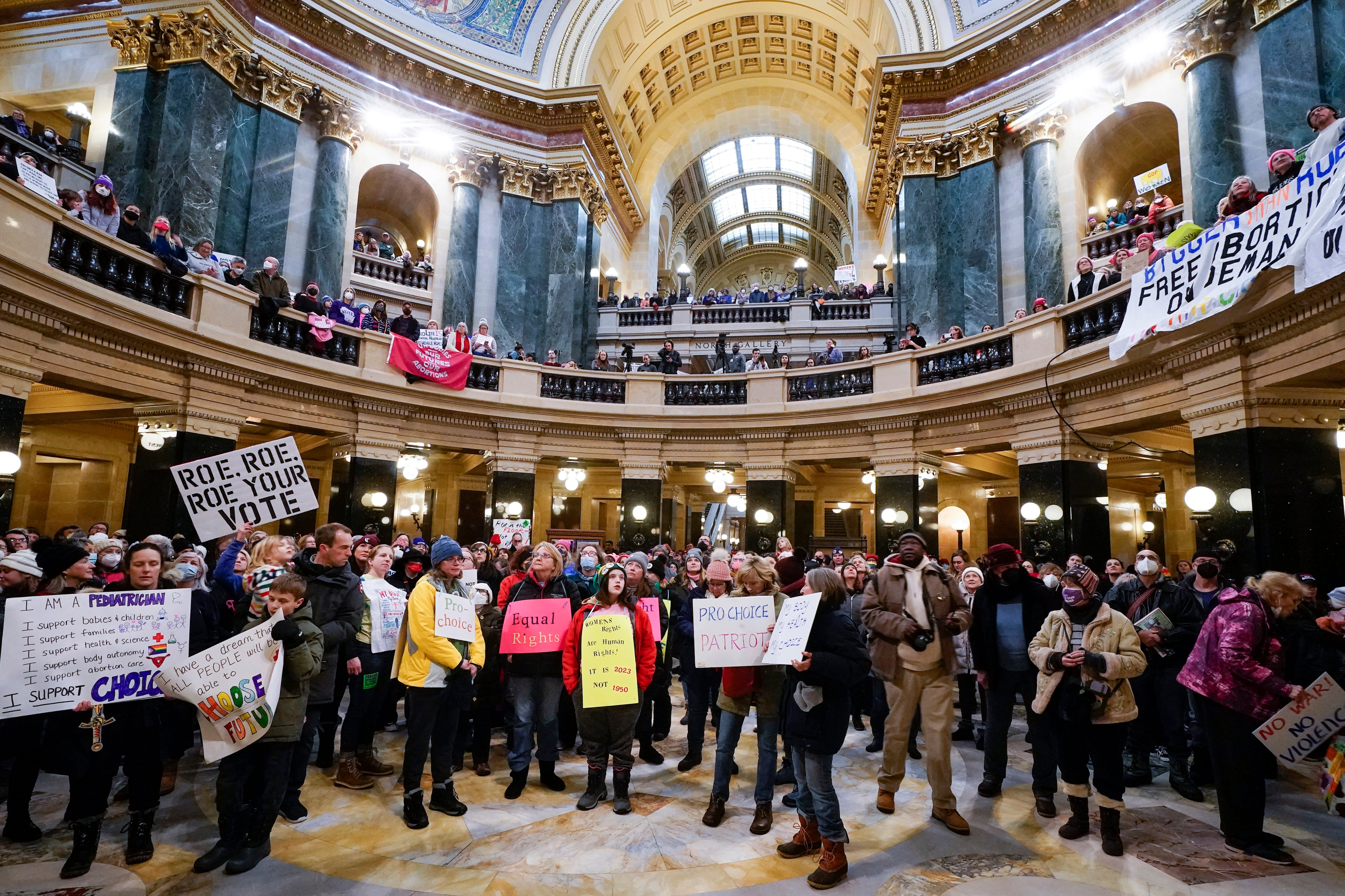
Protesters are seen in the Wisconsin Capitol Rotunda during a march supporting overturning Wisconsin's near total ban on abortion, Jan. 22, 2023, in Madison, Wis. Planned Parenthood has resumed offering abortions in Wisconsin at clinics in Madison and Milwaukee. The resumption of services on Monday Sept. 18 2023 is the first time abortions have been available in the state since the U.S. Supreme Court overturned Roe v. Wade in June 2022. (AP Photo/Morry Gash)
By Harm Venhuizen
Planned Parenthood resumed offering abortion services in Wisconsin on Monday after halting them for more than a year since the U.S. Supreme Court overturned Roe v. Wade.
Providers across the state stopped offering abortions following the June 2022 decision, fearing enforcement of an 1849 state law that appears to ban the procedure but had previously been nullified by the 1973 Roe ruling. A judge ruled last month that the 144-year-old law doesn't apply to medical abortions.
In light of the ruling, Planned Parenthood of Wisconsin began offering abortions at clinics in Madison and Milwaukee again on Monday. The group did not say how many abortions it expected to perform but said appointments at its Milwaukee clinic on Monday were completely filled within 24 hours of announcing that services would resume.
Without access to abortion care in Wisconsin for the past 15 months, many patients have sought assistance in neighboring Illinois, where abortions have remained widely available. According to Planned Parenthood of Illinois, its clinics have seen a seven-fold increase in patients from Wisconsin since the Supreme Court overturned Roe.
Women's Medical Fund of Wisconsin, which offers financial assistance for abortion procedures and related costs, helped 477 patients from Wisconsin obtain abortions outside the state in the first six months of 2023, according to board president Cynthia Lin. Most of those appointments were in Minnesota or Illinois, she said.
“There’s a lot of work still to do, even within the return of legal abortion care in Wisconsin,” Lin said on Monday, pointing to the long distances many patients still have to travel to reach clinics in Madison or Milwaukee. Lin also highlighted barriers created by state laws that require people seeking an abortion in Wisconsin to have an ultrasound and a counseling appointment before waiting 24 hours for the procedure.
The lawsuit challenging Wisconsin's 1849 law was brought by the state's Democratic attorney general and is expected to end up in front of the Wisconsin Supreme Court, which flipped to liberal control last month.
Democrats, including Wisconsin Gov. Tony Evers, praised the resumption of abortion services. Meanwhile, anti-abortion rights groups in the state condemned the move and promised to continue fighting in court for the procedure to be outlawed.
Harm Venhuizen is a corps member for the Associated Press/Report for America Statehouse News Initiative. Report for America is a nonprofit national service program that places journalists in local newsrooms to report on undercovered issues.
Markets were pointing mostly lower to end the week as investors reacted to the threat of a Covid resurgence in Europe. Jeff Schulze, Investment Strategist at ClearBridge Investments joined Cheddar's Opening Bell to discuss Friday's pre-market activity.
A federal judge tossed out a lawsuit against financial services platform Robinhood following the meme stock saga that swept the investment world. The judge said it found no wrongdoing on Robinhood's part after the platform halted trading on popular meme stocks Gamestop and AMC.
Jill and Carlo are back to cover the latest in the Rittenhouse trial, new information on the origins of Covid, return-to-office and more.
JOIN US FOR THE YOUTUBE WATCH PARTY @ 9aET: http://www.youtube.com/cheddarnow
The U.S. Justice Department has filed a lawsuit against Uber after it was discovered that disabled people were being disproportionately affected by extra “wait time” fees. Attorney Jonathan Bell joined Cheddar to discuss.
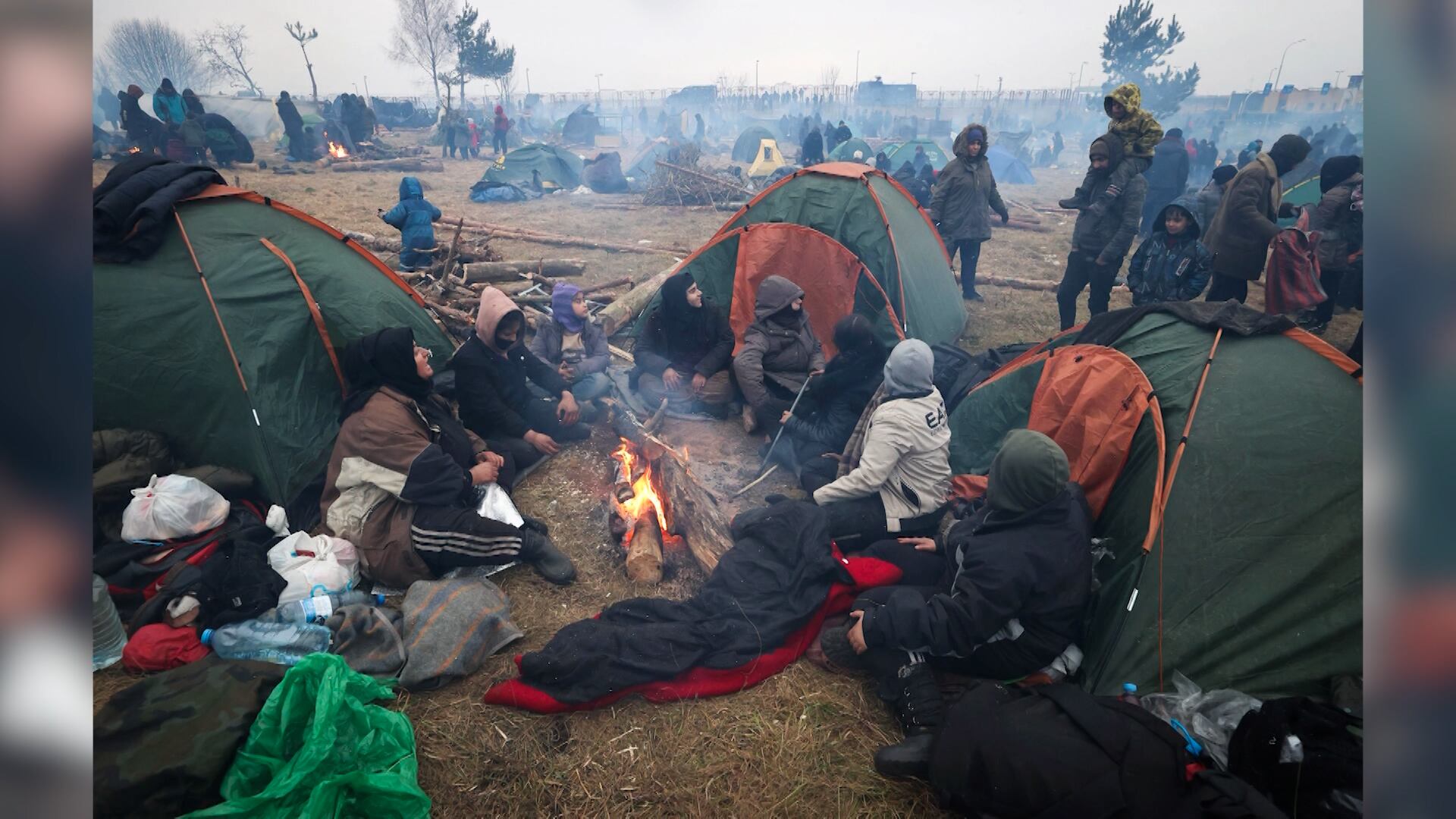
Belarus President Alexander Lukashenko has been accused by the EU of manufacturing a migration crisis along his border with Poland. But, even as tensions appear to be stabilizing at the moment, Ali Noorani, the president and CEO of National Immigration Forum and the host of the "Only in America" podcast spoke to Cheddar about the ongoing danger to the migrants who hail from countries like Iraq and Afghanistan. "What is going to happen to folks who are in Belarus who came from these countries? Is Lukashenko going to provide them asylum and protection in Belarus, or are they going to continue to be political pawns in a geopolitical battle," he said. "Real people's lives are being put at great risk."
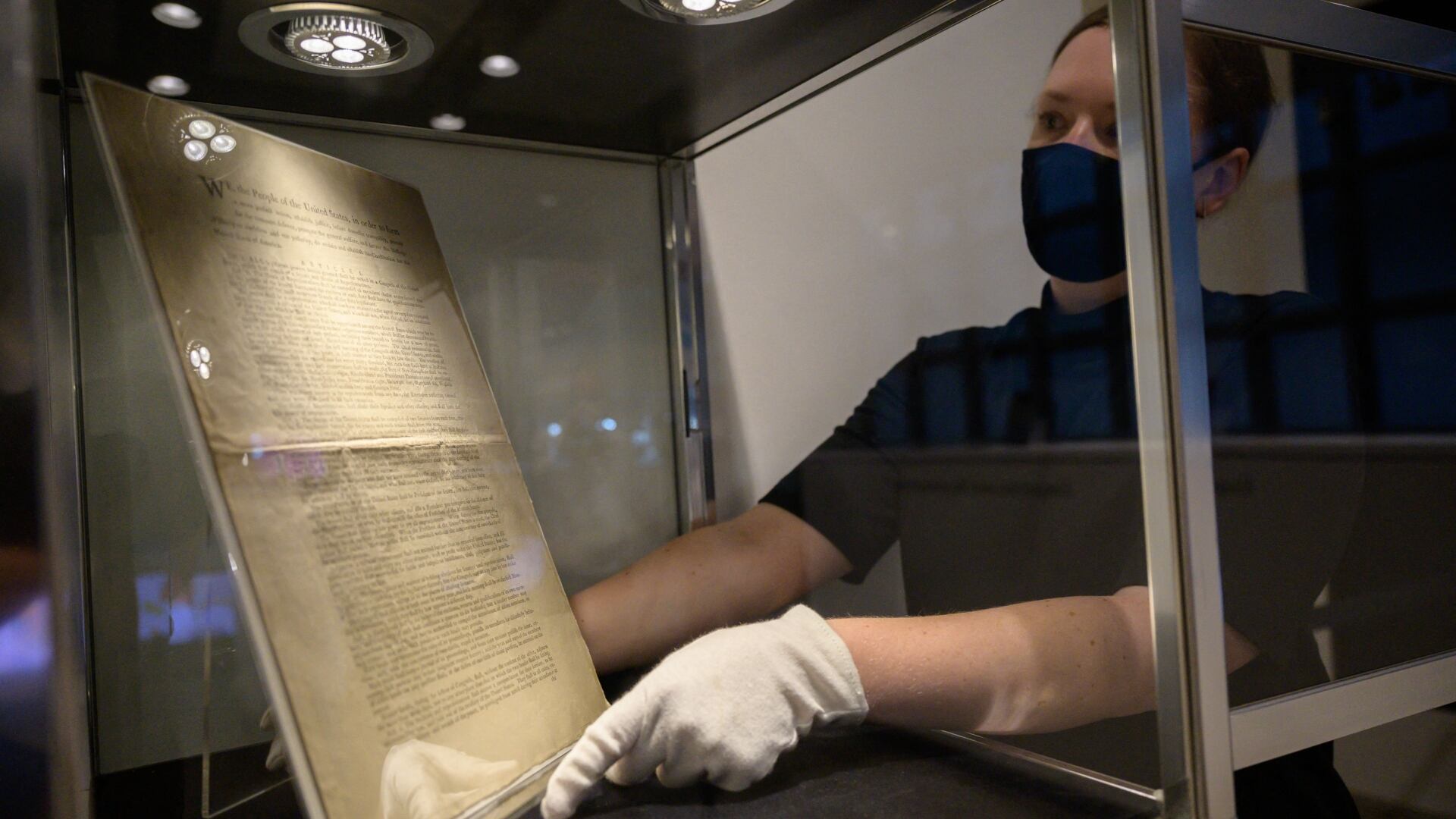
A group of crypto investors has come together to raise millions of dollars in the hopes of owning a rare piece of the U.S. Constitution. According to the crypto group, "Constitution DAO" It is time to put the constitution in the hands of the people. CEO and Founder of Metaversal Yossi Hasson, joined Cheddar to discuss more.
Polarization is among the defining traits of American politics in the 21st century. Sometimes it seems like the only thing we can all agree on is the fact that we don't really agree on anything. But those divisions don't just stop at whether you vote red or blue.
A new survey from the Pew Research Center finds that rather than just two political buckets, we have nine. The "2021 political typology" as it's called distinguishes between different ideological subsets in the Democratic and Republican party. It encompasses everyone from the loudest revolutionary lefties, to the loudest insurrection apologists on the right.
Andrew Daniller, research associate at the Pew Research Center, joins None of the Above to discuss.
Tanya Snyder, transportation reporter at Politico, joins None of the Above with J.D. Durkin to discuss the bipartisan infrastructure law, what it means for the electric vehicle industry and whether Democrats will be able to capitalize on the legislative victory ahead of the 2022 midterms.
Heading into 2022, the eyes of political nerds like us are fixed on statehouses across the country. State legislatures are in the process of taking the data from the 2020 census and using it to draw new congressional districts. The process has major implications for midterms, as Republicans could retake the majority just by gerrymandering enough seats into their column. In Maryland, state level Democrats are considering several maps, one of which would completely draw out the only Republican from the state in Congress.
Bruce DePuyt, senior reporter at Maryland Matters, and Helen Brewer, legal analyst at Princeton's Electoral Innovation Lab, join Cheddar Politics to discuss.