By Lauren Neergaard
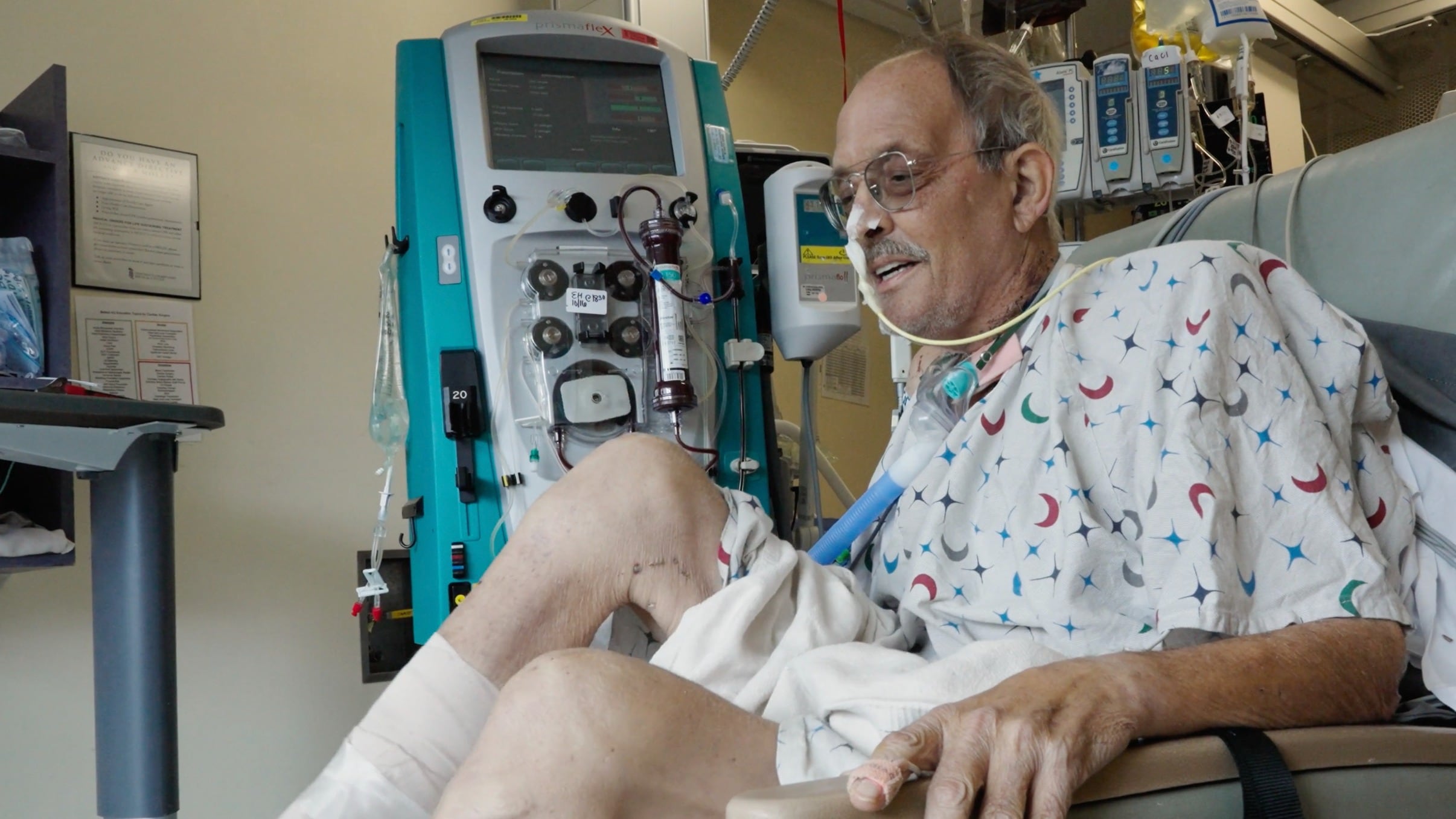
It’s been a month since a Maryland man became the second person to receive a transplanted heart from a pig –- and hospital video released Friday shows he’s working hard to recover.
Lawrence Faucette was dying from heart failure and ineligible for a traditional heart transplant because of other health problems when doctors at the University of Maryland School of Medicine offered the highly experimental surgery.
In the first glimpse of Faucette provided since the Sept. 20 transplant, hospital video shows physical therapist Chris Wells urging him to smile while pushing through a pedaling exercise to regain his strength.
“That’s going to be tough but I’ll work it out,” Faucette, 58, replied, breathing heavily but giving a smile.
The Maryland team last year performed the world’s first transplant of a heart from a genetically altered pig into another dying man. David Bennett survived just two months before that heart failed, for reasons that aren’t completely clear although signs of a pig virus later were found inside the organ. Lessons from that first experiment led to changes before this second try, including better virus testing.
Attempts at animal-to-human organ transplants — called xenotransplants — have failed for decades, as people’s immune systems immediately destroyed the foreign tissue. Now scientists are trying again using pigs genetically modified to make their organs more humanlike.
In Friday’s hospital video, Faucette’s doctors said the pig heart has shown no sign of rejection.
“His heart is doing everything on its own,” said Dr. Muhammad Mohiuddin, the Maryland team’s cardiac xenotransplantation chief.
A hospital spokeswoman said Faucette, of Frederick, Maryland, has been able to stand and physical therapists are helping him gain strength needed to attempt walking.
Many scientists hope xenotransplants one day could compensate for the huge shortage of human organ donations. More than 100,000 people are on the nation’s list for a transplant, most awaiting kidneys, and thousands will die waiting.
A handful of scientific teams have tested pig kidneys and hearts in monkeys and in donated human bodies, hoping to learn enough for the Food and Drug Administration to allow formal xenotransplant studies.
The Associated Press Health and Science Department receives support from the Howard Hughes Medical Institute’s Science and Educational Media Group. The AP is solely responsible for all content.