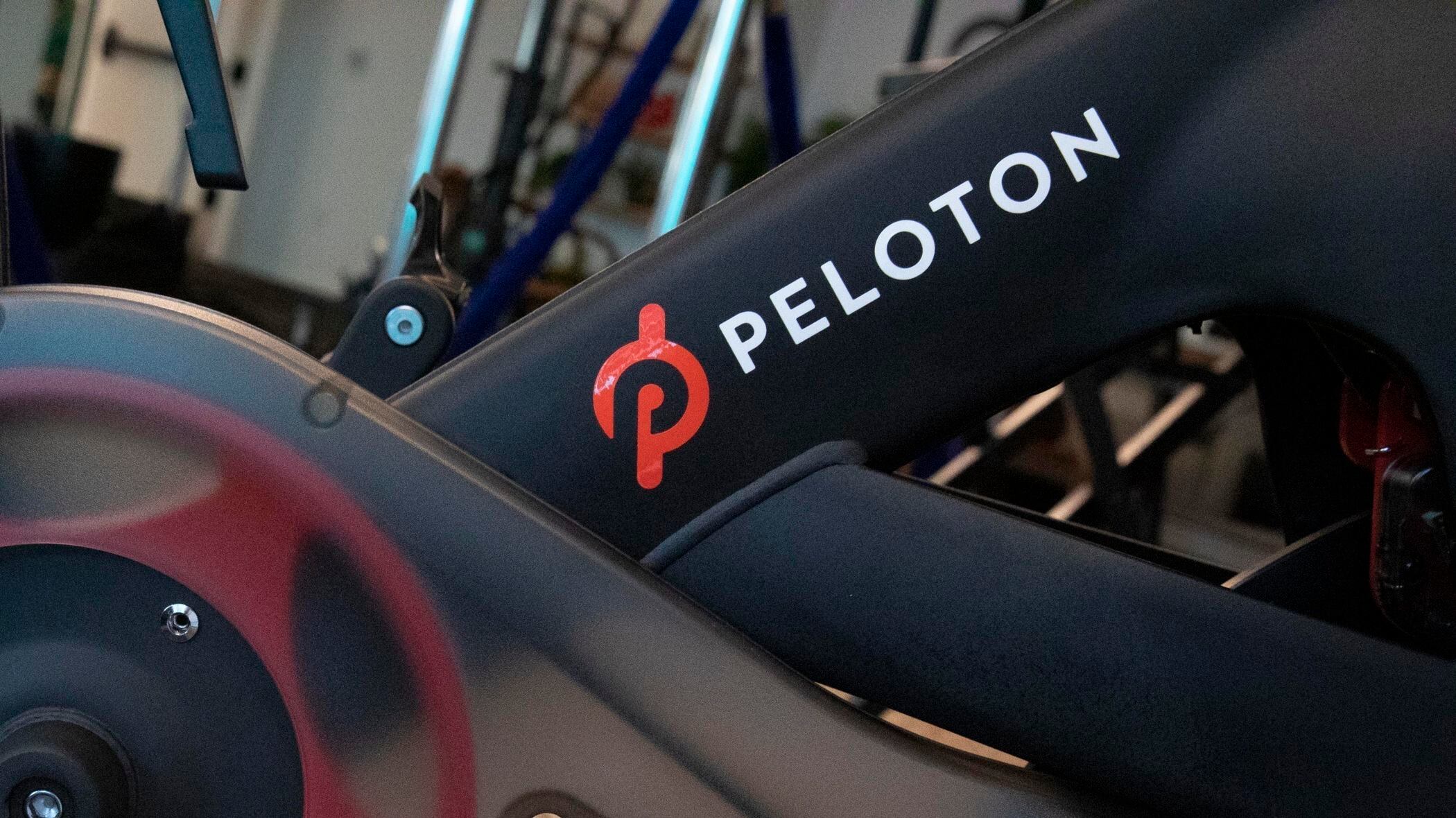
In this Sept. 26, 2019 file photo, the Peloton logo is displayed on the company's stationary bicycle in New York. Peloton plans to spend about $400 million to build its first U.S. factory in Ohio. The exercise equipment maker said Monday, May 24, 2021, that the Peloton Output Park will make the Peloton Bike, Bike+ and Peloton Tread starting in 2023. (AP Photo/Mark Lennihan, File)
Peloton plans to spend about $400 million to build its first U.S. factory in Ohio.
The exercise equipment maker said Monday that the Peloton Output Park will make the Peloton Bike, Bike+ and Peloton Tread starting in 2023. It will have more than 200 acres and more than 1 million square feet of manufacturing, office and amenities space.
Peloton Interactive Inc. said it plans to break ground on the site in Troy Township over the summer. The company anticipates adding more than 2,000 jobs in Ohio over the next few years. Positions will span corporate, manufacturing, assembly and quality assurance functions.
The New York-based company employs about 3,700 people, according to FactSet.
Peloton has faced surging demand during the pandemic. It reported that revenue in the first three months of the year more than doubled on strong subscription growth. Last December, the company spent $420 million to acquire Precor, a company whose fitness machines populate hundreds of commercial and hotel gyms. That deal gave Peloton its first manufacturing capacity in the U.S.
“While we will continue to invest in our Asian manufacturing footprint as well as our existing facilities in the U.S. via our Precor sites, the new Peloton Output Park gives us a massive strategic lever to make sure we have capacity, quality, and economies of scale in our bike and tread product lines, to support our continued growth for years and years to come," said Peloton CEO John Foley.
The plans still need final approvals from state and local officials.
Shares of Peloton fell less than 2% in afternoon trading.
Amid high inflation, shoppers are pinching their pennies in the grocery stores and becoming more frugal when food shopping. However, supermarkets like Kroger are pushing back against passing on the higher costs and demanding reasons for the higher food prices from suppliers.
The founder and president of Cyborg Mobile Kobie Hatcher has been on a strong trajectory to disrupt his industry with a program called The New Technologists. It's not only meant to address the diversity gap within large tech companies but also help pave the way to transform the lives of young BIPOC students. He joined Cheddar News to talk about how he's working to make a difference with the lack of diversity in tech. “There's truly no lack of talent out there. It's just identifying them and letting them know that, hey, I've been in the tech sector for over 20 years. I see you. I know what you can bring, bring it, we need it," Hatcher said.
San Francisco 49ers defensive lineman Alex Barrett discusses why he believes taking his salary in crypto is the best financial decision for him, while Bitwage CEO Jonathan Chester breaks down how Barrett and other crypto investors can best utilize his platform.
Constituent service platform Indigov recently raised $25 million in a Series B funding round. Indigov bills itself as a constituent relationship management tool that helps elected officials improve the way they organize, respond to, and engage those they serve. The startup's services are being used by federal, state, and local governments across the country, including the U.S. House of Representatives. Alex Kouts, founder & CEO of Indigov, joins Cheddar News' Closing Bell to discuss.
It can be tough to make sustainable choices, and even harder when sustainable materials don't hold up. Loliware has a solution to the plastic straw problem: its seaweed-based straws are stronger than paper alternatives and once used, can be composted and return to the earth or sea without causing harm. Sea Briganti, CEO of Loliware, joins Closing Bell to discuss the tech behind the straws, new product launches, and more.