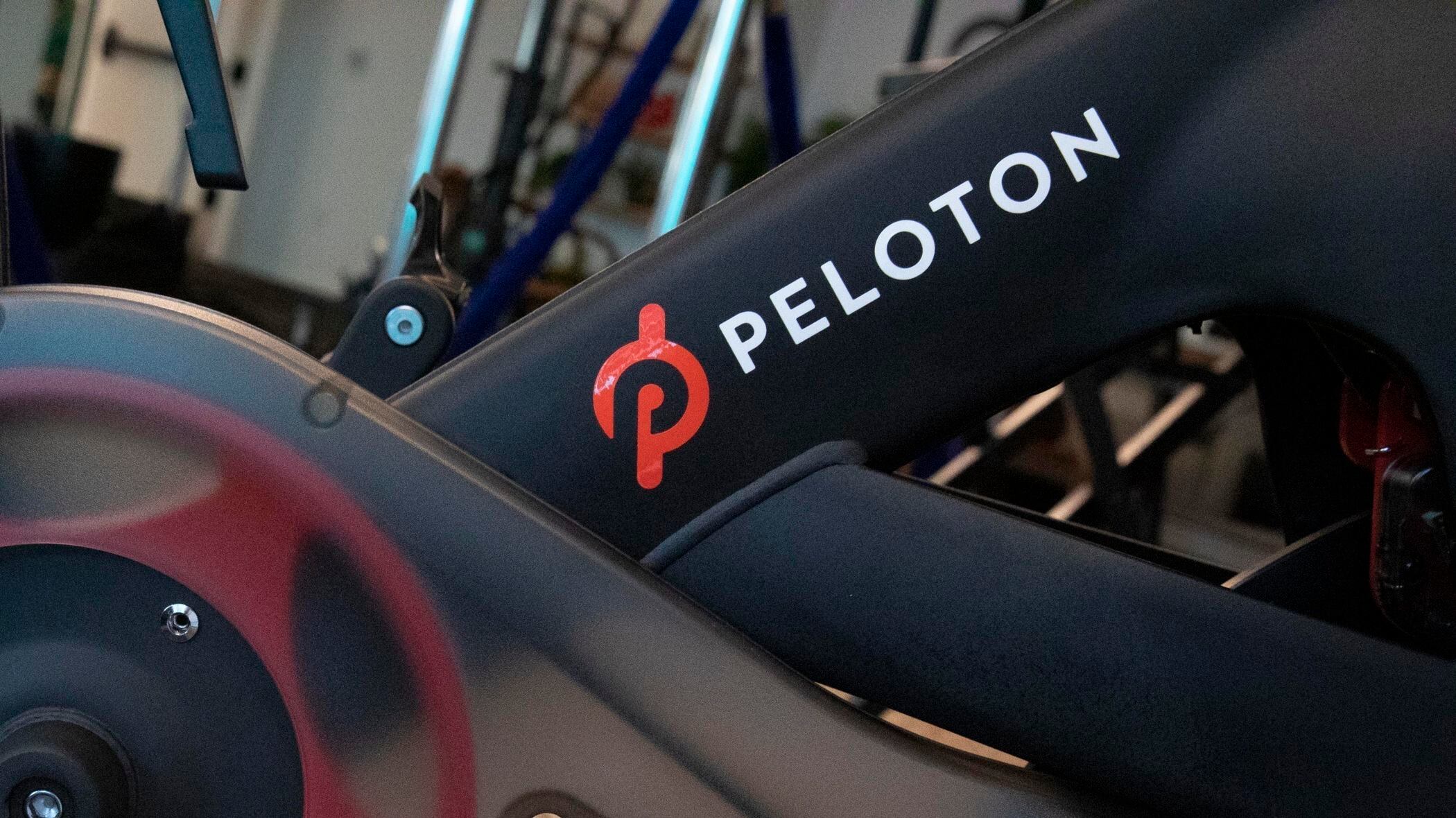
In this Sept. 26, 2019 file photo, the Peloton logo is displayed on the company's stationary bicycle in New York. Peloton plans to spend about $400 million to build its first U.S. factory in Ohio. The exercise equipment maker said Monday, May 24, 2021, that the Peloton Output Park will make the Peloton Bike, Bike+ and Peloton Tread starting in 2023. (AP Photo/Mark Lennihan, File)
Peloton plans to spend about $400 million to build its first U.S. factory in Ohio.
The exercise equipment maker said Monday that the Peloton Output Park will make the Peloton Bike, Bike+ and Peloton Tread starting in 2023. It will have more than 200 acres and more than 1 million square feet of manufacturing, office and amenities space.
Peloton Interactive Inc. said it plans to break ground on the site in Troy Township over the summer. The company anticipates adding more than 2,000 jobs in Ohio over the next few years. Positions will span corporate, manufacturing, assembly and quality assurance functions.
The New York-based company employs about 3,700 people, according to FactSet.
Peloton has faced surging demand during the pandemic. It reported that revenue in the first three months of the year more than doubled on strong subscription growth. Last December, the company spent $420 million to acquire Precor, a company whose fitness machines populate hundreds of commercial and hotel gyms. That deal gave Peloton its first manufacturing capacity in the U.S.
“While we will continue to invest in our Asian manufacturing footprint as well as our existing facilities in the U.S. via our Precor sites, the new Peloton Output Park gives us a massive strategic lever to make sure we have capacity, quality, and economies of scale in our bike and tread product lines, to support our continued growth for years and years to come," said Peloton CEO John Foley.
The plans still need final approvals from state and local officials.
Shares of Peloton fell less than 2% in afternoon trading.
Nvidia smashes earnings with record-breaking revenue and soaring Blackwell demand as shares slip this morning, Barron’s senior writer Adam Levine unpacks it all
Jeff Wagoner, CEO of Outrigger Hospitality Group, discusses the company’s coral preservation initiatives and sustainable practices at their hotels and resorts.
Dena Jalbert, Head of M&A at Align Advisory, discusses the state of mergers and acquisitions in 2025 and beyond, highlighting key trends and opportunities.
Kim Perell, author and entrepreneur, shares actionable tips and tricks to help current and aspiring entrepreneurs kick off 2026 with confidence and momentum.
Computer chipmaker Nvidia is poised to release a quarterly earnings report that is expected to either deepen a recent downturn in the stock market or prompt an ebullient sigh of relief among investors increasingly worried the world’s most valuable company is perched upon an artificial intelligence bubble about to burst.
Emera CEO Scott Balfour discusses soaring energy demand, AI-driven grid challenges, clean-power investments, and how the company is building a resilient future.
JB Mackenzie discusses Robinhood’s new entertainment prediction markets, letting users engage with pop culture, award shows, and more through low-stakes bets.
Rhett Power shares his startup journey, lessons from his early years and insights from his book on overcoming negative self-talk to lead with confidence.
Despite inflation, Americans aren’t giving up the gym. Crunch Fitness CEO Jim Rowley discusses strong growth, value-driven expansion and what the future holds.
Home prices far outpacing incomes, low inventory, and higher living costs are reshaping the market. WSJ’s Veronica Dagher breaks down the challenges ahead.