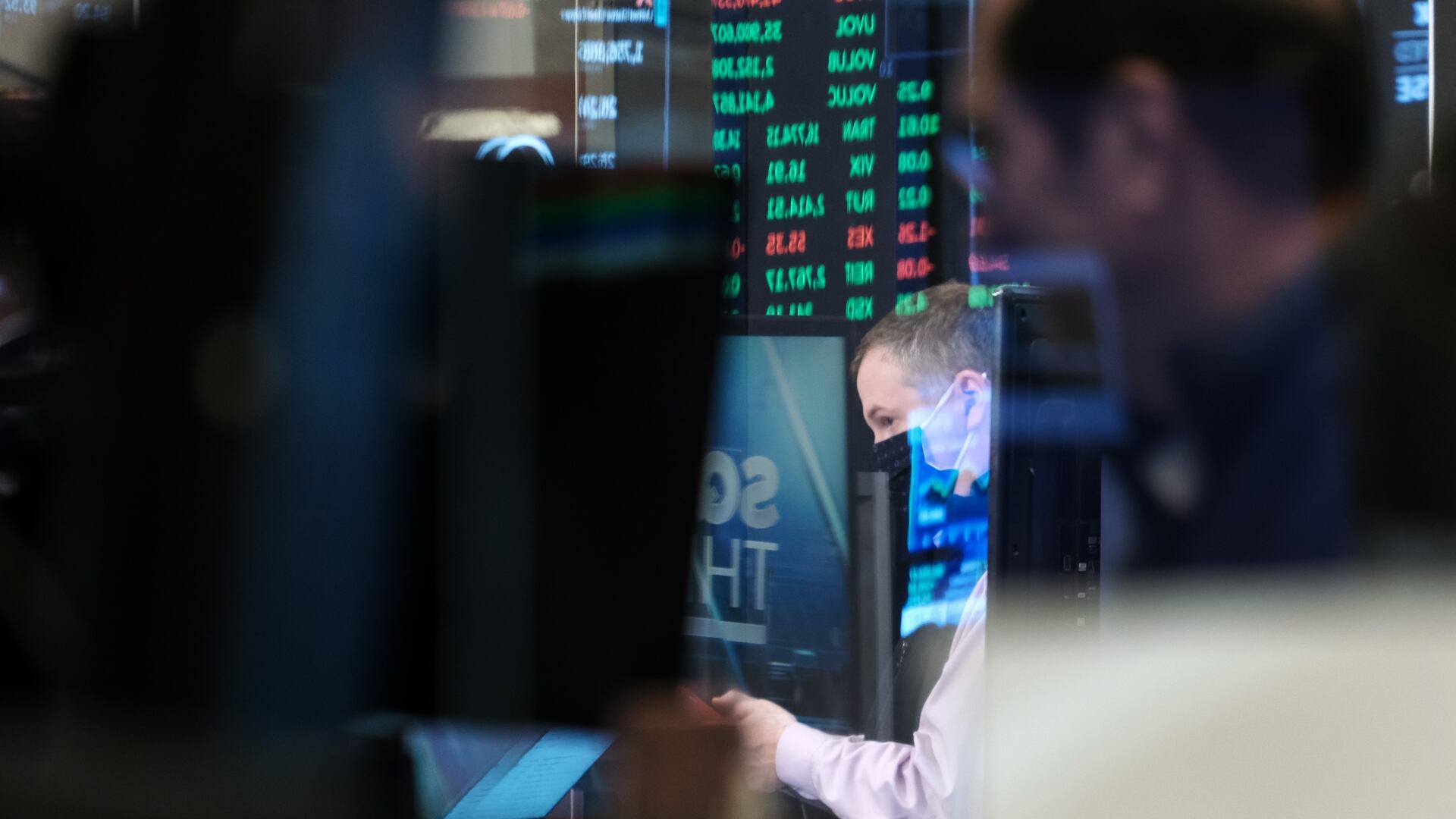
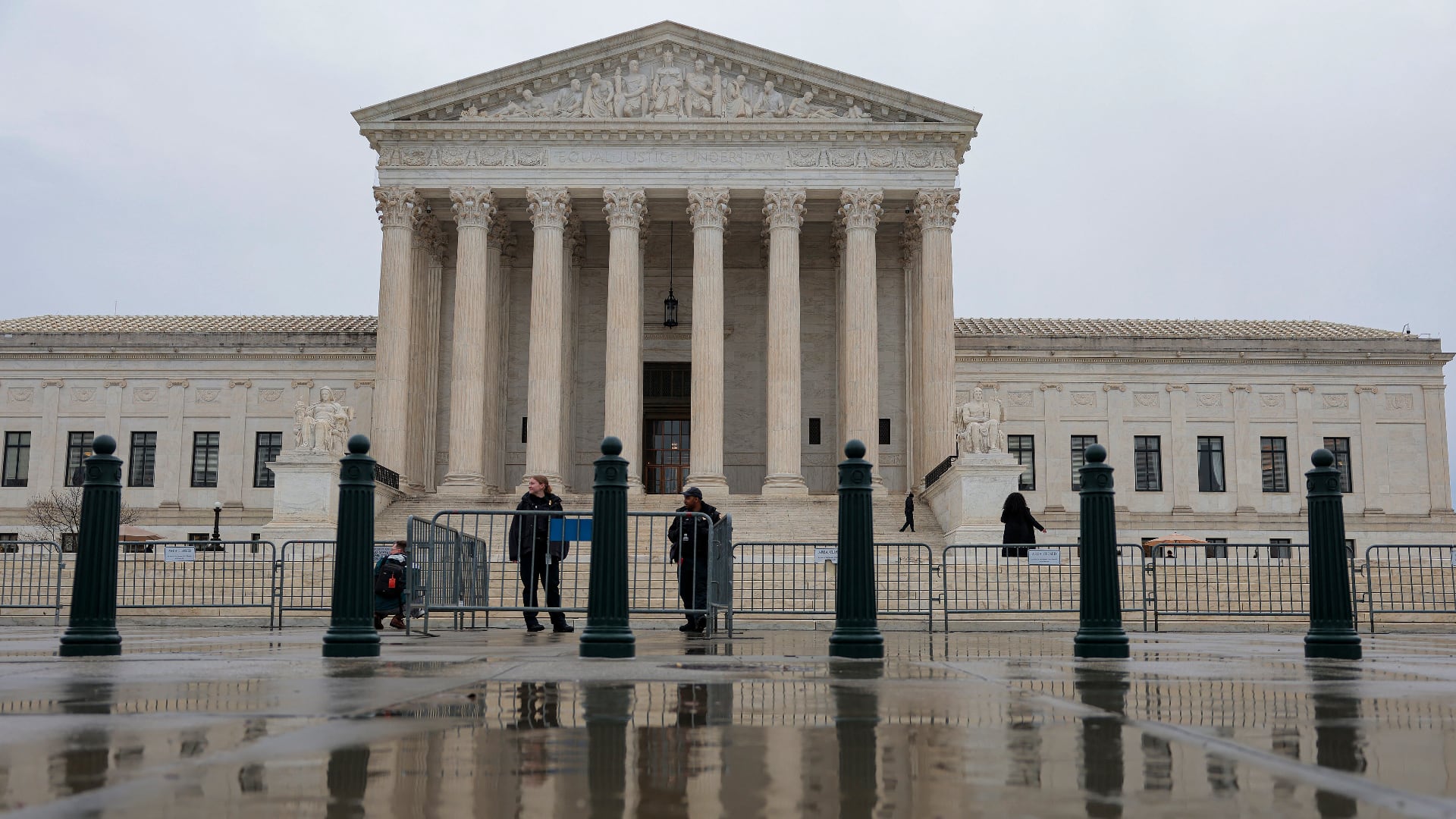
After President Trump authorized a military strike killing a top Iranian military commander, the escalating conflict sent stocks down around the world, and oil and gold prices up on the first Monday of the new year.
Brent oil prices, the international benchmark, hit the $70 mark for the first time in three months and the price of West Texas Intermediate, the American oil benchmark, reached more than $63 a barrel after the Pentagon's announcement confirming an airstrike at Baghdad's airport. Crude oil last hit the $70 mark in September after drones suspected to have been launched by Iran struck Saudi Arabian oil plants. Saudi Arabia, Iran, and Iraq account for almost half of the world's oil reserves.
Prices are up amid a growing list of concerns after the killing of Gen. Qassem Soleimani: Iran may close the Strait of Hormuz, has already threatened retaliation, and said it will no longer abide by the 2015 nuclear deal the U.S. withdrew from two years ago, and Iraq voted to expel U.S. troops. The State Department warned of a "heightened risk" of a missile attack near U.S. bases.
It is unclear how Iran will respond to Trump's unilateral move. Oanda's Jeffrey Halley noted that "a big fat dollop of geopolitical uncertainty has landed on investors desks" in a report.
But J. Jay Park, CEO of ReconAfrica, said the geopolitical uneasiness isn't, alone, enough to continue driving oil prices up. He said what may continue to drive up prices is a change in supply. Park said supply, demand, OPEC decisions and compliance, geopolitics, and public sentiment about those four items affect oil prices. Uncertainty in Iran, coupled with a change in supply or demand may change the game. Iran may choose to close the Strait of Hormuz, a move Britain has forestalled by sending the Royal Navy to help ships pass through the Strait, through which 21 percent of 2018's global petroleum liquids consumption flowed.
"If that were to happen, the sky's the limit, over $100 easily," Park told Cheddar on Monday.
With the region on edge, stocks fell in Japan, Hong Kong, South Korea, and across European markets.
In the meantime, Park said the current crisis may not drive up oil prices further.
"In the recent past we've seen a number of conflicts, for example the suspected Iranian attack on Abqaiq in Saudia Arabia, that kind of underwhelmed in terms of the extent to which these changes affected the overall price and how long that effect lasted," he said.
Doug Flynn, Certified Financial Planner and Co-Founder of Flynn Zito Capital Management, joins Cheddar News' Closing Bell, where he says he believes the news of the infrastructure bill was already priced into the market and that inflation continues to loom large on Wall Street.
The Giving Block's Co-founders, Pat Duffy and Alex Wilson, join Cheddar News' Closing Bell to discuss how their crypto-centric platform is helping big and small nonprofit firms across the world at a time when the demand for digital assets has never been higher.
Virtual reality startup Sandbox VR recently announced it raised $37 million Series B funding round. It is a location-based VR company, a space that was hit hard during the pandemic. Sandbox was eventually forced to file for bankruptcy; however, the company is emerging from the pandemic with a fresh round of funding and plans to open new retail locations around the world. Sandbox VR CEO Steve Zhao joins Cheddar News' Closing Bell to discuss.
President Joe Biden signed into law today his landmark $1.2 trillion infrastructure bill, and it includes approximately $550 billion in new funding for increased broadband access, improving the power grid, and more. But what does this mean for the American economy, and American workers? Eliza Collins, Politics Reporter at The Wall Street Journal joins Cheddar News' Closing Bell to discuss what's included in the bill, which former mayor has been tapped to oversee how the bill is implemented, and how these new infrastructure investments will impact the economy.
It's been a job hunters market of late, as a mass resignation amid the pandemic has added to millions of openings across businesses. ZipRecruiter co-founder and CEO Ian Siegel explained what people currently are looking for in the labor market. "Survey after survey after survey, whether it's on ZipRecruiter or it's a third-party source, is telling us the same piece of information: over half of job seekers right now are looking for work that is either fully remote or hybrid," he said. "They got a real taste of it during COVID, and they liked it a lot. It's the number one perk that's being requested and you can already see employers starting to shift in that direction."
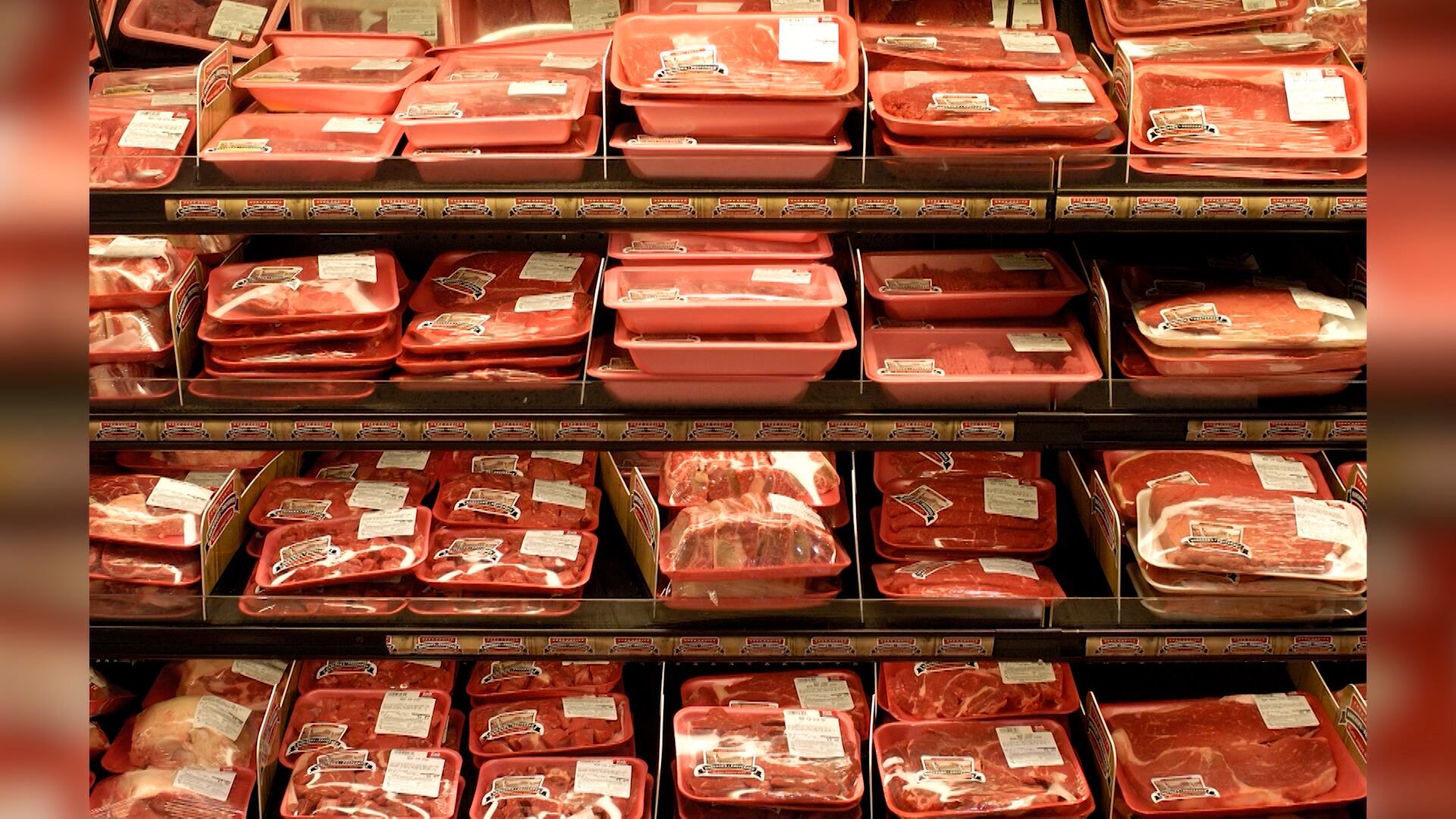
Celebrity butcher and the third-generation owner of Pat LaFrieda Meat Purveyors, Pat LaFrieda, joined Cheddar to dive into the rapid price surges for beef, poultry, fish, and eggs dubbed a "meatflation" by Bloomberg. LaFrieda noted that the increases were being accelerated by high fuel prices and a shortage of labor like truck drivers. However, he did express some hope that the post-holidays/pre-barbecue season lull in the meat sales market will help reset the market.
Booking.com has unveiled a first-of-its-kind sustainable travel designation for properties that might be on the itinerary of a climate-conscious traveler. CEO Glenn Fogel explained to Cheddar the key metrics a location has to achieve to earn a sustainability badge. Waste handling, energy and greenhouse gases, water usage, local community support, and protection of nature were the five top areas of concern he addressed, with an additional subset of 32 measures that properties can implement.