After President Trump authorized a military strike killing a top Iranian military commander, the escalating conflict sent stocks down around the world, and oil and gold prices up on the first Monday of the new year.
Brent oil prices, the international benchmark, hit the $70 mark for the first time in three months and the price of West Texas Intermediate, the American oil benchmark, reached more than $63 a barrel after the Pentagon's announcement confirming an airstrike at Baghdad's airport. Crude oil last hit the $70 mark in September after drones suspected to have been launched by Iran struck Saudi Arabian oil plants. Saudi Arabia, Iran, and Iraq account for almost half of the world's oil reserves.
Prices are up amid a growing list of concerns after the killing of Gen. Qassem Soleimani: Iran may close the Strait of Hormuz, has already threatened retaliation, and said it will no longer abide by the 2015 nuclear deal the U.S. withdrew from two years ago, and Iraq voted to expel U.S. troops. The State Department warned of a "heightened risk" of a missile attack near U.S. bases.
It is unclear how Iran will respond to Trump's unilateral move. Oanda's Jeffrey Halley noted that "a big fat dollop of geopolitical uncertainty has landed on investors desks" in a report.
But J. Jay Park, CEO of ReconAfrica, said the geopolitical uneasiness isn't, alone, enough to continue driving oil prices up. He said what may continue to drive up prices is a change in supply. Park said supply, demand, OPEC decisions and compliance, geopolitics, and public sentiment about those four items affect oil prices. Uncertainty in Iran, coupled with a change in supply or demand may change the game. Iran may choose to close the Strait of Hormuz, a move Britain has forestalled by sending the Royal Navy to help ships pass through the Strait, through which 21 percent of 2018's global petroleum liquids consumption flowed.
"If that were to happen, the sky's the limit, over $100 easily," Park told Cheddar on Monday.
With the region on edge, stocks fell in Japan, Hong Kong, South Korea, and across European markets.
In the meantime, Park said the current crisis may not drive up oil prices further.
"In the recent past we've seen a number of conflicts, for example the suspected Iranian attack on Abqaiq in Saudia Arabia, that kind of underwhelmed in terms of the extent to which these changes affected the overall price and how long that effect lasted," he said.
Breakthrough Energy Catalyst, a private-public fund backed by Bill Gates, is planning to invest up to $15 billion in clean technology initiatives across the U.S., UK, and European Union. It will target four key areas and help fund large projects that otherwise would not be financially possible. Bobby Hollis, Director of Breakthrough Energy Catalyst, joins Cheddar News' Closing Bell to discuss.
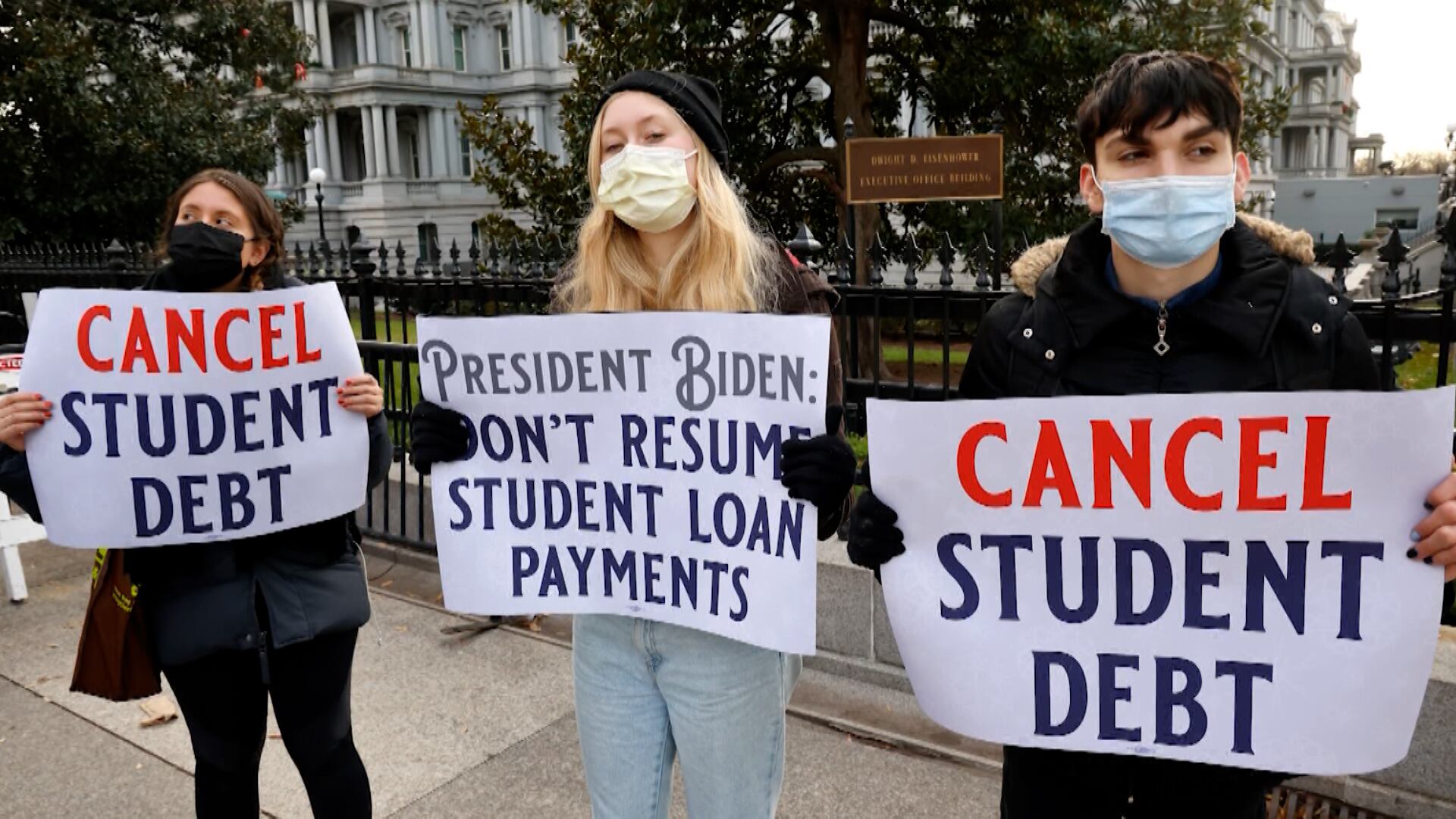
Student loan collection company Navient agreed to cancel $1.7 billion in debt and paid more than $140 million in other penalties to settle a lawsuit over abusive lending practices. Josh Shapiro, the attorney general of Pennsylvania who led negotiations in the settlement, joined Cheddar to go over the details of the company's predatory lending. "What Navient would do is charge [borrowers] these exorbitantly high rates, even though they knew people couldn't pay them or they would likely default on them," he explained.
An economic development agency, the Northwest Arkansas Council, is looking to draw technology professionals to their region of the Southern state with incentives like $10,000 worth of Bitcoin and a new bicycle. Nelson Peacock, president and CEO of the private nonprofit made up of companies like Walmart and Tyson Foods, joined Cheddar to talk about the program to further power his local economy. "By offering the payment in Bitcoin, we're looking to identify those people with interest and expertise in the underlying technologies, the blockchain technologies," he said.
Stocks closed mixed Friday with big bank stocks dragging on the Dow after a few lackluster earnings reports. Both the Nasdaq and the S&P 500 gained, but overall, stocks notched a second losing week in a row to start 2022. Tom Kozlik, Head of Research and Analytics at Hilltop Securities, joins Cheddar News' Closing Bell to discuss today's close, expectations for 2022 earnings reports, whether or not the COVID-19 omicron variant is being properly priced into markets, and more.
After months of investors turning to crypto as a hedge against inflation, instead of the traditional hedge of gold, one crypto exchange is working with a token creator to launch a digital coin backed by a physical asset. GCOIN gives customers a digital title of ownership to 99.99% pure physical gold which is stored in a secured vault. Brent de Jong, GCoin's founder and Kristin Boggiano, Co-Founder and President of CrossTower, a cryptocurrency exchange, join Cheddar News' Closing Bell to discuss the GCOIN rollout, customer interest, why crypto is used as an inflation hedge, and more.
Retail platform operator and delivery company, Foxtrot,
raised $100 million in a Series C round led by D1 Capital Partners. Foxtrot bills itself as the modern convenience store that combines what it calls in-store curated discovery with 30-minute delivery and 5-minute pickup. Since launching first as a digital-only delivery service, the company has since grown into a popular local retailer, opening 16 brick and mortar locations across Chicago, Dallas, and Washington, DC. Foxtrot co-founder and CEO Michael LaVitola joined Cheddar News' Closing Bell to discuss.