After President Trump authorized a military strike killing a top Iranian military commander, the escalating conflict sent stocks down around the world, and oil and gold prices up on the first Monday of the new year.
Brent oil prices, the international benchmark, hit the $70 mark for the first time in three months and the price of West Texas Intermediate, the American oil benchmark, reached more than $63 a barrel after the Pentagon's announcement confirming an airstrike at Baghdad's airport. Crude oil last hit the $70 mark in September after drones suspected to have been launched by Iran struck Saudi Arabian oil plants. Saudi Arabia, Iran, and Iraq account for almost half of the world's oil reserves.
Prices are up amid a growing list of concerns after the killing of Gen. Qassem Soleimani: Iran may close the Strait of Hormuz, has already threatened retaliation, and said it will no longer abide by the 2015 nuclear deal the U.S. withdrew from two years ago, and Iraq voted to expel U.S. troops. The State Department warned of a "heightened risk" of a missile attack near U.S. bases.
It is unclear how Iran will respond to Trump's unilateral move. Oanda's Jeffrey Halley noted that "a big fat dollop of geopolitical uncertainty has landed on investors desks" in a report.
But J. Jay Park, CEO of ReconAfrica, said the geopolitical uneasiness isn't, alone, enough to continue driving oil prices up. He said what may continue to drive up prices is a change in supply. Park said supply, demand, OPEC decisions and compliance, geopolitics, and public sentiment about those four items affect oil prices. Uncertainty in Iran, coupled with a change in supply or demand may change the game. Iran may choose to close the Strait of Hormuz, a move Britain has forestalled by sending the Royal Navy to help ships pass through the Strait, through which 21 percent of 2018's global petroleum liquids consumption flowed.
"If that were to happen, the sky's the limit, over $100 easily," Park told Cheddar on Monday.
With the region on edge, stocks fell in Japan, Hong Kong, South Korea, and across European markets.
In the meantime, Park said the current crisis may not drive up oil prices further.
"In the recent past we've seen a number of conflicts, for example the suspected Iranian attack on Abqaiq in Saudia Arabia, that kind of underwhelmed in terms of the extent to which these changes affected the overall price and how long that effect lasted," he said.
Four-day week global, an organization in the UK, is pushing for a society where health and wellbeing come first, and a world in which people work to live, rather than live to work. They're demanding a four-day work week based o a recent study that proves productivity increases when working hours are reduced to 32 hours a week. Now, at least 30 companies in the UK are taking part in a four-day work week trial. joining me now is Charlotte Lockhart, founder of four-day week global.
The streaming giant Netflix posted its latest earnings from its fourth quarter after the close on Thursday. The company's stock plummeted shortly after the company warned that its rate of subscription additions are slowing down. Senior Reporter at MarketWatch Jon Swartz, joined Cheddar to discuss more.
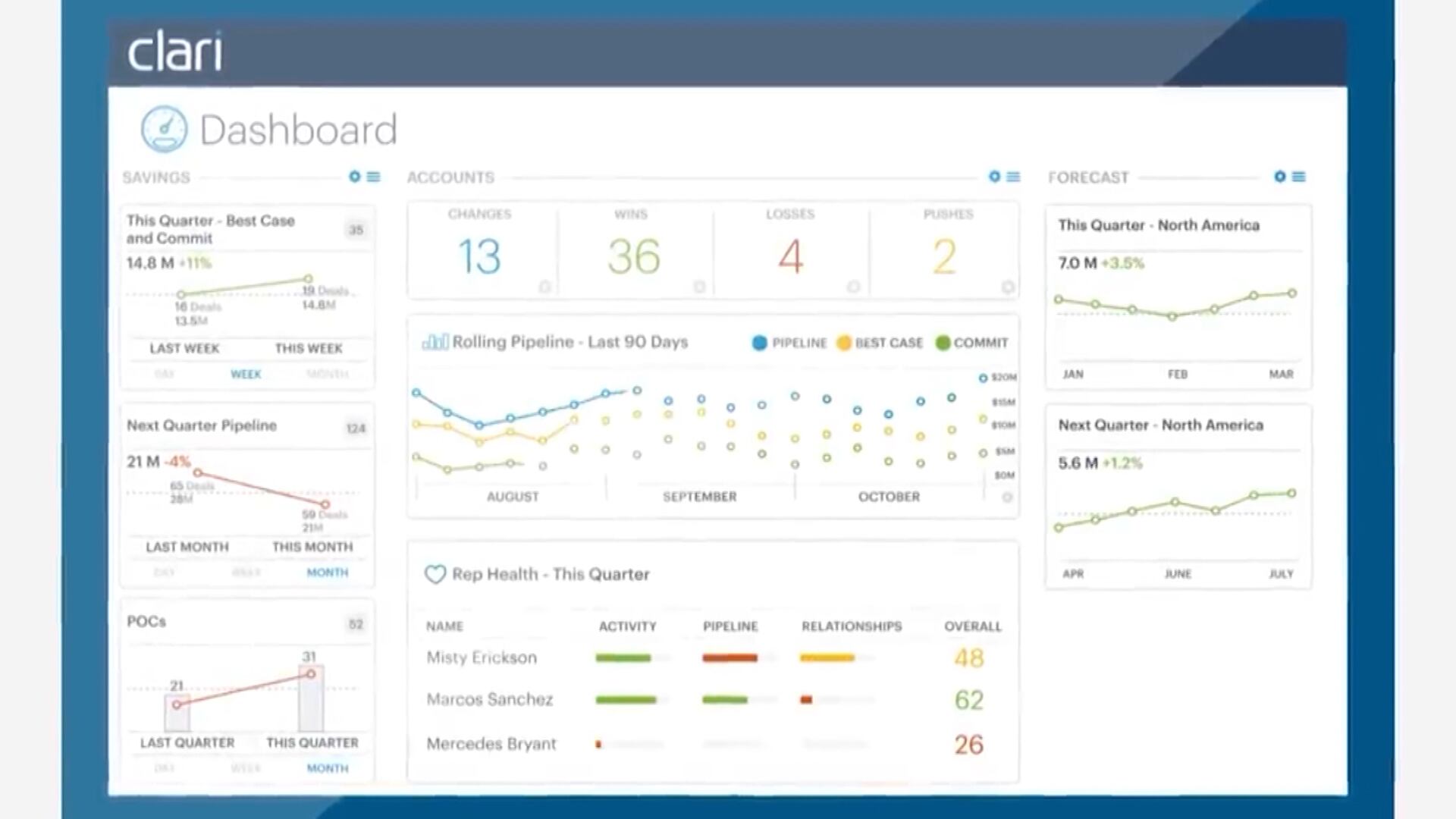
Revenue operations platform Clari recently raised $225 million in a Series F financing round led by Blackstone, bringing the company's valuation to more than $2.6 billion. Calri says more than 450 companies from around the world use its A.I.-powered platform to make their revenue operations more connected, efficient, and predictable. Clari CEO Andy Byrne joined Cheddar News' Closing Bell to discuss.
Technology company Unity announced it has acquired Ziva Dynamics. Marc Whitten, SVP & GM, Create at Unity, joins Cheddar News' Closing Bell, where he discusses how this move will help his company democratize real-time character creation.
Wellness retreats have grown in popularity as self-care has become a bigger focus during the pandemic. Jamie Costello, Vice President of Sales and Fitness at Pritikin Longevity Center, joined Cheddar to discuss the goals of a retreat program, and how to make health and wellness accessible to more people.
The gambling industry has seen a boom since shutting down in 2020, outpacing even pre-pandemic levels. But as gamblers have returned to the tables, there's been a rise in reports of gambling addiction as well. Sara Slane, founder of Slane Advisory and sports betting/casino gaming executive, joined Cheddar to discuss the state of the gambling industry.
Shares of Peloton recovered after CEO John Foley debunked rumors that the company would halt production of some products, confirming that the company will instead be quote 'right-sizing' production as it faces lagging demand.
This comeback for the stock comes after reports surfaced that Peloton could completely hit the brakes on production of its bikes and treadmills. In the last year, Peloton has wiped nearly $40 billion off its market cap, with its stock down over 70% in 2021. Doug Astrop, managing partner at Exponential Investment Partners, joined Cheddar Movers to discuss.
After an intense hours-long meltdown Monday, stocks closed higher in a last minute, stunning comeback. At one point, the Dow shed over 1,000 points, the tech-heavy Nasdaq was down close to 5% and inching toward correction territory, and the S&P 500 briefly hit a correction earlier in the day. During most of Monday's session, stocks were on track to mark their worst months since March 2020, and for the Nasdaq, since October 2008. Philip Palumbo, Founder, CEO and Chief Investment Officer of Palumbo Wealth Management, joined Cheddar News' Closing Bell to discuss today's stunning market comeback, whether there's more room for stocks to fall, his 2022 market predictions, and more.