Voting rights groups in Ohio are being lauded for their oversight efforts which uncovered massive errors in the state's recent bid to remove hundreds of thousands of voters from its rolls. The inspection, which was carried out primarily by nonprofit volunteers, found that more than 40,000 voters were mistakenly included on the state's to-be-deleted list.
"It definitely showed that Ohio's registration system needs a major upgrade," Jen Miller, the director of the League of Women Voters of Ohio, told Cheddar on Monday. "We can't be using a policy as severe as a purge when we can't even be sure that our purge lists are correct."
In an unusual move, this past August Ohio's Secretary of State Frank LaRose publically released a list of 235,000 voters that were set to be deleted from the state's registry. By reviewing the long spreadsheet, the League of Women Voters and several other groups uncovered gross inaccuracies, including the inclusion of Miller's name.
Yet Secretary LaRose, a Republican, has praised the process, saying his office undertook the most transparent review of Ohio's voting rolls to date. "Because of our collaboration with outside organizations, the proper safeguards are in place to ensure any eligible voter will have the opportunity to have their voice heard," LaRose said in a statement after revising the list.
The list maintenance process, as it's officially called, is legally mandated in Ohio and seeks to clear the state's system of deceased residents, inactive voters, or people who have moved out of state. Voter purging, however, has become a major issue nationwide as Republican-led initiatives in several states have sought to remove voters through controversial registration requirements, which critics say primarily target minority or Democratic voters.
Other oversight groups that participated in the review include the National Association for the Advancement of Colored People, All Voting is Local, and the Fair Elections Center.
Australia says it will fight against plans to downgrade the Great Barrier Reef’s World Heritage status due to climate change, while environmentalists are applauding the U.N. World Heritage Committee’s proposal.
he Supreme Court has decided unanimously that the NCAA cannot enforce rules limiting education-related benefits that colleges offer to student athletes — things like computers and paid internships.
A sharply limited number of fans will be allowed to attend the Tokyo Olympics. The decision announced Monday comes as organizers try to save some of the spirit of the Games where even cheering has been banned.
The Supreme Court has dismissed a challenge to the Obama era health care law, preserving insurance coverage for millions of Americans.
The Supreme Court has ruled that the city of Philadelphia violated the Constitution by limiting its relationship with a Catholic foster care agency over that group's refusal to certify same-sex couples as foster parents.
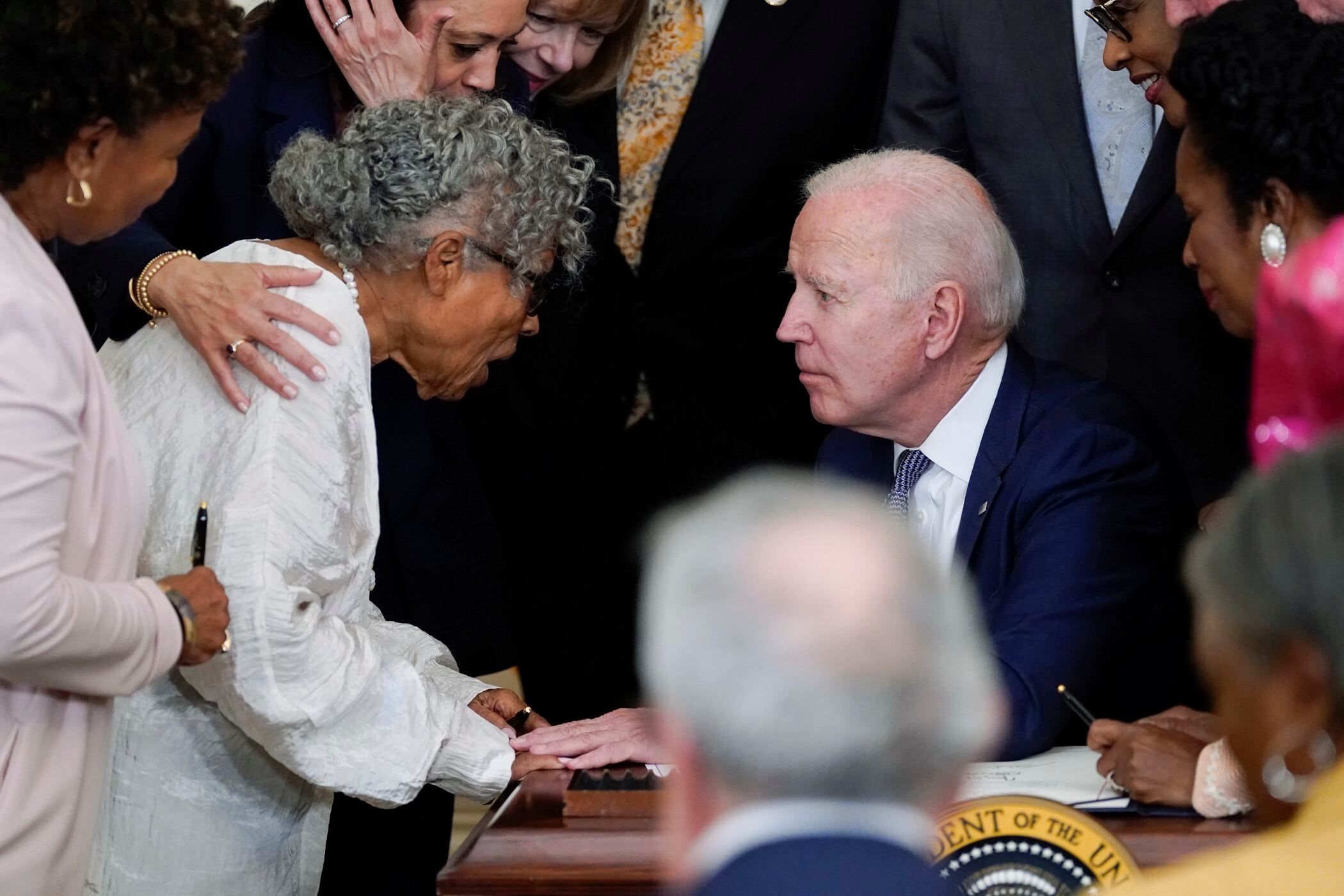
President Joe Biden has signed legislation Thursday establishing a new federal holiday commemorating the end of slavery, saying he believes it will go down as one of the greatest honors he has as president.
The number of Americans applying for unemployment benefits rose last week for the first time since April despite widespread evidence that the economy and the job market are rebounding steadily from the pandemic recession.
How much do you think cops make? A few hundred thousand per year? It sounds extreme, but this is the case in many cities across the country thanks to a slew of financial perks in ironclad union contracts.
The Federal Reserve is holding steady on the dovish policy stance that it's maintained since the beginning of the pandemic but not without a hat-tip to those worried about rising inflation.
Just 40 years ago, New York City's Times Square was a very different place: crime-ridden and adult theaters as the main source of entertainment. Cheddar explains how it went from this to one of the top tourist attractions in the world.