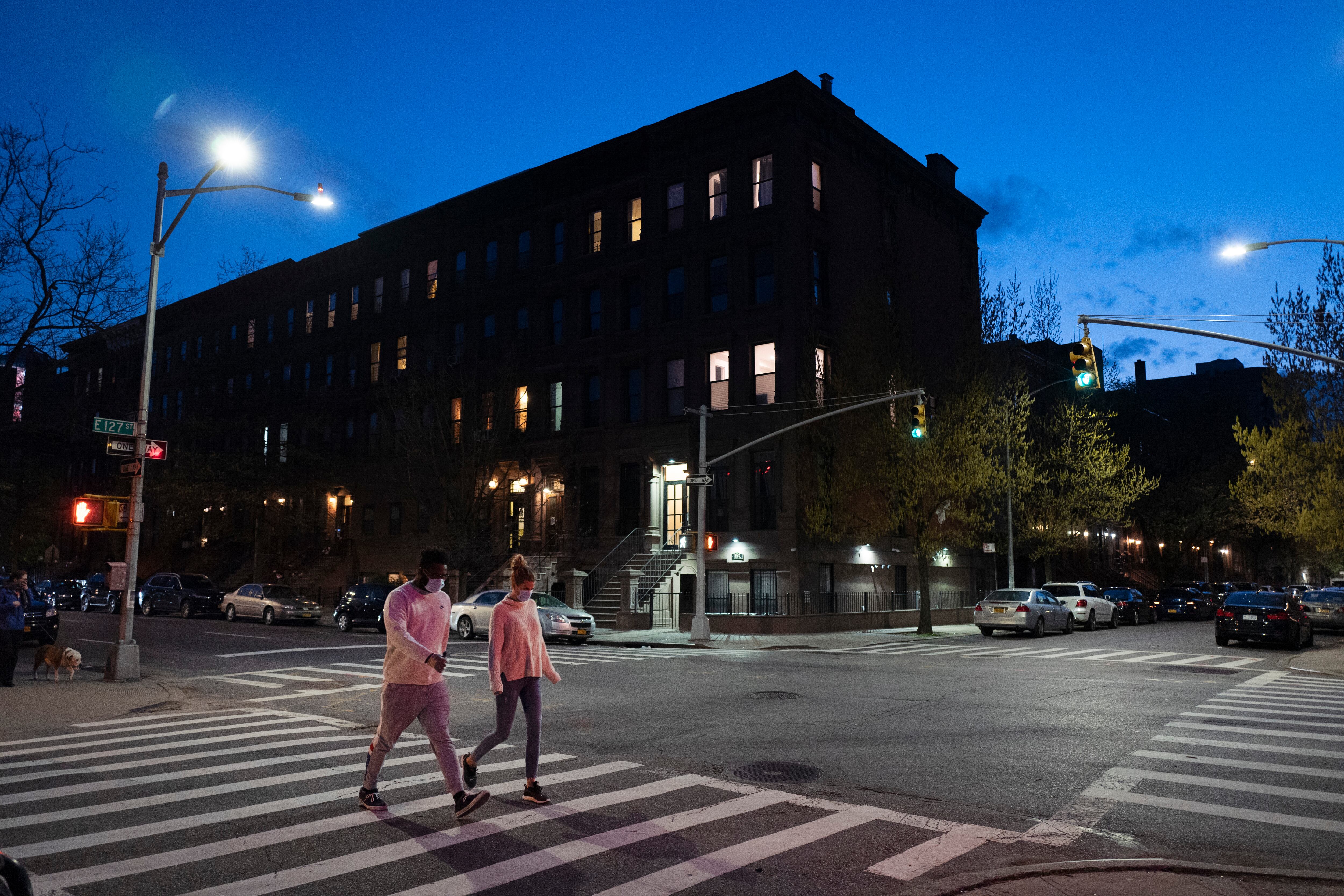
New York planned for a long fight against the coronavirus outbreak amid hopeful hospitalization trends. Gov. Andrew Cuomo extended stay-at-home restrictions Thursday through mid-May and New York City is getting ready to use 11,000 empty hotel rooms for coronavirus quarantines. Meanwhile, Mayor Bill de Blasio said the city is grappling with a projected $7.4 billion loss in tax revenue because of the crisis.
Here are the latest coronavirus developments in New York:
RESTRICTIONS EXTENDED
New York state will extend its stay-at-home restrictions at least through May 15 amid signs the initial wave of the coronavirus outbreak is slowing down.
Cuomo said Thursday that transmission rates still need to be tamed as he prolonged the restrictions that have left most New Yorkers housebound.
The number of people hospitalized statewide has ticked down to around 17,000, far below initial projections. But there are still close to 2,000 newly diagnosed people coming into hospitals daily, Cuomo said.
New York recorded 606 COVID-19-related deaths Wednesday, the lowest daily number in more than a week.
“This is still continuing at a really tragic, tragic rate,” Cuomo said at a press briefing.
The governor said the requirement for New Yorkers to wear face coverings when people are out and close by other people starting Friday will also help fight the outbreak.
____
NEW PLAN FOR HOTEL ROOMS:
After initially lining up hotels to become temporary hospitals, the city is now planning to use the rooms as quarantine sites for some people in crowded apartments, for some homeless shelter residents and for health care workers who don’t want to risk infecting family members, de Blasio said.
In some communities where infection rates are high, some people are living in cramped multi-generational households, the mayor noted.
“If there is a threat that someone might get infected in the home and it might spread amongst the members of that family, we have to guard against that,” he said.
De Blasio said the city will work with community health centers to identify who needs the service and will start moving people into hotel rooms on April 22.
Initially, “our projections told us we might have to use a vast number of hotels, dozens and dozens, to be able to accommodate all the medical needs,” he said. “So far, thank God, that has not been the case.”
The COVID-19 virus causes mild or moderate symptoms for most people. For some, especially older adults and people with existing health problems, it can cause more severe illness or death.
BUDGET CRUNCH
New York City expects to take a $7.4 billion budget hit over the next 15 months because of the coronavirus, de Blasio said Thursday as he detailed planned cuts and appealed to President Donald Trump and Congress for an infusion of cash for cities and states.
“If you lead, the Senate will follow. If you are silent, they will not. It’s on you, Mr. President,” the Democrat said at a news briefing. He said he spoke Wednesday to the Republican president and told him “his hometown needs him.”
The city so far has spent over $700 million to handle the virus outbreak and expects to spend a total of $3.5 billion by the end of December, according to a news release from the mayor's office.
The new spending has come as tax revenues are shrinking. The mayor’s new $89.3 budget proposal, released Thursday, trims projected tax revenue by $2.2 billion in the current budget year, and it’s $5.2 billion lower than his earlier plan for the fiscal year that begins in July.
The city has drawn on reserves, and it’s also saving on some programs because of virus-related shutdowns. But the mayor’s plan also calls for making a wide variety of trims: everything from delaying an expansion of its free prekindergarten program for 3-year-olds to reducing tree pruning, and from suspending a summer-job program for young people to closing city pools this summer in light of the virus.
Still, there are uncertainties about whether it will be enough. The city Independent Budget Office on Wednesday projected a $9.7 billion revenue shortfall in this budget year and next. De Blasio said he respects the independent agency but stands by City Hall’s projections.
He said layoffs or furloughs would be a last resort, but “honestly, that decision rests in Washington.”
“Washington has to step in so we can provide basic services," he said. “We must have that stimulus money, or else we’re going to have to make horrible choices.”