By Marcia Dunn

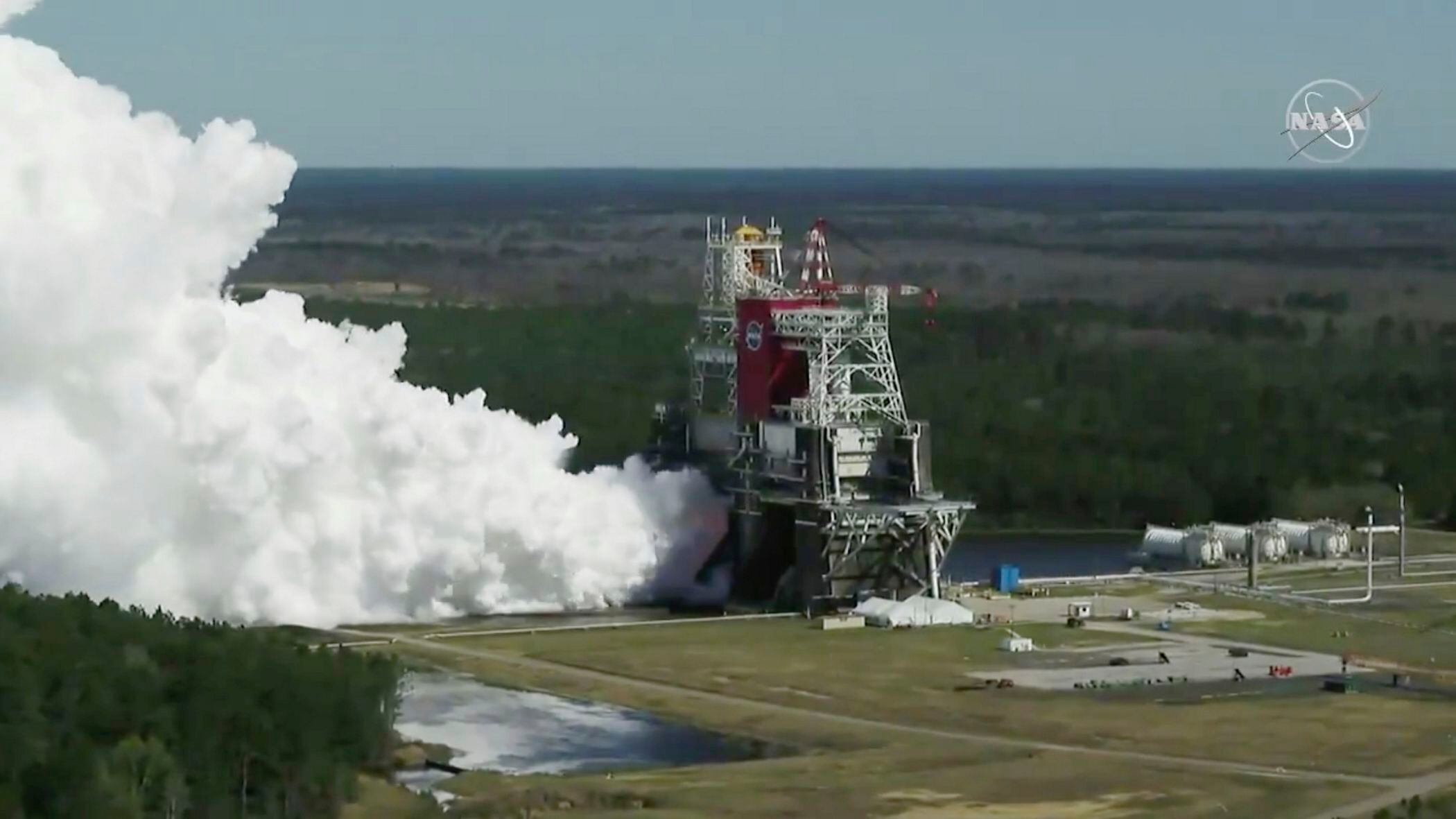
NASA completed an engine test firing of its moon rocket Thursday, after the first attempt in January ended prematurely.

This time, the four main engines of the rocket’s core stage remained ignited for the full eight minutes. Applause broke out in the control room at Mississippi's Stennis Space Flight Center once the engines shut down on the test stand.

NASA officials called it a major milestone in sending astronauts back to the moon, but declined to say when that might occur or even whether the first test flight without a crew would occur by year's end as planned.

John Honeycutt, NASA's program manager for the Space Launch System or SLS rocket, said everything seemed to go well in Thursday's test firing. “The core stage ... got an A-plus today,” he told reporters.

During the first test, the engines fired for just a minute, automatically cut short by strict test limits that were relaxed for the redo. Valve issues also had to be resolved prior to Thursday's countdown.

With this critical test finally finished — and assuming everything went well — NASA can now send the rocket segment to Florida's Kennedy Space Center to prepare it for launch.

Noting they're taking it one step at a time, officials declined to say whether this first SLS launch will occur by year's end as had been planned or will bump into 2022. The SLS rocket will send an empty Orion capsule to the moon and back.

The four engines tested Thursday actually flew into orbit on NASA's space shuttles and were upgraded for the more powerful SLS system. The orange core stage is reminiscent of the shuttle's external fuel tank, which held the liquid hydrogen and oxygen that fed the main engines.

Boeing built the core stage, which stands 212 feet (65 meters.)

The Trump administration had pressed for a moon landing by astronauts by 2024, a deadline increasingly difficult if not impossible to achieve at this point. The current White House has yet to issue a revised timeline.

NASA Acting Administrator Steve Jurczyk said the space agency is conducting an internal study to determine a schedule for the astronaut moon landings — “what we can optimally do” based on budgets. The review will take a few months, he noted.
Share:
More In Science
Eli Lilly to Offer Breakthrough Migraine Drug for Free
Relief for migraine suffers may, at long last, be imminent. With the FDA approving Eli Lilly's Emgality drug, Christi Shaw, president of Lilly Bio-Medicines, expounded on the drug's potential efficacy. The company has said it will offer the treatment to chronic migraine suffers with commercial insurance for free for a year.
Facebook's Bosworth: VR the 'Next Frontier For Human Connection'
Facebook announced its newest VR headset that will ship next year. "Oculus Quest" offers users the same virtual experience, but now users are able to move more freely while wearing the headset. Andrew Bosworth, VP of VR/AR at Facebook, said this is the next step in better connecting people around the world.
After Florence, Farm Animal Death Toll Could Be in Millions
North Carolina is facing a new crisis a week after Hurricane Florence made landfall. Not only have millions of farm animals drowned in the initial floods. Now, flooded waste lagoons are contaminating the drinking water, explained Zoë Schlanger, environment reporter for Quartz.
How High Can Pot Stocks Go?
Tilray, the Canadian cannabis company swiftly becoming one of the most talked-about stocks of the year, was up as much as 50 percent on Wednesday morning, leading a continued bull run in pot stocks and putting its market cap above established companies like Macy's and Viacom.
SpaceX Has Chosen Its First Moon Tourist
Elon Musk and SpaceX announced the company's first private passenger, Japanese billionaire Yusaku Maezawa. Shannon Stirone, freelance science journalist, said that this is the first step to Musk's ultimate goal ー transporting people to Mars.
Florence's Slow Movement a Worry for Insurers
Insurers should expect losses in the tens of billions of dollars due to Hurricane Florence's rain, which will linger for days because of the system's slow movement, said Mark Watson, CEO of Argo Group.
With Florence Looming, Trump Claims Democrats Made Up Puerto Rico Death Toll
Natural disasters, hurricanes especially, were once opportunities for administrations to flex their leadership and empathy muscles. When they failed (see: Bush, Katrina), the results were politically devastating. When they succeeded (see: Christie, Sandy), they launched runs for office. Those days appear to be over.
Load More