Microsoft started 2020 with a bold plan: become carbon negative by 2030. Now it's announced a new coalition of global companies with the goal of catalyzing the shift away from fossil fuels.
"This has to be about much more than just Microsoft," Lucas Joppa, chief environmental officer at Microsoft, told Cheddar. "This has to be about leading companies across the private sector coming together to work on this challenge."
The industry and continent-spanning coalition, dubbed Transform to Net Zero, includes Maersk, Danone, Mercedes-Benz AG, Microsoft, Natura & Co, Nike, Starbucks, Unilever, and Wipro.
"What we're focusing on is going beyond making commitments," he said. "We need all companies to make meaningful, significant climate commitments. But those of us that have made those commitments, now it's time to get to work."
One shared goal of the group will be to develop playbooks based on their experiences decarbonizing, which they can then share with other companies unsure of how to proceed.
Microsoft's short-term goal is to remove 1 million metric tons of carbon from the environment within the year. It began the process this week by issuing what it calls a "groundbreaking" request for a proposal to source technology and nature-based carbon removal solutions from other firms.
Another piece of Microsoft's climate plan is switching its data centers to renewable energy sources. The company is partnering with Sol Systems, energy developer and investor, to build that capacity in communities that have been disproportionately impacted by pollution.
This will be the first major investment from the company's $1 billion Climate Innovation Fund that launched in January.
The partnership aims to add 500 megawatts to Microsoft's renewable energy portfolio, which already has approximately 1.9 gigawatts, according to Joppa. Microsoft says 500 megawatts would provide enough energy to power 70,000 U.S. homes.
Joppa said Microsoft is shooting for 100 percent renewable energy by 2025.
As Microsoft attempts to drive change in the corporate sector, Joppa is still banking on the public sector to step up with new regulations to combat climate change.
"It can't just be about us," Joppa said. "I believe that we need a much more level playing field. We need everybody to be required and incentivized to go and operate in this space, to move everybody's business practices to net zero by 2050. Ultimately we're going to need regulation and policy to get us there."
Food pickup app Ritual has big expansion plans. But its founder says the company's rapid growth can actually be traced back to a slower start. "Ritual's about your neighborhood, and I think what a lot of other companies did differently was they tried to go too broad too quickly, and they just lack the depth and coverage that Ritual has," Ray Reddy, co-founder and CEO of Ritual, told Cheddar Wednesday. "And we still approach the world neighborhood by neighborhood, and ensure that it's actually compelling."
Step aside, Siri and Alexa. VR studio Fable is relaunching as a "virtual beings" company to bring the public its first A.I.-powered character with whom users can have a two-way relationship. According to co-founders Edward Saatchi and Pete Billington, the rebranding ー which the two announced at the 2019 Sundance Festival ー is partly an effort to educate consumers about machine learning.
Microsoft shares dropped in extended trading on Wednesday despite reporting better-than-expected quarterly earnings due to investor concerns about its crucial cloud business.
Tesla shares sank in extended trading on Wednesday after reporting mixed earnings and revenue. The electric carmaker reported earnings per share of $1.93 cents on revenue of $7.23 billion, just missing expectations on earnings, but beating on revenue. Analysts surveyed by Thomson Reuters anticipated earnings of $2.20 per share on $7.08 billion in revenue.
Facebook soared in extended trading on Wednesday after reporting fourth-quarter earnings and revenue that beat Wall Street forecasts. Facebook reported earnings per share of $2.38 on revenue of $16.91 billion. That topped analysts' expectations for $2.19 earnings per share on $16.4 billion in revenue, according to Thomson Reuters.
Visible wants to make signing up for a phone service as easy as calling a Lyft. The digital-only wireless carrier backed by Verizon offers unlimited text, talk, data, and hot-spot for $40 a month. CEO Miguel Quiroga, a telecom industry veteran, says that this is the phone service that consumers want.
As digital advertising is increasingly beholden to the Google/Facebook duopoly, Glamour is experimenting with what it sees as the future of the industry: a multi-faceted revenue model that uses a combination of traditional ads, metered or niche paywalls, events, audio and e-commerce, even as it kills off its one-time moneymaker, the monthly print edition. Samantha Barry, Glamour's editor-in-chief, told Cheddar in an interview Wednesday that she sees the 80-year-old iconic brand as a "service for women."
The ongoing feud between Apple and Facebook just heated up. Apple said on Wednesday that it revoked Facebook’s access to its Developer Enterprise Program, a move that kneecaps the social network and marks a steep escalation of tensions between the two tech giants.
These are the headlines you Need 2 Know for Wednesday, Jan. 30, 2019.
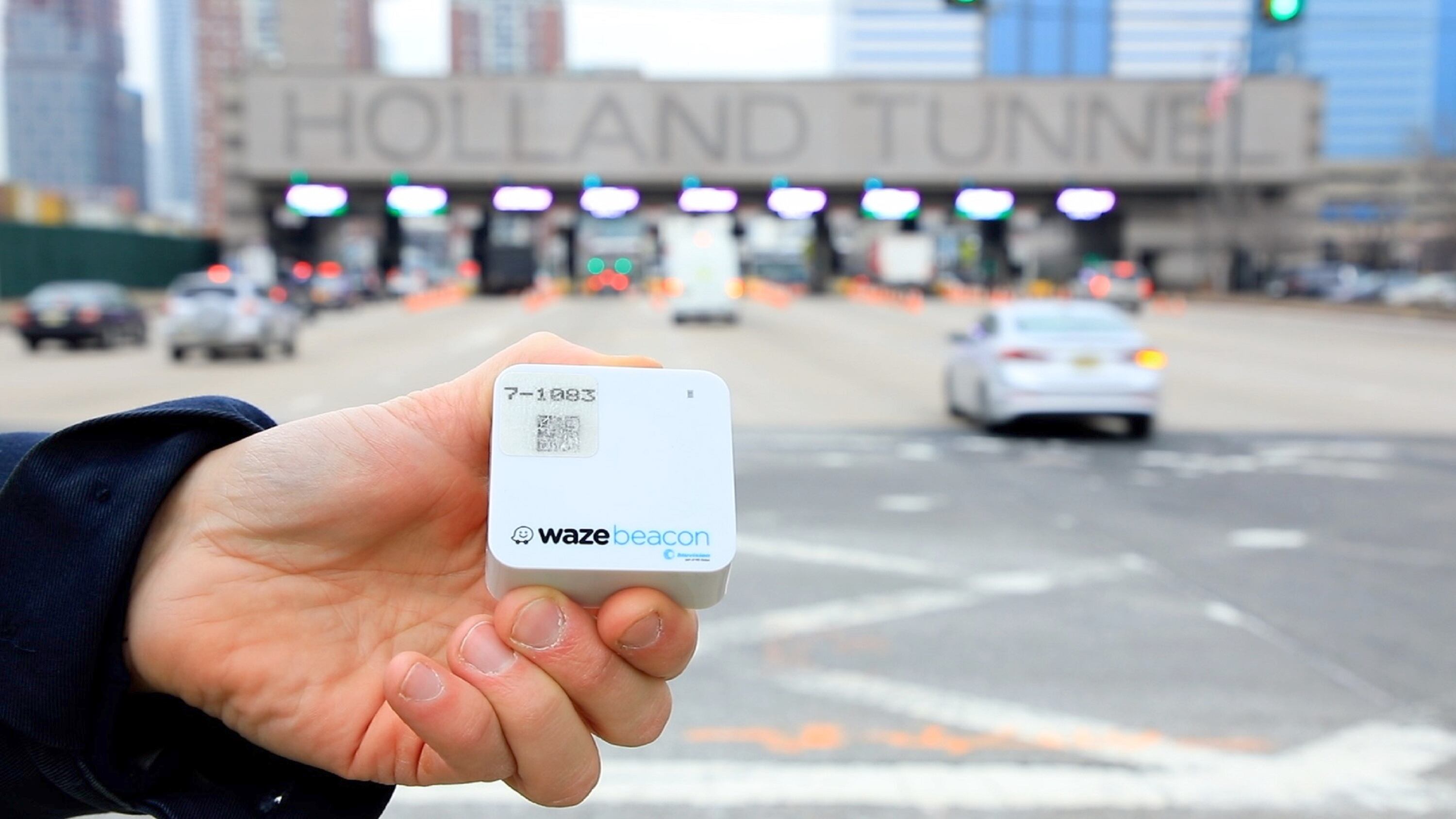
Waze is rolling out its beacon technology in New York City to improve tunnel navigation and help drivers commute in and out of the Big Apple. "This allows us to basically locate the users inside the tunnels," said head of Waze Beacons Gil Disatnik in an interview on Cheddar Tuesday.