Microsoft started 2020 with a bold plan: become carbon negative by 2030. Now it's announced a new coalition of global companies with the goal of catalyzing the shift away from fossil fuels.
"This has to be about much more than just Microsoft," Lucas Joppa, chief environmental officer at Microsoft, told Cheddar. "This has to be about leading companies across the private sector coming together to work on this challenge."
The industry and continent-spanning coalition, dubbed Transform to Net Zero, includes Maersk, Danone, Mercedes-Benz AG, Microsoft, Natura & Co, Nike, Starbucks, Unilever, and Wipro.
"What we're focusing on is going beyond making commitments," he said. "We need all companies to make meaningful, significant climate commitments. But those of us that have made those commitments, now it's time to get to work."
One shared goal of the group will be to develop playbooks based on their experiences decarbonizing, which they can then share with other companies unsure of how to proceed.
Microsoft's short-term goal is to remove 1 million metric tons of carbon from the environment within the year. It began the process this week by issuing what it calls a "groundbreaking" request for a proposal to source technology and nature-based carbon removal solutions from other firms.
Another piece of Microsoft's climate plan is switching its data centers to renewable energy sources. The company is partnering with Sol Systems, energy developer and investor, to build that capacity in communities that have been disproportionately impacted by pollution.
This will be the first major investment from the company's $1 billion Climate Innovation Fund that launched in January.
The partnership aims to add 500 megawatts to Microsoft's renewable energy portfolio, which already has approximately 1.9 gigawatts, according to Joppa. Microsoft says 500 megawatts would provide enough energy to power 70,000 U.S. homes.
Joppa said Microsoft is shooting for 100 percent renewable energy by 2025.
As Microsoft attempts to drive change in the corporate sector, Joppa is still banking on the public sector to step up with new regulations to combat climate change.
"It can't just be about us," Joppa said. "I believe that we need a much more level playing field. We need everybody to be required and incentivized to go and operate in this space, to move everybody's business practices to net zero by 2050. Ultimately we're going to need regulation and policy to get us there."
Enterprise blockchain provider, BlockApps, recently raised $41 million in a new funding round led by Liberty City Ventures. BlockApps builds products and applications for other companies on its own blockchain platform called STRATO. The company says its blockchain technology can help businesses increase the value of their assets, streamline their supply chains, and help them meet their sustainability goals. Kieren James-Lubin, President & CEO of BlockApps, joins Cheddar News' Closing Bell to discuss.
Tesla has continued to beat expectations as illustrated by its last quarter earnings despite issues in Shanghai, China. Dan Ives, the managing director of equity research at Wedbush Securities, joined Cheddar News to talk about the resilience of Tesla. "I thought they were almost Cinderella-like numbers," he said about the delivery numbers. "They are performing just miles ahead of any auto player, and that's why the stock is doing what it's doing. In my opinion, they're expanding their lead in EVs, even in this Category 5 hurricane that we're seeing in China." Ives noted that issues in China could pose ongoing challenges going forward even with the largely positive outlook.
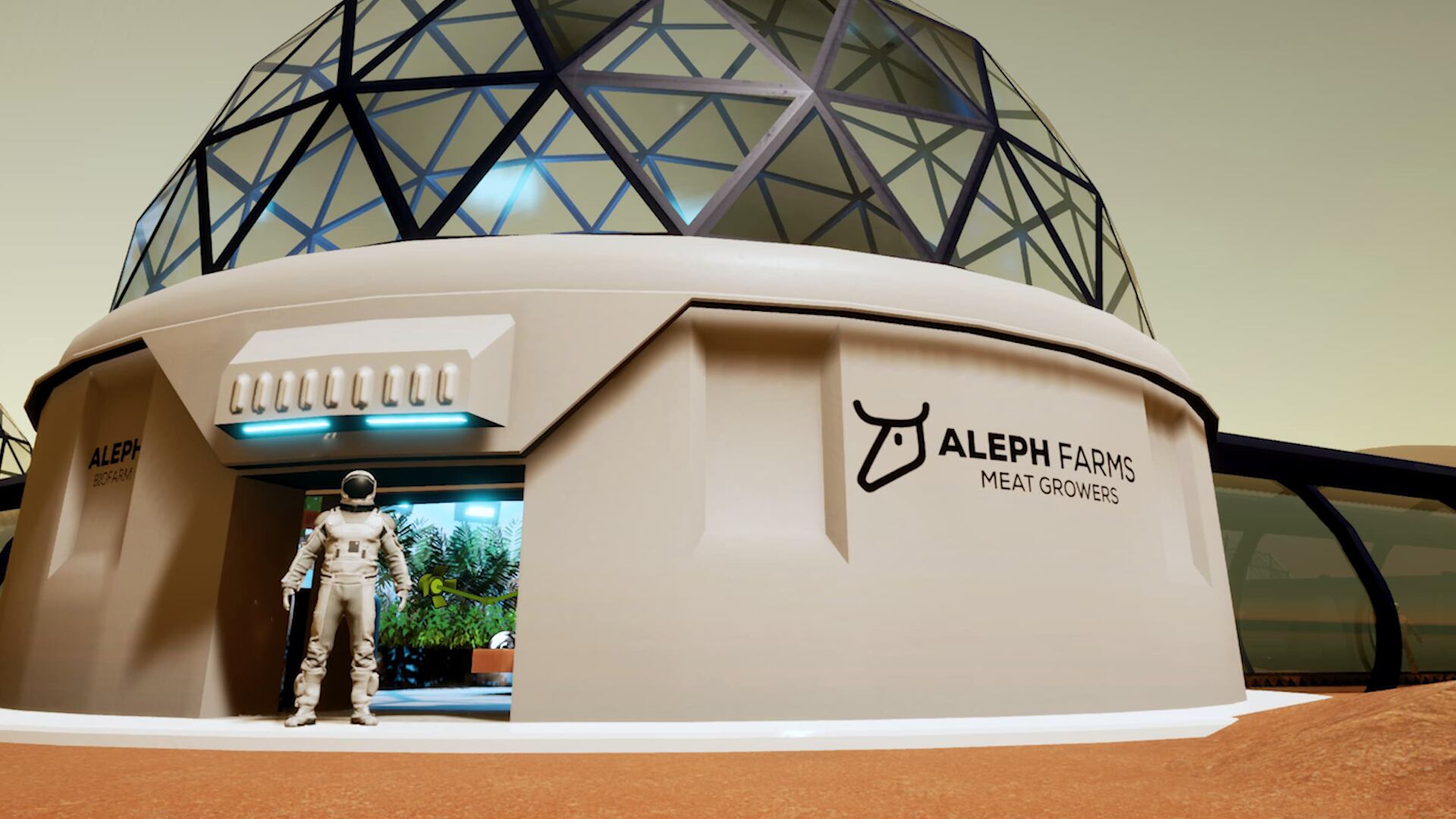
Dr. Neta Lavon, CTO and VP of R&D at Aleph Farms, joins Cheddar Innovates to discuss how the team sent cow cells to space to further research the production of meat in space, and why developing cultivated meat is so critical to the future of space travel.
A new report from DrakeStar Partners, an investment bank that closely tracks the sector, said $98.7 billion in deals were announced or closed in the first three months of the year. T
AT&T reported a 2.5 percent rise in its core wireless revenue for the first quarter as its 5G rollout expands across the United States, even as the company pivots away from streaming to focus on its communication business amid heightened demand for high-speed internet. CEO John Stankey joined Cheddar's Opening Bell to discuss the company's 5G plans, its divestment from WarnerMedia, and its push into the metaverse. "To the extent that we start to see social aspects come into the metaverse that allows people to — as they're out and about — experience those kinds of things, that just puts a higher premium on mobile networks and scaled robust mobile networks to enable those applications, which is our bread and butter, and it's probably one of our best returning and best yielding businesses," he said.