In the middle of a military base outside Mexico City, an army colonel runs what he calls a kindergarten for dogs.
Puppies that one day will become rescue dogs, or sniffer dogs for drugs or explosives, get their basic training here, at Mexico’s Army and Air Force Canine Production Center. The puppies are born and spend their first four months at the facility, before being sent to military units around the country for more specialized training.
Founded in 1998, the center has in the past produced breeds such as German Shepherds and Rottweilers.
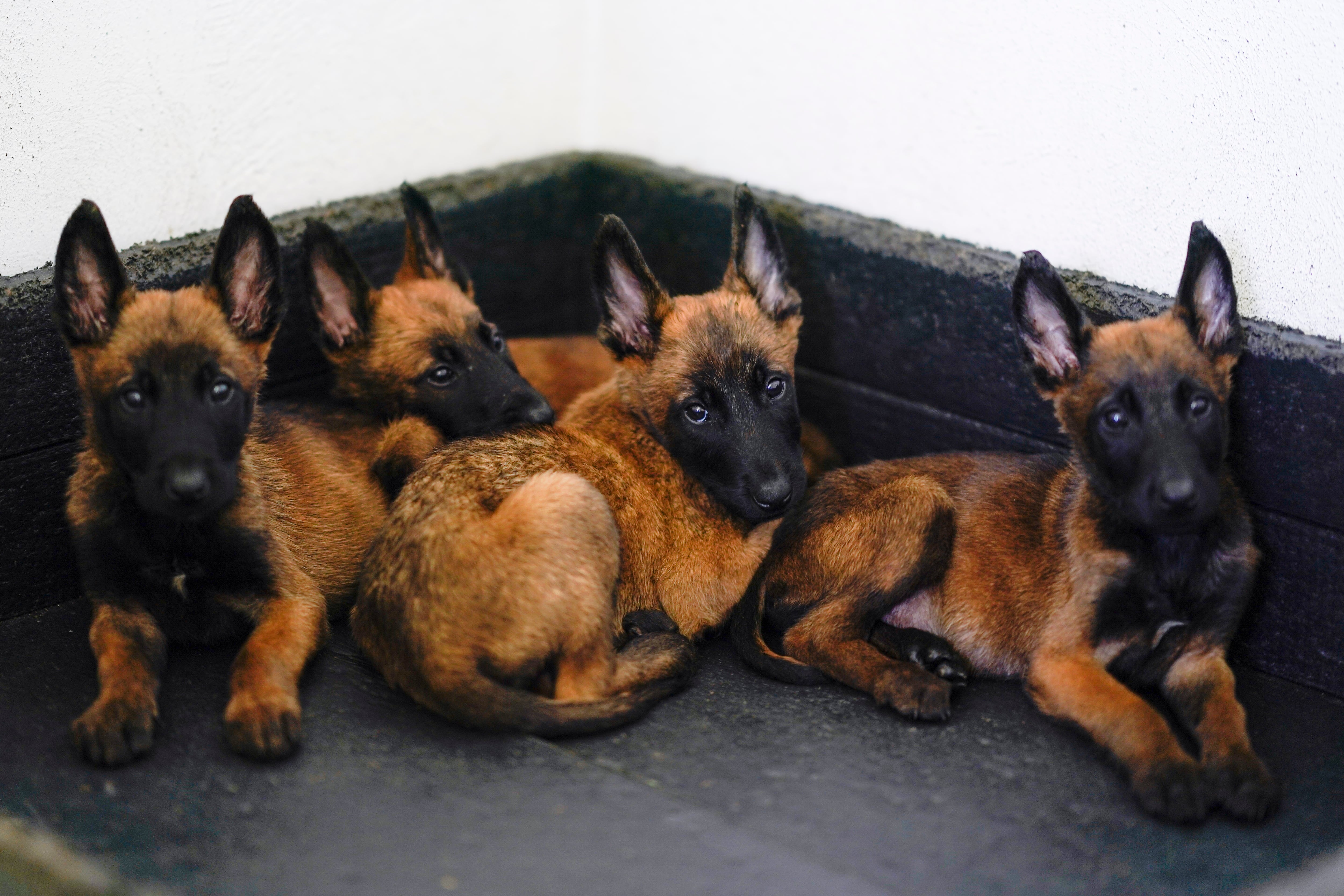
Now, it exclusively breeds Belgian Malinois — about 300 of them a year.
“It’s a very intelligent dog, it’s a dog with a lot of hardiness, very resistant to diseases,” said Col. Alejandro Camacho Ibarra, a veterinarian and the center’s director. It is the Mexican military’s only such production facility, and Camacho said it may be the largest in Latin America.
The mainly green-and-white, one-story buildings look like any others at the military camp in the State of Mexico, near Mexico City. But the difference here is in the sounds that fill the air: high-pitch barking from dozens of puppies scattered through its maternities and training camps.
Precautions here are strict because of a recent canine parvovirus outbreak that sickened some of the puppies. Visitors are disinfected with a spray, and must step into a watery solution to clean shoe soles. Only military personnel can touch the puppies. If you want to get close, you need to wear scrubs, shoe protectors and a mask, but you still cannot hold or pet the animals.
The training starts early in life, about a month after birth once the weaning process finishes. And everything is taught as a game.
“We start playing with the dog,” Camacho said. The idea is to draw them to items that trainers call “attractors” — like a ball or a rag — and puppies are challenged to catch t
hem. “Every time it holds his prey, it’s rewarded, congratulated, and it learns to go after that prey, after that attractor,” Camacho added.
Unlike in civilian life, where puppies often get food treats, in the military the only prize for a job well done is a caress and some praise.
In one section of the camp, there’s a trail with obstacles including rocks, a tunnel, a section of empty plastic bottles to clamber over, a ladder and tires.
A soldier beckons the little dogs with a rag they must capture. The brown puppies with black snouts begin running through the trail, jumping over the rocks and crossing the obstacles. One takes the lead and the second struggles to cross over the plastic bottles, but also finishes. Both go to bite the rag the soldier holds.
“Very, very good, sons! Very good, boys,” he repeats while dragging the puppies as they maintain their grasp on the rag for several moments.
Camacho explains that the puppies are known by a number until they are three months old, when they are given a proper name. Each year, the center gives names according to a single letter of the alphabet. In 2023, that letter is “F.”
Febo, Frodo, Fósil, Forraje and Fido are some of this year’s names.
The basic training ends when the puppies are 4 months old. Then, they move to other military units to become specialists in detection of drugs or explosive, in search and rescue or in protection and security.
The current government of Mexico’s President Andrés Manuel López Obrador has relied heavily on the armed forces for various initiatives, from public safety to the building of airports and a tourist train line. And K-9 units have been a key element of some of the military’s activities, like the detection of drugs.
Col. Camacho said that some dogs born at the center have been trained to detect fentanyl, a synthetic opioid trafficked by Mexican cartels that has been blamed for about 70,000 overdose deaths per year in the United States.
That kind of specialized training happens elsewhere, but the colonel says it builds on his center's basic training by using “attractor” objects but having them impregnated with the scent of what the dogs need to track, such as a drug.
Dogs retire from their military service after eight years, Camacho says.
Many of the dogs have become unsung heroes of missions in Mexico and abroad. Occasionally they become publicly known, like a German Shepherd named Proteo who was part of a rescue team sent in February to Turkey after a 7.8-magnitude earthquake that killed more than 40,000 people.
Proteo died during the search for survivors of the quake. A statue of him now stands at the center.
Another dog that made headlines in Mexico and abroad was a yellow Labrador retriever rescue dog named Frida. The Navy dog gained fame in the days following Mexico’s Sept. 19, 2017, earthquake that left more than 300 dead in the capital. She retired in 2019 and died in 2022.
Col. Camacho said that the dogs have a symbiotic relationship with their handlers during their working life in the military.
“The dog uses us to survive, but we also use the dog to do a job,” he said. “So it’s a coordinated work where we both get a benefit."