Mayim Bialik, an actress, author, and neuroscientist, who became a fan-favorite on the hit CBS show The Big Bang Theory as Sheldon's quirky love interest, is starring in a sitcom of her own again.
The show, which premiered in January and titled Call Me Kat, is about a woman who uses her life savings to open a cat cafe in Louisville, Ky. Jim Parsons, who starred opposite Bialik in The Big Bang Theory as the highly intelligent but often irritating Sheldon, is producing the show adapted from the British sitcom Miranda by Miranda Hart.
"He said 'if anyone can pull off annoying but also adorable, I think it's you," Bialik told Cheddar.
In the grand-old tradition of adapting British comedies, the two shows will share more in spirit than in specifics, but both concern a single woman looking for love and employment. What's unique to the American version is the decision to base the show in a cat cafe.
Luckily for Bialik, she's a cat owner herself.
"It's really awesome that I get to play with cats all day at work, and come home and then deal with my own cats who definitely smell the other cats on me," she said.
A stylistic choice that was carried over from Miranda is that Bialik's character will break the fourth wall throughout the show.
"Kat is a character who's alone a lot and tries not to be lonely, so the audience is kind of in on what's going on in her head," Bialik said.
In addition, the cast takes a bow at the end of each episode, which Bialik said has been divisive.
"You don't have to love it, but if you don't, it's not our fault. It's based on Miranda," she said.
The neuroscientist also took a moment to talk about the world outside the silver screen.
Bialik made headlines back in October for posting a video on YouTube clarifying that she was not an anti-vaxxer. She said misinformation had spread about her because her newly-born children were not vaccinated on a regular schedule.
"Obviously my children are vaccinated," she said. "We are a family that supports the vaccine program for this virus."
However, she noted that she was a skeptical person in general and pointed out that the long-term effects of COVID vaccines are still unknown. Nonetheless, she said she got the vaccine in order to reach herd immunity as soon as possible.
"I got the vaccine, and that's something that I decided to share about because there's been a lot of misinformation about me."
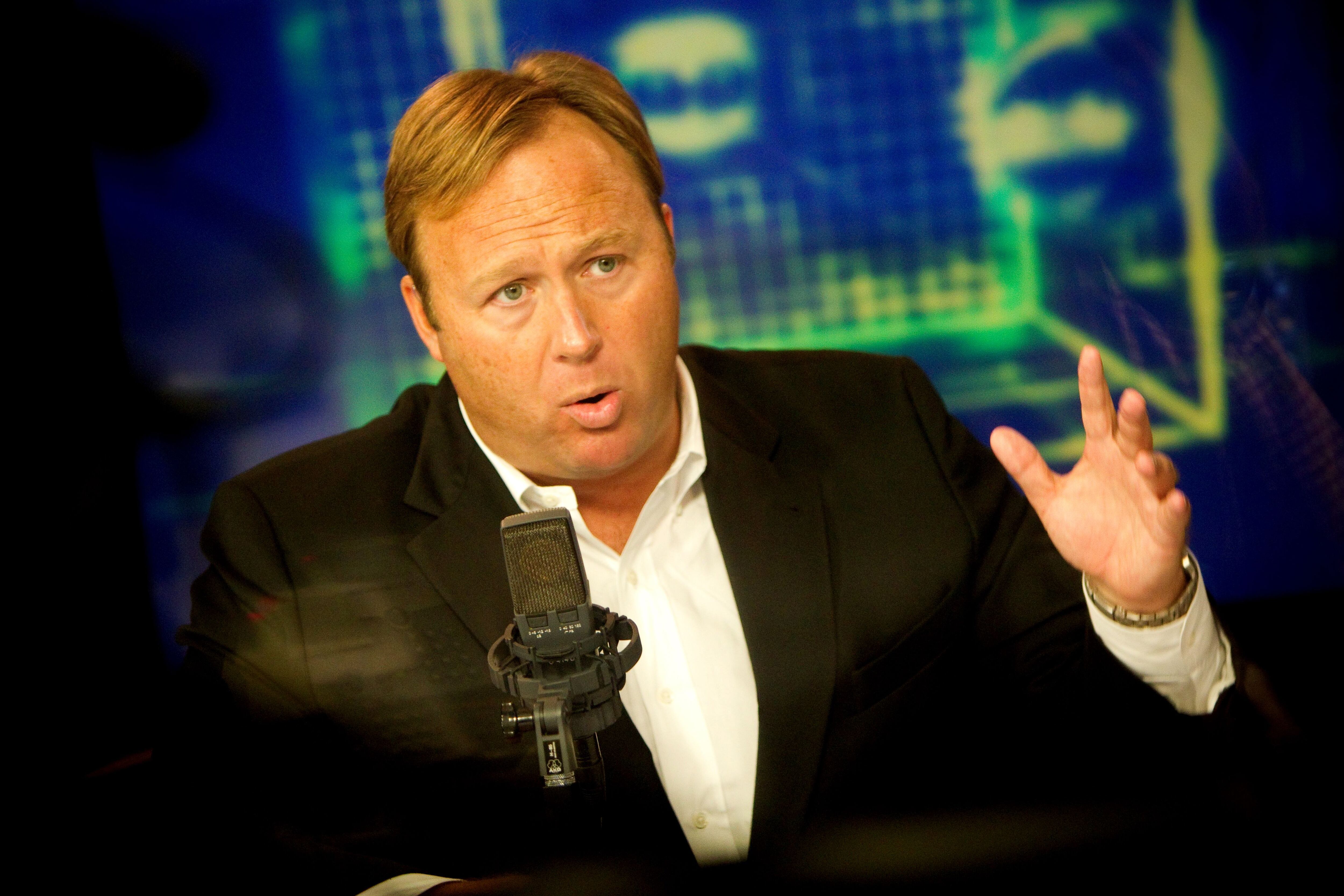
After years of spreading incendiary conspiracy theories, the right-wing gadfly Alex Jones was kicked off Facebook, YouTube, Apple, and Spotify because recent lawsuits highlight the "real-life harm" of his rhetoric, says Axios media reporter Sara Fischer, and the tech platforms have established a new standard for acceptable speech online.
Andy Swift, executive editor for TVLine, explains to Cheddar that 'peak TV' has evolved into 'panic TV.' And, Swift says, networks and streaming platforms are revisiting the old standbys to guarantee success in a market over-saturated with new content.
President Trump has proposed rolling back his predecessor's fuel efficiency standards. The move is effectively
an attack on states like California that set their own standards, says Dan Becker, director at Safe Climate Campaign.
Norwich University is offering students Income Share Agreements, the opportunity for reduced tuition in exchange for a share of their future paychecks. Daphne E. Larkin, Director of Media Relations & Community Affairs at Norwich University, describes the advantages of an ISA and tells Cheddar which students are eligible for this financing.
The tech giants' decisions to block content by the conspiracy theorist Alex Jones may encourage other platforms to crackdown on his incendiary rhetoric, says Mashable's Heather Dockray. "The claims he's making have always been dangerous," Dockray says. "But they seem particularly paranoid as of late."
These are the headlines you Need2Know.
Josh Ostrovsky, the Instagram influencer known as The Fat Jewish says social media entrepreneurs should stop posting photos of their açaí bowls and make real products instead. He and his Swish Beverage co-founder David Oliver Cohen say there are too many influencers peddling brands and creating nothing but noise.
Zest Labs CEO Peter Mehring says his company is suing Walmart for $2 billion for allegedly stealing its fresh-food technology. The Silicon Valley start-up worked for years with the retail behemoth to develop ways to keep produce fresh for shipping before Walmart unveiled its own eerily similar solution.
Ripa Rashid, co-president of the Center for Talent Innovation, says that CBS's decision to keep Les Moonves as CEO after six women alleged he sexual harassed them could hurt the network's internal culture as much as its public reputation.
These are the headlines you Need2Know.