By Jennifer Peltz and Jesse Bedayn
Christian Glass was a geology geek, a painter and a young man beset by a mental health crisis when he called 911 for help getting his car unstuck in a Colorado mountain town last year.
When sheriff's deputies arrived, he refused to get out of the car after saying that supernatural beings were after him, body camera video shows. The officers shouted, threatened and coaxed. Glass made heart shapes with his hands and prayed: “Dear Lord, please, don’t let them break the window.”
They did, and the 22-year-old grabbed a small knife. Then he was hit with bean bag rounds, stun gun charges and, ultimately, bullets that killed him and led to a murder charge against one deputy and a criminally negligent homicide charge against another.
As part of a $19 million settlement this spring with Glass’ parents, Colorado’s Clear Creek County this month joined a growing roster of U.S. communities that respond to nonviolent mental health crises with clinicians and EMTs or paramedics, instead of police.
The initiatives have spread rapidly in recent years, particularly among the nation’s biggest cities.
Data gathered by The Associated Press show at least 14 of the 20 most populous U.S. cities are hosting or starting such programs, sometimes called civilian, alternative or non-police response teams. They span from New York and Los Angeles to Columbus, Ohio, and Houston, and boast annual budgets that together topped $123 million as of June, The AP found. Funding sources vary.
“If someone is experiencing a mental health crisis, law enforcement is not what they need,” said Tamara Lynn of the National De-Escalation Training Center, a private group that trains police to handle such situations.
There's no aggregate, comprehensive data yet on the programs' effects. Their scope varies considerably. So does their public reception.
In Denver, just an hour’s drive from where Glass was killed, a program called STAR answered 5,700 calls last year and is often cited as a national model. Its funding has totaled $7 million since 2021.
In New York, a more than $40 million-a-year program dubbed B-HEARD answered about 3,500 calls last year, and mental health advocates criticize it as anemic.
Representatives from some other cities were frank about challenges — staffing shortages, acclimating 911 dispatchers to sending out unarmed civilians, and more — at a conference in Washington, D.C., this spring.
Still, officials in places including New York see no-police teams as an important shift in how they address people in crisis.
“We really think that every single B-HEARD response is just a better way that we, the city, are providing care to people,” said Laquisha Grant of the New York Mayor’s Office of Community Mental Health.
Federal data is incomplete, but various studies and statistics show that mentally ill people make up a substantial proportion of those killed by police. Often, the dead are people of color, though Glass was not.
The alternative approach dates back decades but gained new impetus from calls for wide-ranging police reform after the 2020 killing of George Floyd in Minneapolis. There also were specific pleas for better responses to psychiatric crisis after such tragedies as the death of Daniel Prude that year in Rochester, New York. Prude was just out of a psychiatric hospital and running naked through snowy streets when he was suffocated by police who had been called to help him. He was Black, as was Floyd.
Reports of mental distress made up about 1% of police calls in a 2022 study involving nine police agencies; there’s no nationwide statistic. A long-established civilian response program in Eugene, Oregon, says it diverts 3% to 8% of calls from police. The Vera Institute of Justice, a police reform advocacy group, suggests alternative teams could handle 19% if homelessness, intoxication and some other troubles were included.
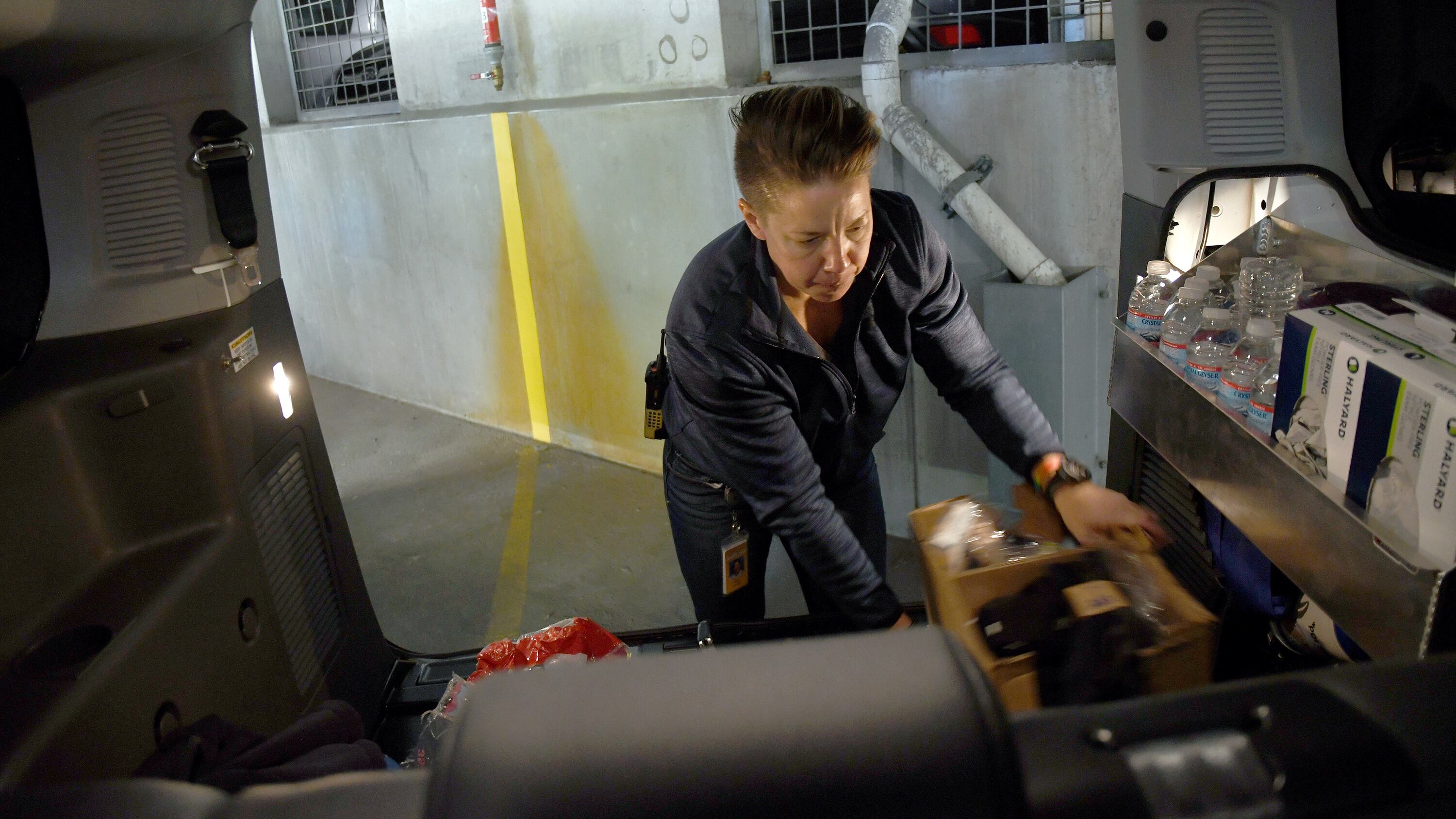
In Denver, STAR teams arrive in vans stuffed with everything from medical gear to blankets to Cheez-Its. In one recent instance, they spent three hours — more time than police could likely have spent -- with a Denver newcomer who was living on the streets. The team helped him get a Colorado ID voucher, groceries, and medications and took him to a shelter.
“It’s really about meeting the needs of the community and making sure we are sending the right experts, so we can actually solve the problem,” says Carleigh Sailon, a former STAR manager who now works elsewhere.
STAR responded to 44% of calls deemed eligible last year, said Evan Thompkin, a STAR program specialist.
A Stanford University study found that petty crime reports fell by a third and violent crime stayed steady in areas that STAR served in its earliest phase. Throughout the program's three years, police have never been called for backup due to safety concerns but have helped direct traffic, Thompkin said.
Some observers wonder if safety worries will grow as non-police programs do. While there’s an appeal to the idea of pulling cops out of psychiatric crisis calls, “the challenge is identifying those calls,” said Stephen Eide, a senior fellow specializing in mental health issues at the conservative Manhattan Institute think tank.
In New York, dispatchers must gauge the potentially life-or-death risk of “imminent harm” while deciphering sometimes frantic 911 calls that often come from bystanders or relatives, not the person in crisis.
Officials say B-HEARD answered 53% of eligible calls in the last six months of 2022, the most recent data available. But that was 16% of all the mental health crisis calls within the program's limited territory.
Combined, staffers answered about 2% of the 171,000 such calls citywide throughout last year.
“Very unimpressive,” says Ruth Lowenkron, an attorney involved in a federal lawsuit that seeks changes in B-HEARD.
Grant says the city is exploring whether more calls could qualify. Meanwhile, officials note that B-HEARD's social workers and EMTs resolve about half of calls by talking to people or taking them to social service or community health centers, rather than the hospitals where armed officers have traditionally brought people in crisis. Plans call for extending B-HEARD citywide.
Grant credits the program with “providing people with more options and letting people know that they can stay safely in their homes, in their communities, with the connection to the right resources.”
John Barrett, however, wanted to go to a hospital to get some physical and mental health problems checked out one June day. He asked 911 for an ambulance, but police came, he said. Then two other people showed up unannounced, in bulletproof vests and face masks.
“They totally escalated the situation for me,” recalled Barrett, 45, a former door technician. “Between them and the police being there, I was just totally terrified.”
He said he learned only by asking that they were with B-HEARD. (Teams can be summoned by on-scene police, and staffers are allowed, but not required, to wear ballistic vests.)
Barrett said the two performed medical tasks such as taking his blood pressure, and eventually a social worker appeared in plain clothes and sought to talk with him, but he wasn’t interested. An ambulance ultimately took him to a hospital.
The city mental health office said it couldn’t discuss any individual responses.
Barrett said he went home from the hospital the next day, still shaken by the response to his call for help.
“I’m saving money for an Uber next time," he said.
Associated Press writer Lindsay Whitehurst contributed from Washington. Peltz reported from New York. Jesse Bedayn is a corps member for the Associated Press/Report for America Statehouse News Initiative. Report for America is a nonprofit national service program that places journalists in local newsrooms to report on undercovered issues.