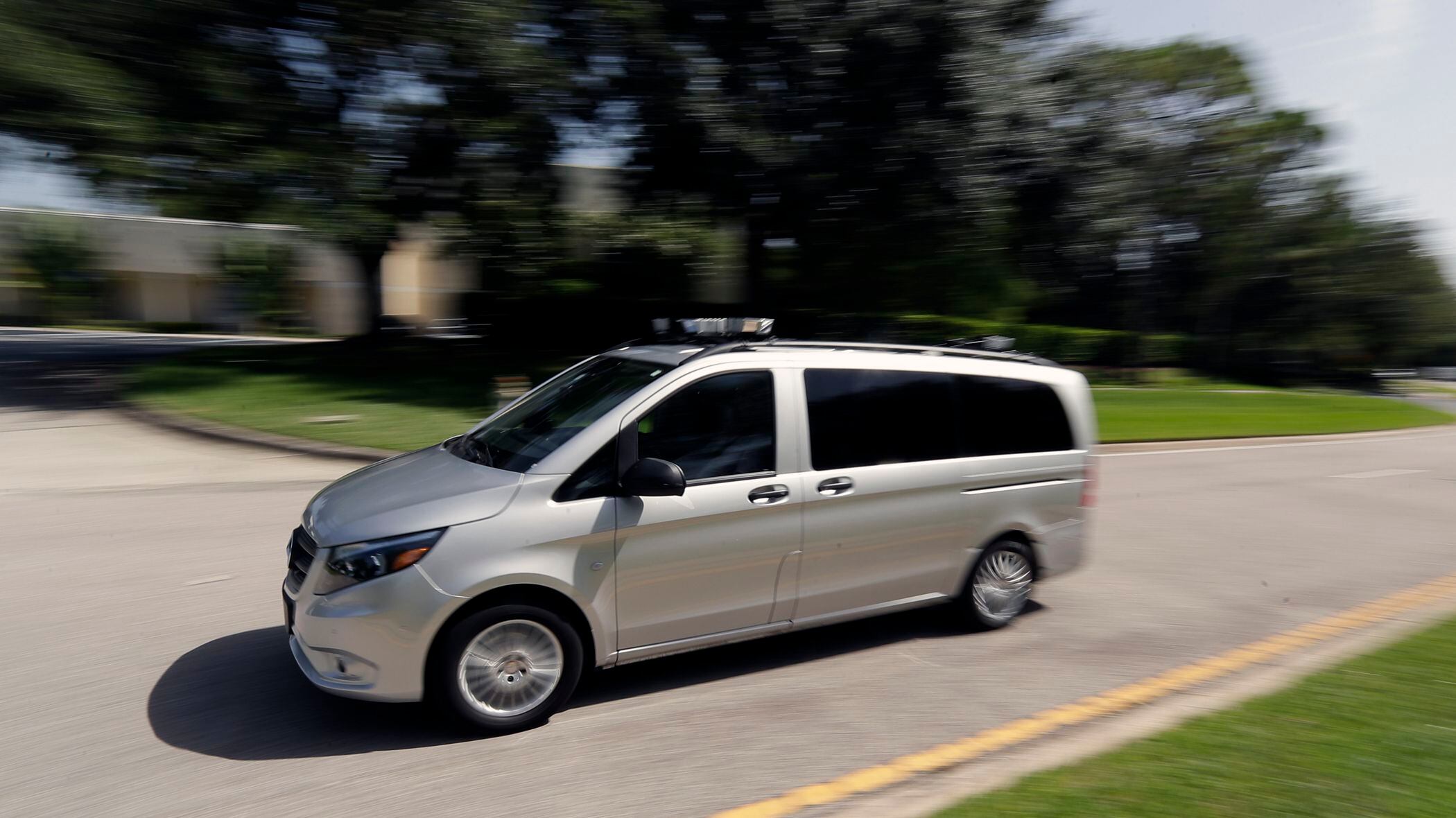
A Luminar Technologies car equipped with LiDAR (light detection and radar) sensors on the roof demonstrates technology now being used in driverless vehicles that many automotive companies are using as part of global research during a demonstration for the Automated Vehicles Symposium, Monday, July 15, 2019, in Orlando, Fla. (AP Photo/John Raoux)
Luminar Technologies ($LAZR) has completed its merger with a special purpose acquisition company (SPAC), bringing the company public on the Nasdaq on Thursday.
The deal makes the 25-year-old founder and CEO Austin Russell one of the world's youngest billionaires and among the first in the emerging self-driving market.
The company specializes in what's called LIDAR or light detection and ranging technology, which is critical for self-driving cars to understand their surroundings.
"We built a custom sensor that can see and understand the world accurately and reliably around it in 3D by sending out laser pulses measuring the exact distance of different things down to centimeter-levels of precision," Russell told Cheddar. "This is critical for allowing an autonomous car to see and understand its environment and to be able to safely navigate it accordingly."
The company, which spent much of its eight-year history developing the technology, has more recently moved into commercialization. It now has more than 50 commercial partners, including seven of the top-10 automakers, according to Russell.
He added that Luminar has its sights on three main verticals: consumer vehicles, trucking, and robo-taxis.
Current deals include one with Volvo, which plans to release consumer vehicles using the technology for autonomous highway driving in 2022. Another is with Daimler Trucks, which will employ LIDAR tech for autonomous long-range trucking.
As for when self-driving cars will become more mainstream, Russell offered this perspective: "I think for self-driving cars you'll start to see it on the consumer vehicle and the trucking side, really at true large scale, by the end of the decade," he said, though the young entrepreneur conceded that this ultimately may be a "conservative timeline."
The SPAC, Gores Metropoulos, saw shares jump nearly 30 percent Thursday following the merger.
YouTube will offer creators a way to rejoin the streaming platform if they were banned for violating COVID-19 and election misinformation policies that are no longer in effect.
Lukas Alpert of MarketWatch explores how networks, brands, and ad buyers absorb the shockwaves when late‑night show hosts are suddenly cut — and brought back.
A new poll finds U.S. adults are more likely than they were a year ago to think immigrants in the country legally benefit the economy. That comes as President Donald Trump's administration imposes new restrictions targeting legal pathways into the country. The Associated Press-NORC Center for Public Affairs Research survey finds Americans are more likely than they were in March 2024 to say it’s a “major benefit” that people who come to the U.S. legally contribute to the economy and help American companies get the expertise of skilled workers. At the same time, perceptions of illegal immigration haven’t shifted meaningfully. Americans still see fewer benefits from people who come to the U.S. illegally.
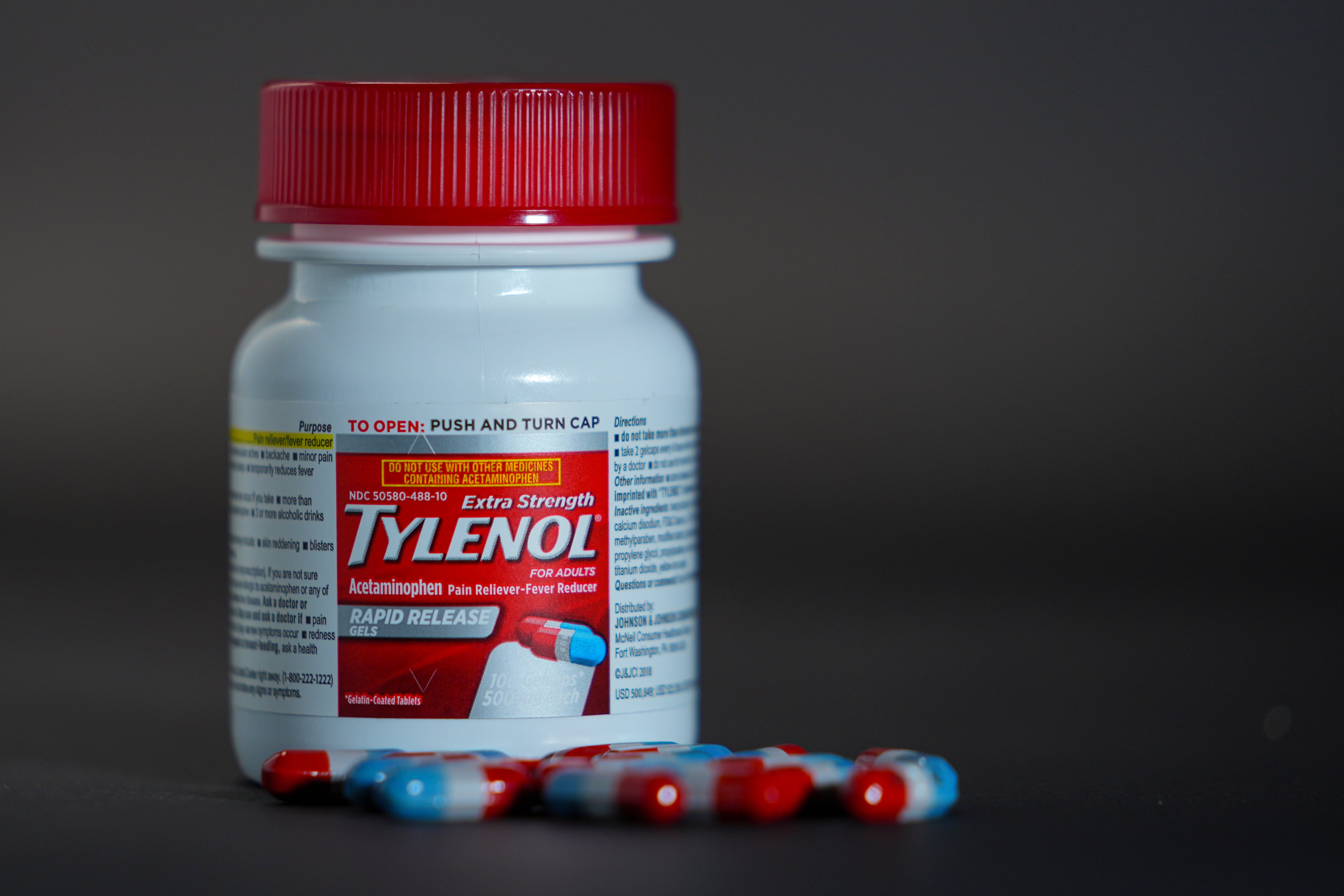
Shares of Tylenol maker Kenvue are bouncing back sharply before the opening bell a day after President Donald Trump promoted unproven and in some cases discredited ties between Tylenol, vaccines and autism. Trump told pregnant women not to use the painkiller around a dozen times during the White House news conference Monday. The drugmaker tumbled 7.5%. Shares have regained most of those losses early Tuesday in premarket trading.
Scott Trench, host of the BiggerPockets Money Podcast, explores how recent rate cuts, high borrowing costs, and mortgage rates are reshaping U.S. real estate.
A look into how disruption, AI, and global economic trends are transforming the modern supply chain with Jeremy Jansen, Head of Supply Chain at Wells Fargo.