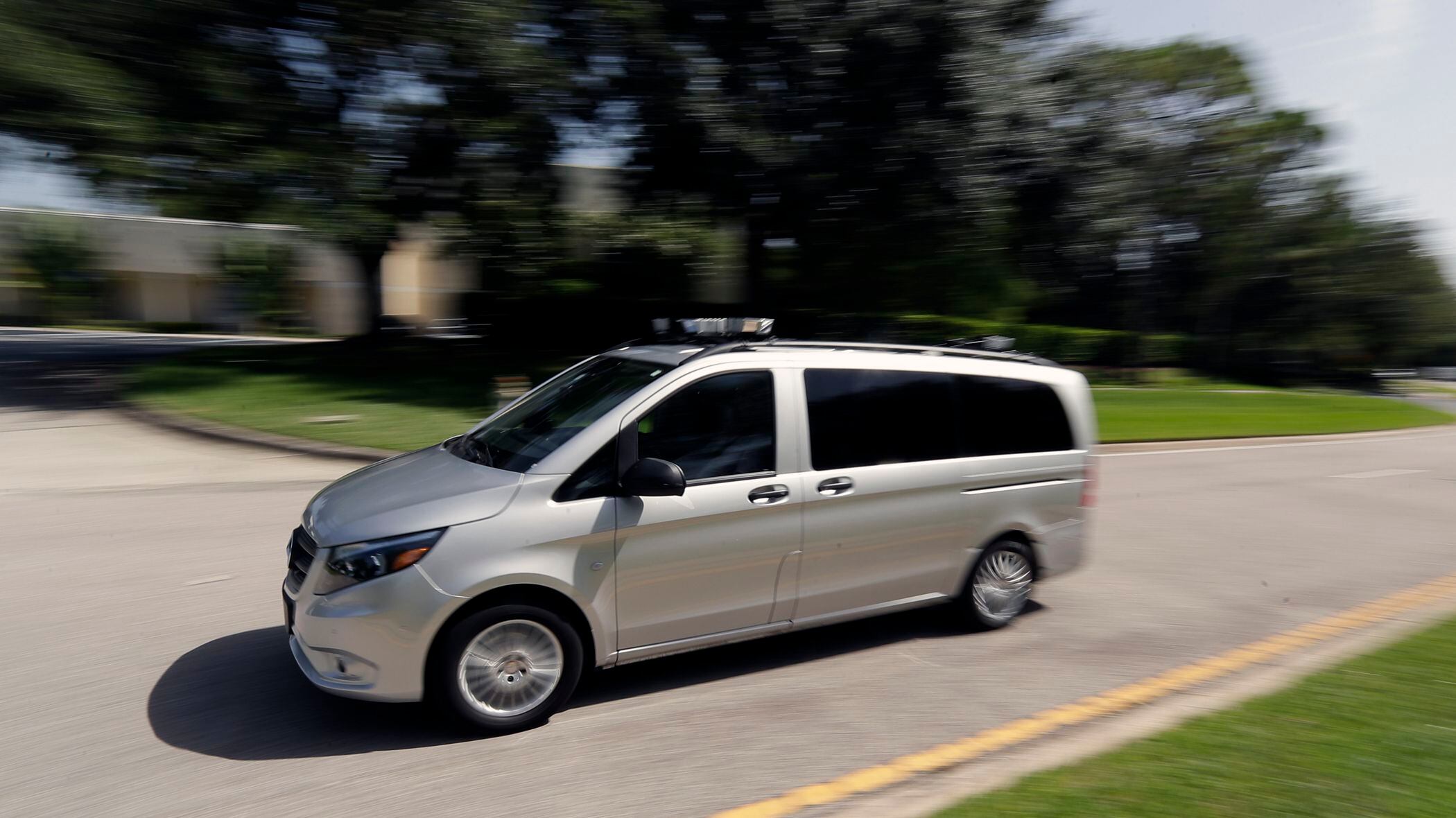
A Luminar Technologies car equipped with LiDAR (light detection and radar) sensors on the roof demonstrates technology now being used in driverless vehicles that many automotive companies are using as part of global research during a demonstration for the Automated Vehicles Symposium, Monday, July 15, 2019, in Orlando, Fla. (AP Photo/John Raoux)
Luminar Technologies ($LAZR) has completed its merger with a special purpose acquisition company (SPAC), bringing the company public on the Nasdaq on Thursday.
The deal makes the 25-year-old founder and CEO Austin Russell one of the world's youngest billionaires and among the first in the emerging self-driving market.
The company specializes in what's called LIDAR or light detection and ranging technology, which is critical for self-driving cars to understand their surroundings.
"We built a custom sensor that can see and understand the world accurately and reliably around it in 3D by sending out laser pulses measuring the exact distance of different things down to centimeter-levels of precision," Russell told Cheddar. "This is critical for allowing an autonomous car to see and understand its environment and to be able to safely navigate it accordingly."
The company, which spent much of its eight-year history developing the technology, has more recently moved into commercialization. It now has more than 50 commercial partners, including seven of the top-10 automakers, according to Russell.
He added that Luminar has its sights on three main verticals: consumer vehicles, trucking, and robo-taxis.
Current deals include one with Volvo, which plans to release consumer vehicles using the technology for autonomous highway driving in 2022. Another is with Daimler Trucks, which will employ LIDAR tech for autonomous long-range trucking.
As for when self-driving cars will become more mainstream, Russell offered this perspective: "I think for self-driving cars you'll start to see it on the consumer vehicle and the trucking side, really at true large scale, by the end of the decade," he said, though the young entrepreneur conceded that this ultimately may be a "conservative timeline."
The SPAC, Gores Metropoulos, saw shares jump nearly 30 percent Thursday following the merger.
Tesla reported a surprise increase in sales in the third quarter as the electric car maker likely benefited from a rush by consumers to take advantage of a $7,500 credit before it expired on Sept. 30. The company reported Thursday that sales in the three months through September rose 7% compared to the same period a year ago. The gain follows two quarters of steep declines as people turned off by CEO Elon Musk’s foray into right-wing politics avoided buying his company’s cars and even protested at some dealerships. Sales rose to 497,099 vehicles, compared with 462,890 in the same period last year.
Tom’s Guide Editor-in-Chief Mark Spoonauer breaks down Apple & Amazon's latest product drops—what's hot, what's hype, and what really matters for users.
InnerPlant CEO Shely Aronov reveals how engineered crops like soybeans and corn emit signals when stressed—offering farmers early warnings to boost yields.
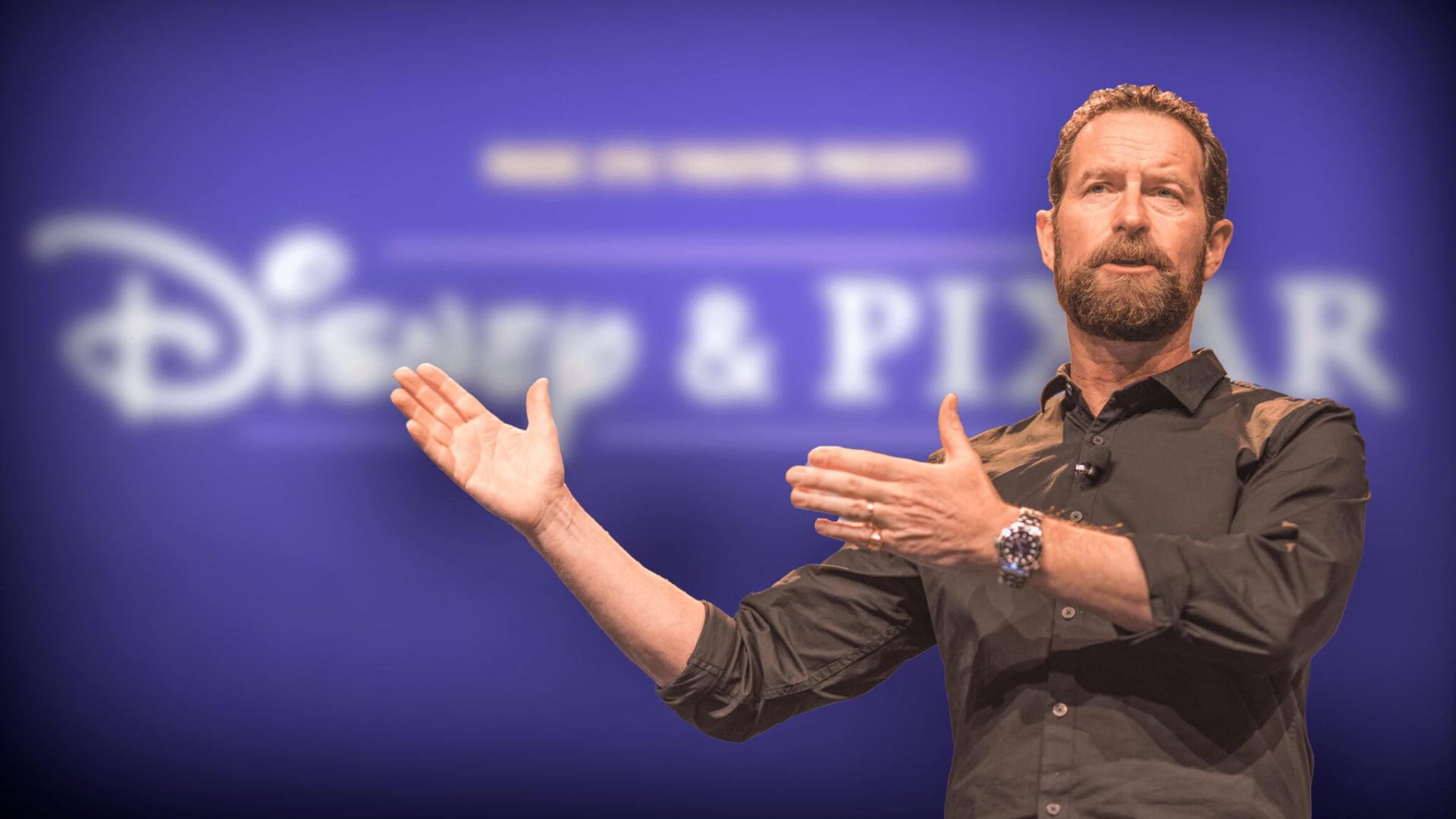
Payoneer CEO John Caplan discusses the implications of $100K H1B visa requirements—and how they could reshape tech talent, hiring, and U.S. competitiveness.
Electronic Arts, the video game maker of “Madden NFL,” “The Sims,” and other popular titles, is being acquired and taken private for about $52.5 billion in what could become the largest-ever buyout funded by private-equity firms.