By Tom Krisher
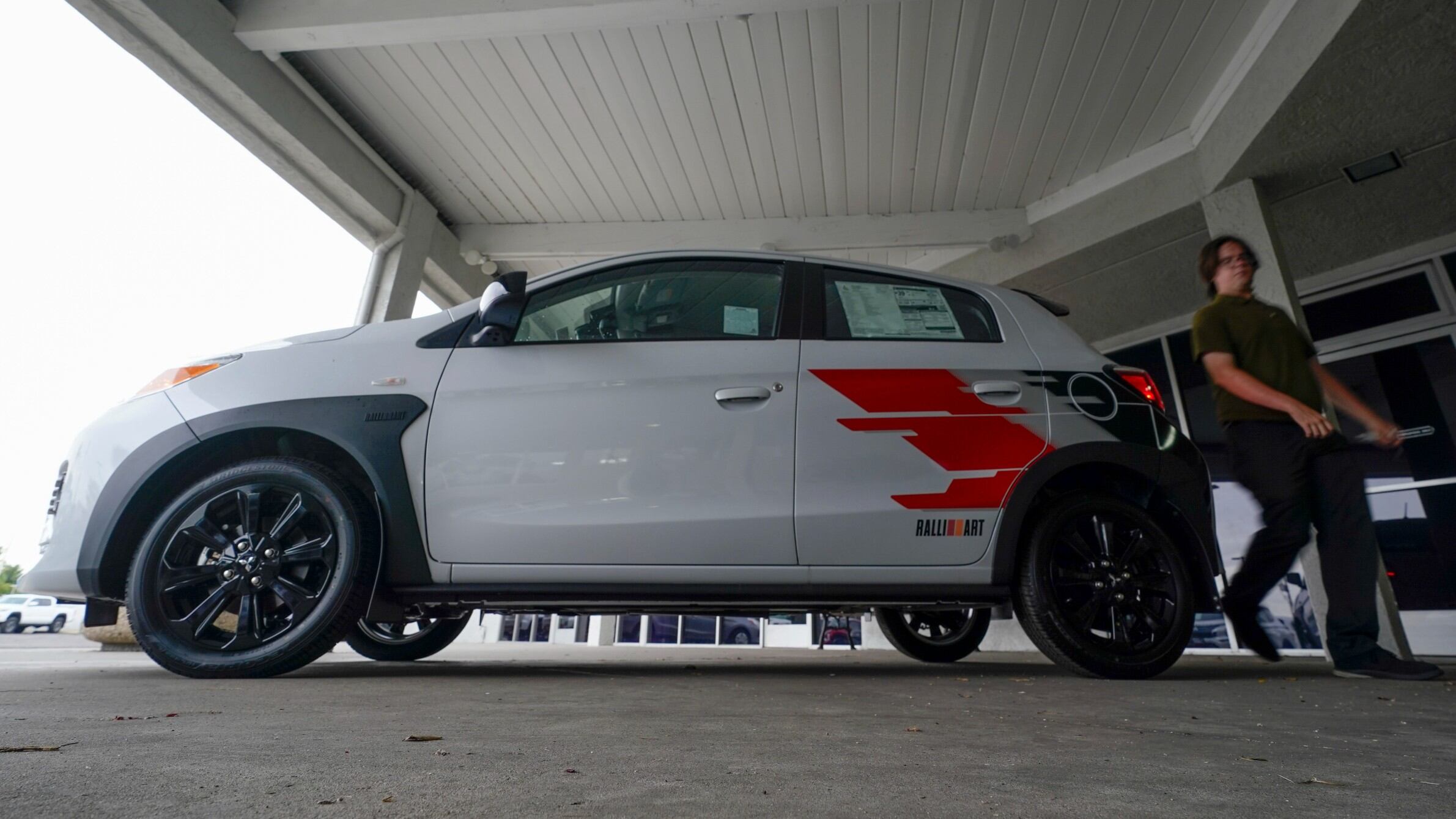
Just five years ago, a price-conscious auto shopper in the United States could choose from among a dozen new small cars selling for under $20,000. Now, there’s just one: The Mitsubishi Mirage. And even the Mirage appears headed for the scrap yard.
At a time when Americans increasingly want pricey SUVs and trucks rather than small cars, the Mirage remains the lone new vehicle whose average sale price is under 20 grand — a figure that once marked a kind of unofficial threshold of affordability. With prices — new and used — having soared since the pandemic, $20,000 is no longer much of a starting point for a new car.
This current version of the Mirage, which reached U.S. dealerships a decade ago, sold for an average of $19,205 last month, according to data from Cox Automotive. (Though a few other new models have starting prices under $20,000, their actual purchase prices, with options and shipping, exceed that figure.)
The Mirage, with hatchback and sedan versions, costs less than half of what the average U.S. new vehicle does. That average is now just above $48,000 — 25% more than before the pandemic struck three years ago.
“I just won’t pay that kind of price,” said Karen Schaeppi of suburban Minneapolis, who bought a red Mirage sedan last month for around $19,000. Schaeppi, who is 78, said she could have afforded an average-priced new vehicle. But because she's only 5 feet tall, she wanted a small car so she could see easily over the hood.
When she set out to replace her 2008 Ford Focus, Schaeppi was surprised to find no small cars available at the dealers she visited — at any price.
“There was nothing that existed," she said. “Not even close.”
The scarcity of small cars at dealerships helps explain why the average new vehicle costs so much: Detroit's Big Three automakers — General Motors, Stellantis and Ford — began to jettison the compact and subcompact car business about five years ago. Low profit margins for small cars and consumers' increasing shift to SUVs and trucks made the decision an easy one. Likewise, Toyota and Honda later halted U.S. sales of their subcompacts.
Then a pandemic-related computer-chip shortage slashed global auto production. Vehicles were suddenly in short supply at a time of high demand. Prices shot up.
Another factor that has swollen average prices is that 32 models in the United States now have selling prices above $100,000, according to Cox. As recently as 2018, only 12 models sold for over 100 grand. At an average sale price of $29,000, even most used vehicles cost more than a new Mirage.
People like Andrew Lang of Flint, Michigan, feel priced out of the market entirely. Lang, 26, said there's no way he could afford a new car right now, not even a Mirage.
“I don't make enough money,” he said,
Lang spoke after stepping out of his 2009 Chevrolet Impala in a grocery store parking lot near Ypsilanti. The Impala, with cloudy headlights, a crack in the front bumper and a dent in right side of the trunk, has 150,000 miles on it. Lang, an information technology coordinator, said he doesn't know what he'd do if he had to replace it. He would have to buy a used car — if he could find something affordable.
At White Bear Mitsubishi near St. Paul, Minnesota, where Schaeppi bought her vehicle, used cars are the main competition for the Mirage, according to Richard Herod III, the dealership's managing partner. But because so few new small cars were sold in recent years, he said, the used-vehicle selection is low and prices are high.
A new Mirage, which costs about the same as a 4-year-old Chevrolet Cruze or Mazda 3, has a five-year, 60,000-mile bumper-to-bumper warranty. Most used cars that age, Herod said, no longer include such warranties. The Mirage gets roughly 39 miles to the gallon, among the highest of any vehicle in the United States that isn't hybrid or electric.
Still, the horsepower in its three-cylinder engine amounts to a tepid 76.
“It’s not going to win any drag races," Herod said. "It’s not going to make you more popular at school. It’s the last honest affordable car in America.”
Despite the low price, U.S. sales of the Mirage have been sluggish. Mitsubishi sold only 5,316 in the first half of the year — 44% below the same period in 2022.
And it might not be available at all in a couple of years. The trade publication Automotive News reported last week that Mitsubishi will stop selling the Mirage by mid-decade. Mitsubishi, part of the Nissan-Renault alliance, declined to comment. But its website says production of the Mirage in Thailand, where it is built, is ending.
Once the Mirage disappears, Mitsubishi's least expensive vehicle would be the Outlander Sport small SUV. It starts around $24,600, which includes shipping.
Michelle Krebs, an analyst at Cox Automotive, said she thinks sales of the Mirage would be stronger if more customers knew about it.
“There aren't that many Mitsubishi dealers, and they don't have a very loud voice in the advertising world,” she said.
In addition, Krebs said, Mitsubishi buyers tend to have lower-than-average credit scores, and many of them have been priced out of the auto market entirely because higher loan rates have sent monthly payments surging.
A buyer who put down a 10% payment at the average Mirage sales price of $19,205 would owe roughly $365 each month for 60 months at a 7% loan rate.
The latest data suggests that Mitsubishi's decision to phase out the Mirage might be premature. Overall sales of small cars, after having dropped in seven of the past 10 years, are up 11.7% in the first half of the year. Some of that gain may reflect more interest from consumers concerned about higher gas prices, Krebs said, but most of it represents fleet sales to rental car companies.
“It's not going to be where it used to be,” she said of small-car purchases.
Mitsubishi can afford to sell the Mirage for less than its competitors do for similar vehicles because it's such an old model that money to develop it has long since been spent, said Sam Abuelsamid, an analyst for Guidehouse Insights.
Low-wage labor is another factor: Factory workers in Thailand make only about $16 a day — far less than unionized automakers earn in the United States and slightly less than in Mexico.
Even as the Mirage appears likely to be phased out, some other cars and SUVs have average sales prices only slightly above $20,000. They include the Kia Rio, the Nissan Versa, the Hyundai Venue and the Nissan Sentra. According to Cox, their prices range from $20,157 for the Rio to $23,994 for the Sentra.
As the sub-$20,000 new car disappears, Krebs suggests that buyers who need affordable transportation consider certified pre-owned small cars, which can be reasonably priced and include at least a year's warranty.
Krebs said she expects new-auto prices to drop slightly as factories produce more vehicles, likely forcing automakers to offer discounts. Price declines among electric vehicles, led by Tesla, have helped lower overall auto prices, too.
But don't expect the return of the $20,000 new car.
“I can't imagine that unless a Chinese automaker came in and sold cheap,” Krebs said. "Politically, that doesn't seem likely."
Jintamas Saksornchai in Bangkok, Thailand; Yuri Kageyama in Tokyo; and Mark Stevenson in Mexico City contributed to this report.