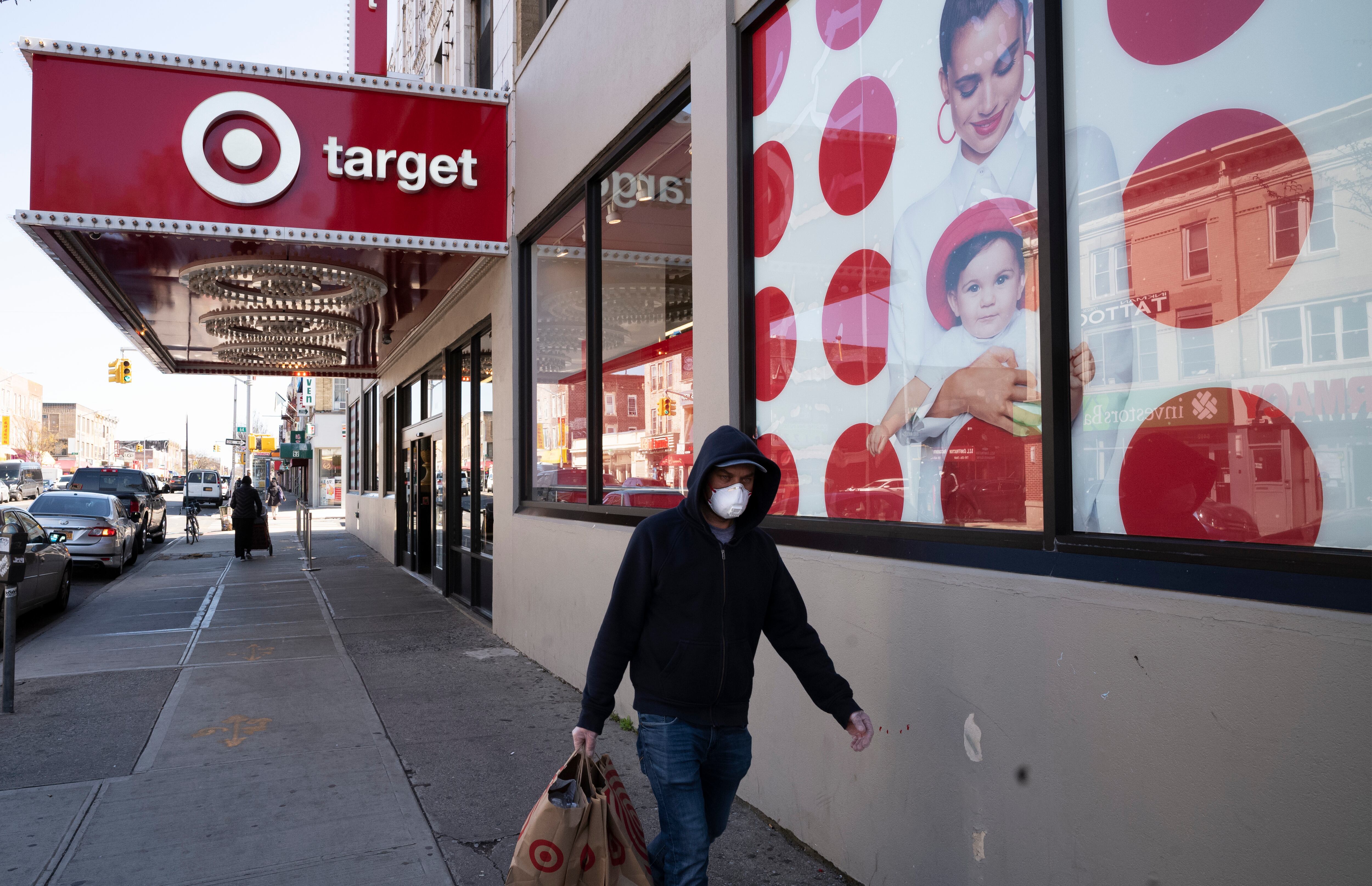
In this April 6, 2020 file photo, a customer wearing a mask carries his purchases as he leaves a Target store during the coronavirus pandemic in the Brooklyn borough of New York. Target has joined a growing list of major retailers that will require customers at all their stores to wear face coverings. The Minneapolis, Minnesota-based discounter said Thursday, July 16, that the policy will go into effect Aug. 1.(AP Photo/Mark Lennihan, File)
By Anne D'Innocenzio
Two major retailers on Thursday joined the growing list of national chains that will require customers to wear face masks regardless of where cities or states stand on the issue.
Target's mandatory face mask policy will go into effect Aug. 1, and all CVS stores will begin requiring them on Monday.
More than 80 percent of Target's 1,800 stores already require customers to wear masks due to local and state regulations. Target will hand out masks at entrances to those who need them.
The announcements come one day after the nation's largest retailer, Walmart, said that it would mandate face shields for all customers starting Monday.
Starbucks, Best Buy, Kohl's, and Kroger Co. have also announced mandatory masks nationwide.
Retailers have hesitated to make masks mandatory nationwide out of fear of angering some customers over what, even in a pandemic, has become a political issue.
They have been reluctant to put employees in the position of becoming enforcers. Confrontations with customers and store employees have played out in multiple incidents caught on video.
It was difficult to enforce such rules even in states that mandate face masks. However, the recent surge of new virus cases — particularly in Florida, California, Texas, and Arizona — has left them with no choice, retail experts say.
"To be clear, we're not asking our store employees to play the role of enforcer, " said Jon Roberts, the chief operating officer at CVS. "What we are asking is that customers help protect themselves and those around them by listening to the experts and heeding the call to wear a face covering."
As commercial options tighten, more travelers are turning to private aviation. Wheels Up CEO George Mattson breaks down capacity and demand challenges.
Layoffs, hiring slowdowns, and shifting skill demands dominate this year’s job talk. LinkedIn’s Kory Kantenga explains what workers should watch for next.
Retailers face tariffs and cost challenges this holiday season. Wells Fargo's Lauren Murphy shares insights on pricing, promotions, and shopping trends.
Dateability, founded by sisters Jacqueline and Alexa Child, is the only dating app for disabled and chronically ill communities, fostering love without limits.
Some small grocery stores and neighborhood convenience stores are eager for the U.S. government shutdown to end and for their customers to start receiving federal food aid again. Late last month, the Trump administration froze funding for the SNAP benefits that about 42 million Americans use to buy groceries. The U.S. Department of Agriculture says about 74% of the assistance was spent last year at superstores like Walmart and supermarkets like Kroger. Around 14% went to smaller stores that are more accessible to SNAP beneficiaries. A former director of the United Nations World Food Program says SNAP is not only a social safety net for families but a local economic engine that supports neighborhood businesses.
Andy Baehr, Head of Product at CoinDesk Indices, breaks down crypto’s Black Friday crash, Bitcoin dipping under $100K, and what’s driving the market rout.