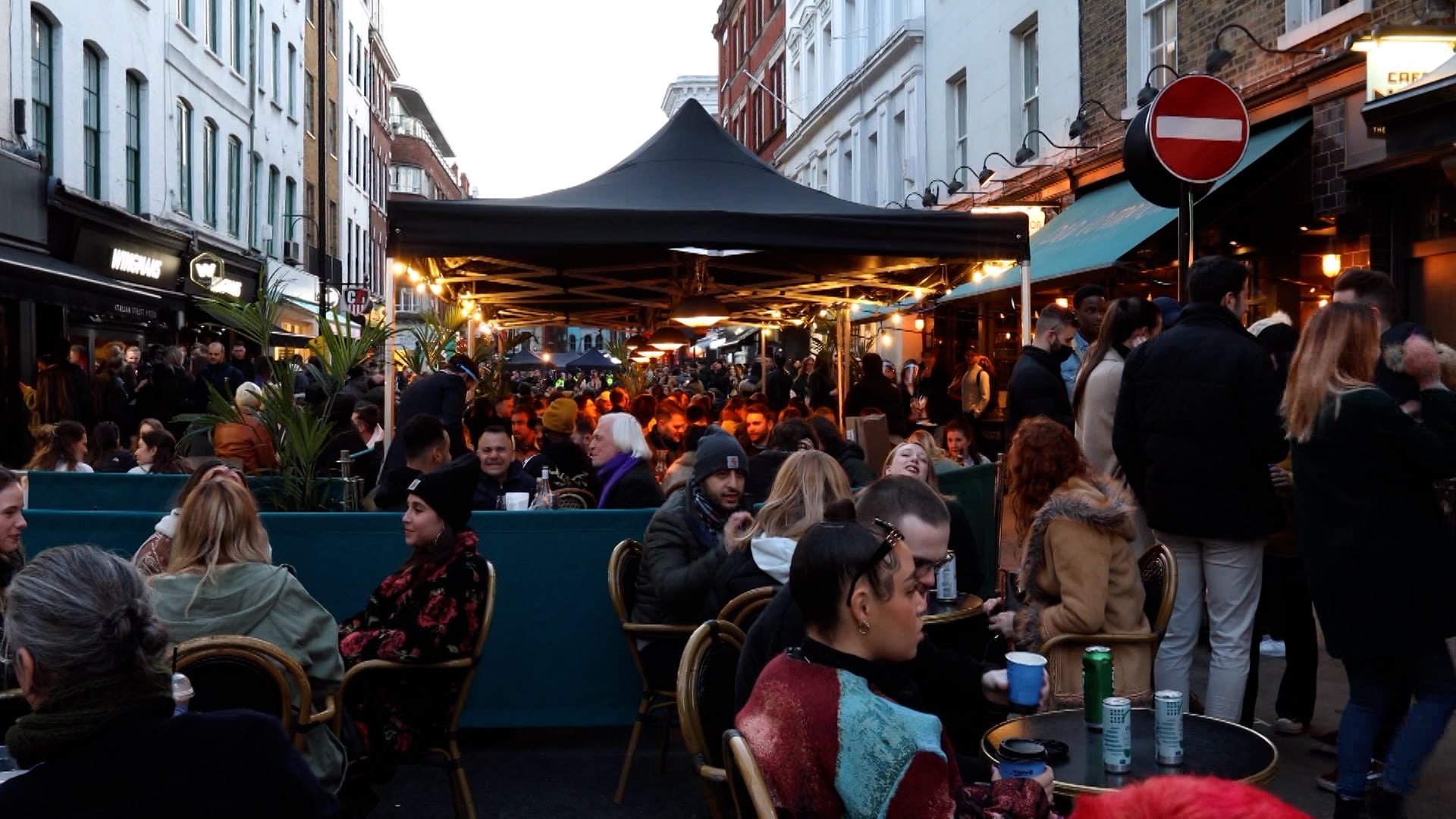
With the threat of holiday-related COVID-19 spread passed, restaurants across New York are reopening for indoor dining — except for restaurants in the state's biggest city. New York City restaurateurs are fighting back for their very survival. Seaport House owner and executive chef Kian Khatibi is pushing on with a lawsuit, filed in December, demanding immediate reopening of indoor dining.
Khatibi opened Seaport House, a seafood joint in the historic South Street Seaport district, on October 31 in the thick of the COVID-19 pandemic. Building out and opening a restaurant amid the pandemic was no cakewalk, but neither is operating.
"Right now, you know, we're running on an empty tank. Every day pays our bills. And that's about it," he said.
The new restaurant got to enjoy less than two months of indoor dining, albeit at significantly reduced capacity, before New York Gov. Andrew Cuomo cracked down again. As of mid-December, indoor dining closed down again, indefinitely, as COVID-19 cases spiked across the state and nation.
But the data behind the governor's decision didn't sit well with Khatibi, who is also a licensed attorney. According to data collected by the state, bars and restaurants are responsible for roughly 1.4 percent of new coronavirus infections. By contrast, the top contributor to spread, private gatherings, accounts for a whopping 74 percent of infections.
He decided to sue, arguing that indoor dining saves lives by giving people something to do other than gather in private homes.
"People are congregating," said Migir Ilganayev, Khatibi's co-council on the case. "By shutting down indoor dining, places that are safe, that are ventilated, that provide UVC lights in the ceilings, open windows — when you take that away from the people, especially during the holiday season, they'll find a place to go."
Although many cases questioning the constitutionality of lockdown orders have been slapped down by judges, Ilganayev said he thinks they have a chance because "numbers don't lie."
The case is heading to court for a preliminary injunction hearing on Jan. 21.
The coronavirus pandemic has been devastating to the restaurant industry, which even in the best of times is a business with very slim margins. More than 1,000 restaurants have shut down permanently in New York City, alone, according to Eater.
A relative newcomer to New York City's restaurant scene, Seaport House is getting by, thanks largely to an expensive outdoor seating installation. But even the optimistic Khatibi knows times ahead will be tough if indoor dining remains shut down amid winter.
"You know, we just have to make it to March," he said.
Applications for U.S. unemployment benefits rose last week, but remain near historically low levels, reflecting relatively few layoffs across the economy
Marc DeBevoise, Incoming CEO of Brightcove, talks about the company's position within the streaming space and what the overall industry needs to do to attract more enterprise clients.
As the Beijing winter Olympics start to wind down, its ratings are heading towards a historic low. An average of only 12.3 million viewers per day have tuned into NBC to watch the games, compared with about 23 million viewers for the 2018 games in South Korea. Seth Schachner, managing director of StratAmericas and digital business executive, breaks down what could be behind this trend.
As coronavirus cases decline, many people are going out again, eating at restaurants, taking long-delayed vacations, attending concerts, and more. But, despite social activities returning to normal, many companies are still working remotely. In fact, only a third of U.S. employees have returned to the office, according to Kastle Systems, which monitors building-access cards. Brian Kropp, chief of research for Gartner's HR practice, joined Cheddar's Opening Bell to discuss the state of the return-to-work debate.
Matthew Tuttle, CEO & Chief Investment Officer at Tuttle Capital, breaks down the economic factors impacting the technology sector and the future pricing power of Big Tech.
Inflation rose 7.5% percent from last January to this January, higher than expected and the fastest rate of growth in 40 years. Consumer prices were up 0.6% percent from the previous month, with increases in food, electricity, and shelter as the biggest drivers. Veronique De Rugy, senior research fellow of the Mercatus Center at George Mason University, joined Cheddar to give her biggest takeaways on the latest CPI report.
Jason Ware, Chief Investment Officer at Albion Financial Group, talks about the sectors to be affected by higher interest rates and highlights the pockets within tech that have room for growth.
Matthew Tuttle, CEO and Chief Investment Officer at Tuttle Capital Management, talks about the geopolitical and economic uncertainty impacting market performance.
Chad Oviatt, Director of Investment Management at Huntington National Bank, breaks down the impact of the inflationary pressure on consumer sentiment and highlights areas of growth going forward.
Wholesale prices rose 9.7% year-over-year in January, yet another sign of rising inflation. This comes as inflation continues to push higher, the Fed considers hiking interest rates, and the conflict in Ukraine threatens to raise the costs of living in the U.S. even higher. John Leer, chief economist at Morning Consult joined Cheddar for more insight.