With the threat of holiday-related COVID-19 spread passed, restaurants across New York are reopening for indoor dining — except for restaurants in the state's biggest city. New York City restaurateurs are fighting back for their very survival. Seaport House owner and executive chef Kian Khatibi is pushing on with a lawsuit, filed in December, demanding immediate reopening of indoor dining.
Khatibi opened Seaport House, a seafood joint in the historic South Street Seaport district, on October 31 in the thick of the COVID-19 pandemic. Building out and opening a restaurant amid the pandemic was no cakewalk, but neither is operating.
"Right now, you know, we're running on an empty tank. Every day pays our bills. And that's about it," he said.
The new restaurant got to enjoy less than two months of indoor dining, albeit at significantly reduced capacity, before New York Gov. Andrew Cuomo cracked down again. As of mid-December, indoor dining closed down again, indefinitely, as COVID-19 cases spiked across the state and nation.
But the data behind the governor's decision didn't sit well with Khatibi, who is also a licensed attorney. According to data collected by the state, bars and restaurants are responsible for roughly 1.4 percent of new coronavirus infections. By contrast, the top contributor to spread, private gatherings, accounts for a whopping 74 percent of infections.
He decided to sue, arguing that indoor dining saves lives by giving people something to do other than gather in private homes.
"People are congregating," said Migir Ilganayev, Khatibi's co-council on the case. "By shutting down indoor dining, places that are safe, that are ventilated, that provide UVC lights in the ceilings, open windows — when you take that away from the people, especially during the holiday season, they'll find a place to go."
Although many cases questioning the constitutionality of lockdown orders have been slapped down by judges, Ilganayev said he thinks they have a chance because "numbers don't lie."
The case is heading to court for a preliminary injunction hearing on Jan. 21.
The coronavirus pandemic has been devastating to the restaurant industry, which even in the best of times is a business with very slim margins. More than 1,000 restaurants have shut down permanently in New York City, alone, according to Eater.
A relative newcomer to New York City's restaurant scene, Seaport House is getting by, thanks largely to an expensive outdoor seating installation. But even the optimistic Khatibi knows times ahead will be tough if indoor dining remains shut down amid winter.
"You know, we just have to make it to March," he said.
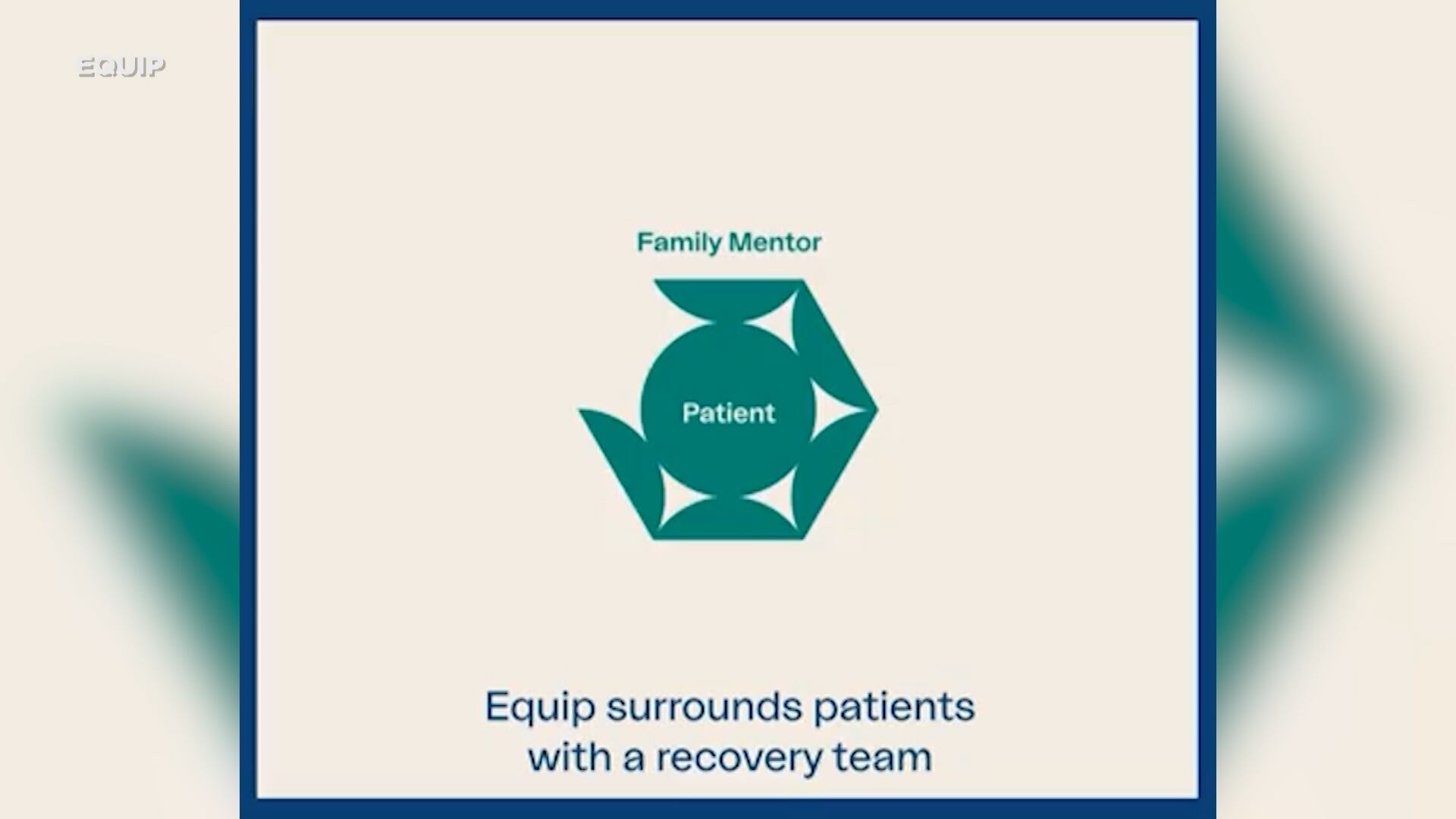
Equip is a virtual treatment platform for eating disorders, and recently raised $58 million in a Series B round led by The Chernin Group. The company aims to revolutionize treatment for eating disorders by delivering virtual care teams and clinical expertise directly to families' homes. Equip says the need for its platform has only been exacerbated by the COVID-19 pandemic. The National Eating Disorder Association's helpline has had a 107% increase in contacts since the start of the pandemic. Kristina Saffran, CEO and co-founder of Equip, joins Cheddar News' Closing Bell to discuss.
U.S. stocks ended today's session sharply lower on the heels of rising geopolitical tensions between Russia and Ukraine. Melissa Brown, Managing Director of Applied Research at Qontigo, joins Cheddar News' Closing Bell to discuss.
President Joe Biden said Tuesday that the U.S. will begin to impose sanctions on Russia, calling recent troop movement into Ukraine an 'invasion.' Biden and other government officials including from the State Department have begun to classify the Russian troop movement as an invasion after Russian President Vladimir Putin ordered troops to two independent Ukrainian areas in an alleged "peacekeeping" mission — which the West considers an act of aggression. Biden said Russia will continue to pay 'an even steeper price' if it continues sending troops into Ukraine. What happens next? Will Putin find a way around these sanctions? Ariel Cohen, senior fellow at the Atlantic Council, joins Closing Bell to discuss Biden's remarks, how the West will protect Ukraine since it doesn't belong to NATO, and more.
Apple retail employees are reportedly looking to unionize, with groups at two locations so far coordinating with major national labor organizations and prepping to file paperwork with the National Labor Relations Board. This comes after a broader push for unionization as Starbucks workers in recent months have voted to unionize, and workers at Amazon are set to hold another vote soon. As the popularity of unions returns after a decades-long slump, will we see more retail and consumer-facing workforces move to unionize? Michael Farren, a research fellow at the Mercatus Center, joins Closing Bell to discuss Apple retail employees' efforts, what a union would mean inside Apple, the broader push for unionization, and more.
A just-released Harris Poll revealed that there are some differences of opinion among workers on returning to the office. The survey showed that 52 percent of women would still prefer to work from home versus 41 percent of men. The report also showed that 52 percent of black workers and 50 percent of women see it as being better when it comes to career advancement. Dr. Laura Morgan Roberts, professor of practice at the University of Virginia’s Darden School of Business, joined Cheddar News to explain the report. "The first set of observations are about infrastructure and flexibility. The second are about inclusion," she said. "And so what we've learned from many non-white workers are that they appreciate the opportunity to focus more on their tasks and to be buffered in a sense from some of the hostilities and the exclusive environment and practice that they had to navigate for many years in their in-person offices."