With the threat of holiday-related COVID-19 spread passed, restaurants across New York are reopening for indoor dining — except for restaurants in the state's biggest city. New York City restaurateurs are fighting back for their very survival. Seaport House owner and executive chef Kian Khatibi is pushing on with a lawsuit, filed in December, demanding immediate reopening of indoor dining.
Khatibi opened Seaport House, a seafood joint in the historic South Street Seaport district, on October 31 in the thick of the COVID-19 pandemic. Building out and opening a restaurant amid the pandemic was no cakewalk, but neither is operating.
"Right now, you know, we're running on an empty tank. Every day pays our bills. And that's about it," he said.
The new restaurant got to enjoy less than two months of indoor dining, albeit at significantly reduced capacity, before New York Gov. Andrew Cuomo cracked down again. As of mid-December, indoor dining closed down again, indefinitely, as COVID-19 cases spiked across the state and nation.
But the data behind the governor's decision didn't sit well with Khatibi, who is also a licensed attorney. According to data collected by the state, bars and restaurants are responsible for roughly 1.4 percent of new coronavirus infections. By contrast, the top contributor to spread, private gatherings, accounts for a whopping 74 percent of infections.
He decided to sue, arguing that indoor dining saves lives by giving people something to do other than gather in private homes.
"People are congregating," said Migir Ilganayev, Khatibi's co-council on the case. "By shutting down indoor dining, places that are safe, that are ventilated, that provide UVC lights in the ceilings, open windows — when you take that away from the people, especially during the holiday season, they'll find a place to go."
Although many cases questioning the constitutionality of lockdown orders have been slapped down by judges, Ilganayev said he thinks they have a chance because "numbers don't lie."
The case is heading to court for a preliminary injunction hearing on Jan. 21.
The coronavirus pandemic has been devastating to the restaurant industry, which even in the best of times is a business with very slim margins. More than 1,000 restaurants have shut down permanently in New York City, alone, according to Eater.
A relative newcomer to New York City's restaurant scene, Seaport House is getting by, thanks largely to an expensive outdoor seating installation. But even the optimistic Khatibi knows times ahead will be tough if indoor dining remains shut down amid winter.
"You know, we just have to make it to March," he said.
Breakthrough Energy Catalyst, a private-public fund backed by Bill Gates, is planning to invest up to $15 billion in clean technology initiatives across the U.S., UK, and European Union. It will target four key areas and help fund large projects that otherwise would not be financially possible. Bobby Hollis, Director of Breakthrough Energy Catalyst, joins Cheddar News' Closing Bell to discuss.
Student loan collection company Navient agreed to cancel $1.7 billion in debt and paid more than $140 million in other penalties to settle a lawsuit over abusive lending practices. Josh Shapiro, the attorney general of Pennsylvania who led negotiations in the settlement, joined Cheddar to go over the details of the company's predatory lending. "What Navient would do is charge [borrowers] these exorbitantly high rates, even though they knew people couldn't pay them or they would likely default on them," he explained.
An economic development agency, the Northwest Arkansas Council, is looking to draw technology professionals to their region of the Southern state with incentives like $10,000 worth of Bitcoin and a new bicycle. Nelson Peacock, president and CEO of the private nonprofit made up of companies like Walmart and Tyson Foods, joined Cheddar to talk about the program to further power his local economy. "By offering the payment in Bitcoin, we're looking to identify those people with interest and expertise in the underlying technologies, the blockchain technologies," he said.
Stocks closed mixed Friday with big bank stocks dragging on the Dow after a few lackluster earnings reports. Both the Nasdaq and the S&P 500 gained, but overall, stocks notched a second losing week in a row to start 2022. Tom Kozlik, Head of Research and Analytics at Hilltop Securities, joins Cheddar News' Closing Bell to discuss today's close, expectations for 2022 earnings reports, whether or not the COVID-19 omicron variant is being properly priced into markets, and more.
After months of investors turning to crypto as a hedge against inflation, instead of the traditional hedge of gold, one crypto exchange is working with a token creator to launch a digital coin backed by a physical asset. GCOIN gives customers a digital title of ownership to 99.99% pure physical gold which is stored in a secured vault. Brent de Jong, GCoin's founder and Kristin Boggiano, Co-Founder and President of CrossTower, a cryptocurrency exchange, join Cheddar News' Closing Bell to discuss the GCOIN rollout, customer interest, why crypto is used as an inflation hedge, and more.
Retail platform operator and delivery company, Foxtrot,
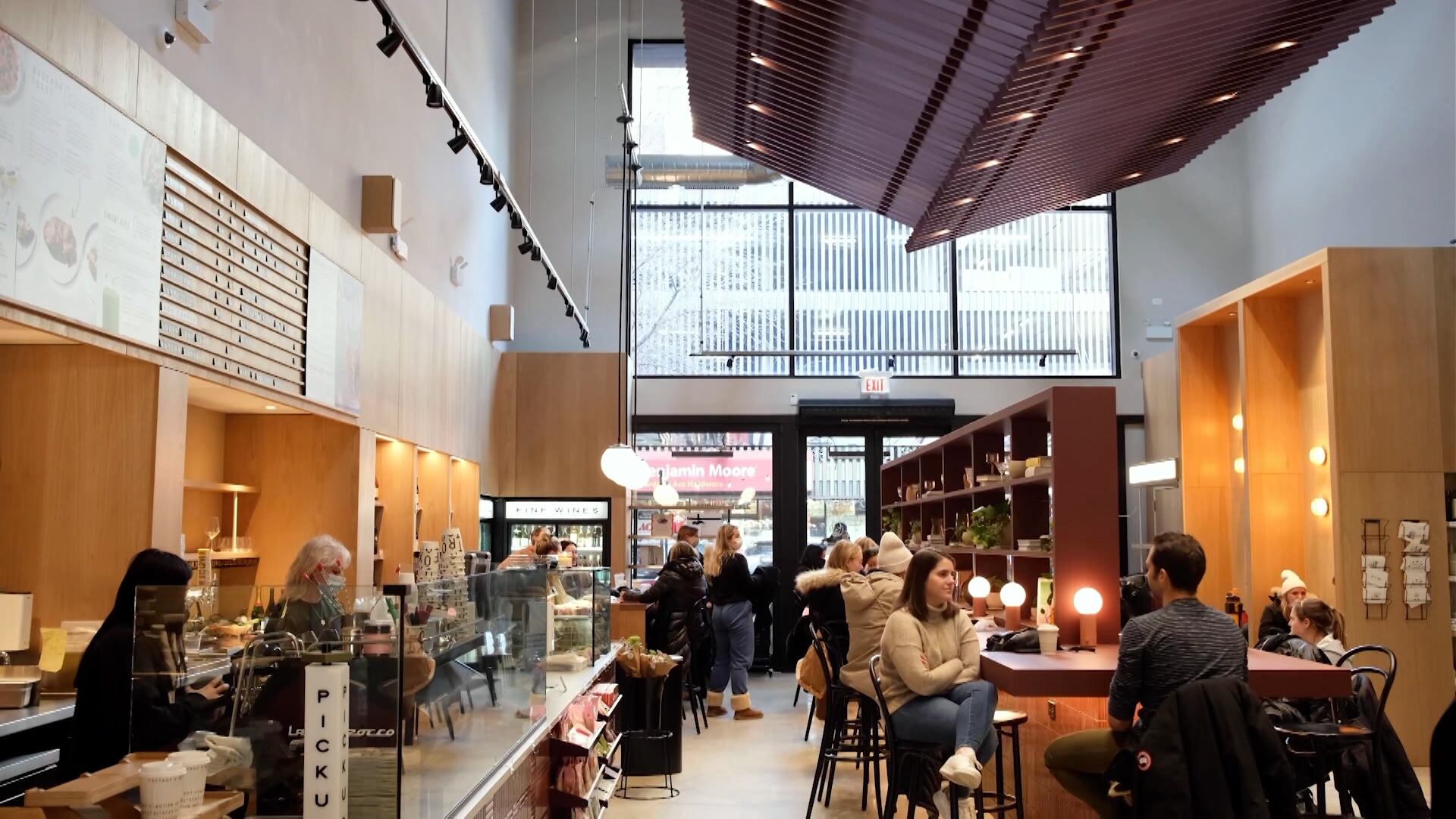
raised $100 million in a Series C round led by D1 Capital Partners. Foxtrot bills itself as the modern convenience store that combines what it calls in-store curated discovery with 30-minute delivery and 5-minute pickup. Since launching first as a digital-only delivery service, the company has since grown into a popular local retailer, opening 16 brick and mortar locations across Chicago, Dallas, and Washington, DC. Foxtrot co-founder and CEO Michael LaVitola joined Cheddar News' Closing Bell to discuss.