Twenty-six questions into day one of questioning, senators have largely directed inquiries to their own sides, assisting respective legal teams in poking holes in the opposition's case.
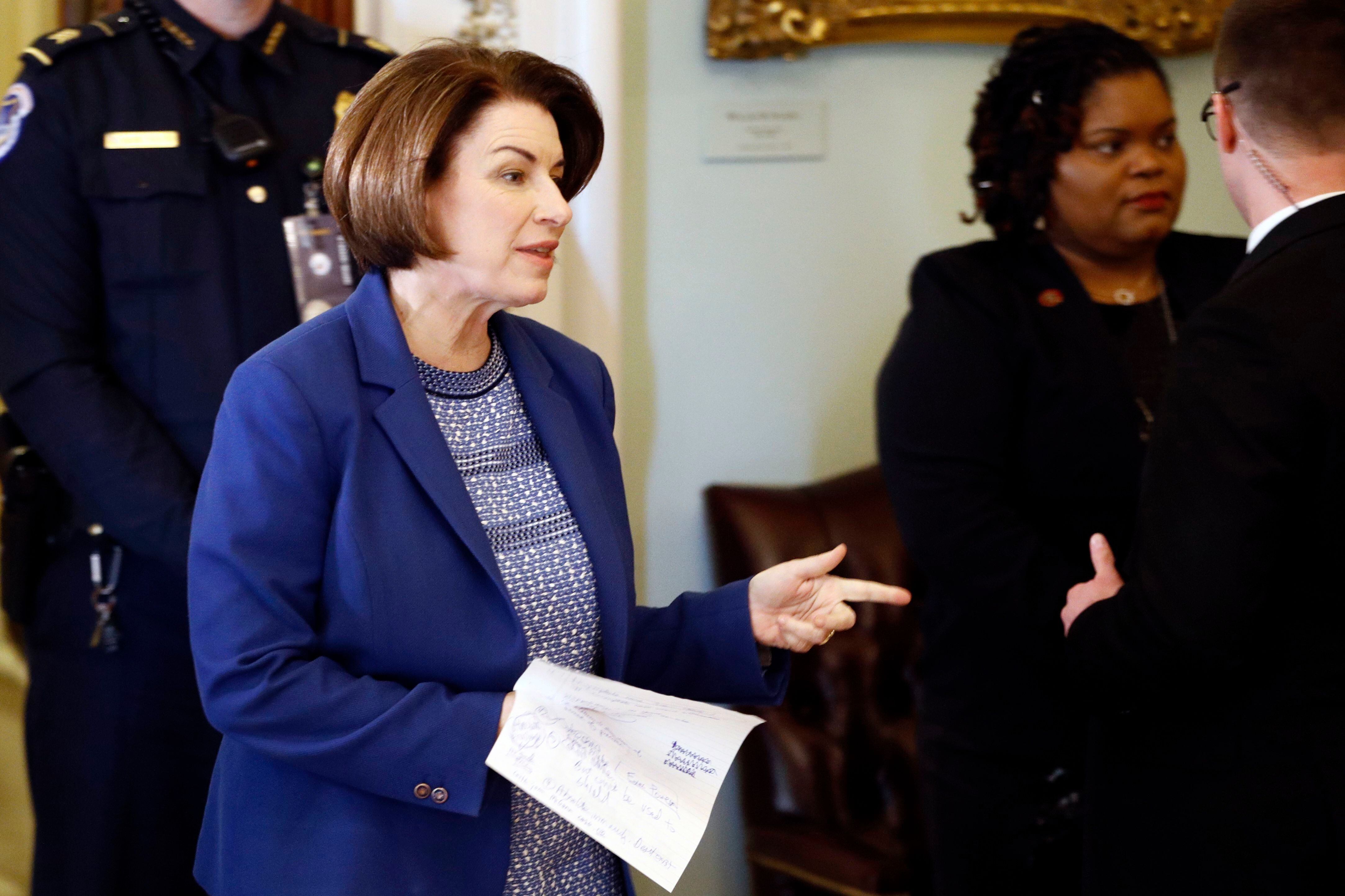
During the first break of the day, nearly three hours after questioning began, Sen. Amy Klobuchar (D-Minn.) told Cheddar she plans to ask a question about absolute immunity. The president has argued he has absolute immunity to bar testimony, though a federal judge ruled in November that former White House counsel Don McGahn must obey a subpoena compelling him to testify. The judge wrote at the time "with respect to senior-level presidential aides, absolute immunity from compelled congressional process simply does not exist."
The president's defense team has repeatedly sought to portray the president as needing the freedom to speak candidly with his advisors. However, House Managers have emphasized the president is not able to exercise blanket immunity.
"Some of the questions were planned ahead, but you can always adjust them," Klobuchar said. "I have one question that I want to focus on, on the absolute immunity issue, but if it's fully asked, maybe I'll switch to another one. You're not bound into what your question is. And then there's other questions that I have — you'll see that Senator Whitehouse is going to ask one of them. He and I shared the same question so he's asking on his behalf and my behalf."
Throughout the first portion of today's session, some senators appeared to have pre-written questions on cards while others, like Senators Lindsey Graham (R-S.C.) and Ted Cruz (R-Texas) exited the room to presumably discuss a question before posing one jointly. Others still, like Senators Martha McSally (R-Ariz.), Joni Ernst (R-Iowa), Richard Burr (R-N.C.), Jerry Moran (R-Kan.) and Kelly Loeffler (R-Ga.) seemed to have empty cards on their desks.
Senators must submit written questions to the Chief Justice and, alternating between parties, a Senator stands, asks Supreme Court Chief Justice John Roberts to hear his or her question, and a high school page carries the card to Roberts, who is facing the Senators from the elevated seat usually reserved for the Vice President. At one point Roberts paused while attempting to read a question from Republicans, as it seemed he was having trouble reading the hand-written question.
The Senate Press Gallery sits above the Republican side of the chamber, which allows better access to see the Republican Senators than the Democrat officials.
Alan Dershowitz, an attorney for the defense who came to today's session to answer questions about his testimony earlier this week, said anything a sitting president does to stay in power is in the national interest, emphasizing a very expansive view of presidential power. Lead House Manager and chairman of the House Intelligence Committee Rep. Adam Schiff (D-Calif 28th District) answered the final question of the early session pushing back against Dershowitz's argument and attempted to portray the president as believing himself to wield broad powers, accusing Trump of being a "president who identifies the state as being himself."
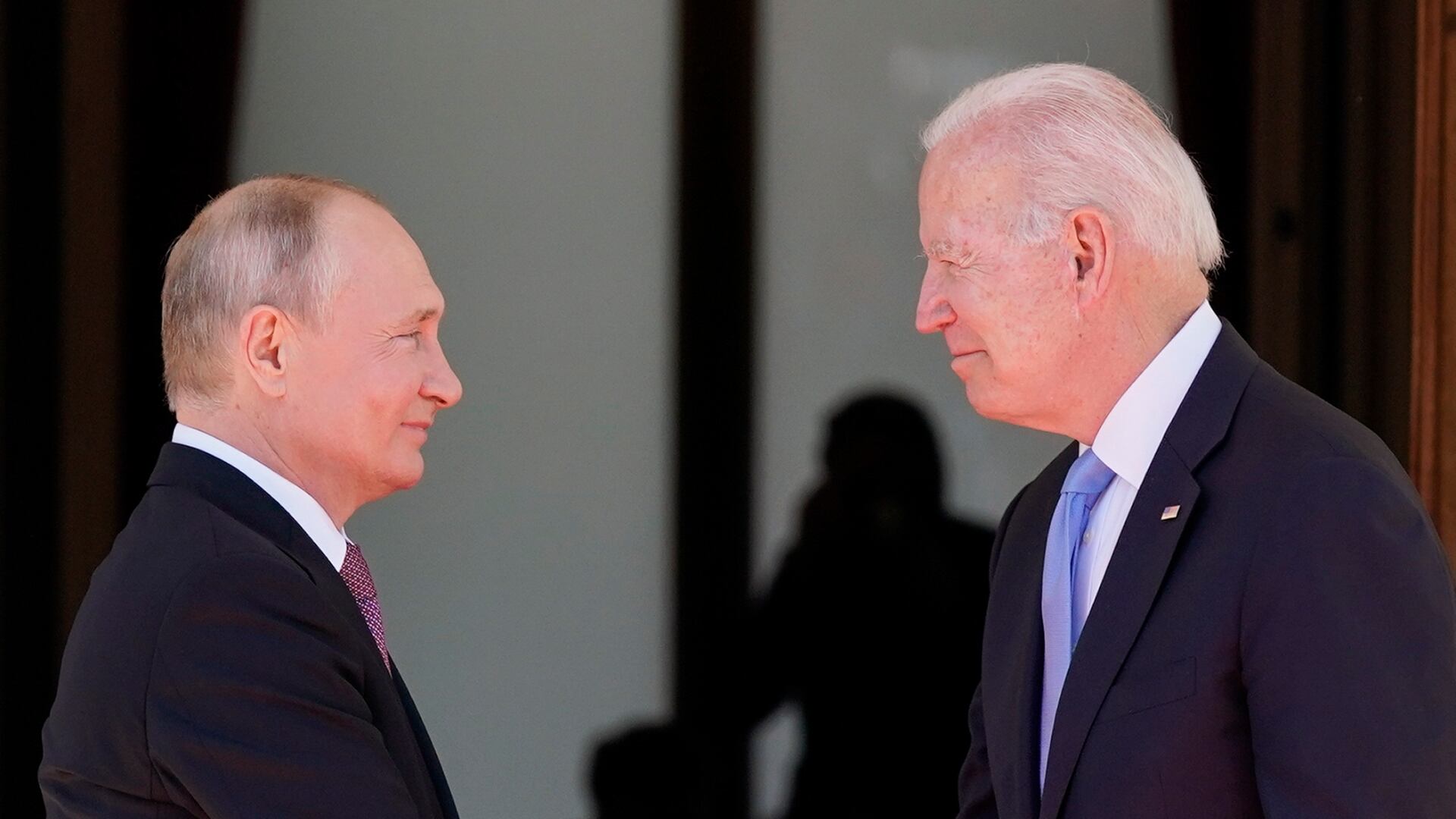
Face to face for just over two hours, President Joe Biden and Russia’s Vladimir Putin squared off in a secure video call Tuesday as the U.S. president put Moscow on notice that an invasion of Ukraine would bring enormous harm to the Russian economy.
Ahead of Instagram head Adam Mosseri's congressional hearing on the mental impact of the social platform on teens, the company announced a number of updates aimed at teen safety.
Troubled Chinese real estate giant Evergrande is once again nearing the brink of collapse. Shares of Evergrande sunk to a new record low on Monday, closing down 20 percent, as debt default fears resurfaced. Drew Bernstein, co-chairman at consultancy MarcumBP, joined Cheddar's Opening Bell to discuss. He said U.S. investors have to understand that "there is no company in China that's too big to fail, that's for sure," and that the Chinese government will be prioritizing the social welfare of the populace. Bernstein did note that it would be a managed collapse in some form.
Joan Greve, a politics reporter at The Guardian US, joined Wake Up With Cheddar to break down the implications of the Biden administration announcing a diplomatic boycott of the 2022 Beijing games in response to allegations of human rights abuses against Uyghur Muslims. She noted the significance of the move, assessing the already frayed relationship between the U.S. and China. "The Chinese have said that a boycott would be politically manipulative, and now they are actually threatening countermeasures," she said. "And that will certainly have an impact on the spirit of the games at the very least."
The Biden administration has reached an agreement with the Mexican government to resume the "Remain-in-Mexico" policy under court order. By reinstating a Trump-era border policy, asylum-seekers will be forced to stay in Mexico until their U.S. immigration court date. The program is set to resume on Monday. Ryan Devereaux, a reporter for The Intercept, joins Cheddar News to discuss.
The U.S. announced it will not send any official representation to the upcoming Beijing winter Olympics. Cheddar's Hena Doba speaks with East Asia expert Michael Swaine about the reasons behind the diplomatic move.
COVID-19 is still battering the nation's criminal justice system, causing a massive backlog in cases and delaying verdicts for months on end. This, combined with the fear of crowded prisons during a pandemic, has prompted many defendants to plead guilty in exchange for time served or probation. Tina Luongo, attorney-in-charge of the Criminal Defense Practice, joined Cheddar to discuss the court backlog, the rise in plea bargains, and why this was an issue long before the pandemic.
With so many high-profile court cases taking over the media, from the trial over the murder of Ahmaud Arbery to the trial of Kyle Rittenhouse to the ongoing Elizabeth Holmes trial, Cheddar took a look at these cases and why there is such a big interest in them. Rachel Fiset, a white collar criminal defense lawyer and partner with Zeiback, Fiset, and Coleman, and Bryan Hance, attorney-at-law, professor, and academic program director of the pre-law and paralegal studies program at National University, joined Cheddar for a roundtable discussion on why there is so much public interest in so-called courtroom drama.
Carlo and Baker discuss the sweeping new vaccine mandate in NYC that will target all private businesses. Plus, Trump's media venture gets its CEO and more.