The Supreme Court ruled Wednesday that a Pennsylvania public school wrongly suspended a student from cheerleading over a vulgar social media post she made after she didn't qualify for the varsity team.
The court voted 8-1 in favor of Brandi Levy, who was a 14-year-old high school freshman when she expressed her disappointment over not making the varsity cheerleading squad with a string of curse words and a raised middle finger on Snapchat.
Levy, of Mahanoy City, Pennsylvania, was not in school when she made her post, but she was suspended from cheerleading activities for a year anyway. In an opinion by Justice Stephen Breyer, the high court ruled that the suspension violated Levy's First Amendment freedom of speech rights.
But the justices did not foreclose schools from disciplining students for what they say off campus. An earlier federal appeals court ruling in this case would have barred public schools from punishing off-campus speech.
Despite ruling in Levy's favor, Breyer wrote that “we do not believe the special characteristics that give schools additional license to regulate student speech always disappear when a school regulates speech that takes place off campus. The school’s regulatory interests remain significant in some off-campus circumstances.”
The case drew extra interest at a time of remote learning because of the coronavirus pandemic and a rising awareness of the harmful effects of online bullying.
The case arose from Levy's posts, one of which pictured her and a friend with raised middle fingers and included repeated use of a vulgarity to complain that she had been left off the varsity cheerleading squad.
“F——— school f——— softball f——— cheer f——— everything,” she wrote near the end of her freshman year, from a local convenience store and on a Saturday. Now 18, Levy recently finished her first year of college.
Levy's parents filed a federal lawsuit after the cheerleading coach suspended her from the junior varsity team for a year. Lower courts ruled in Levy's favor, and she was reinstated.
The school district appealed to the Supreme Court after the broad appellate ruling that said off-campus student speech was beyond schools' authority to punish.
The dispute is the latest in a line of a cases that began with Tinker v. Des Moines, the Vietnam-era case of a high school in Des Moines, Iowa, that suspended students who wore armbands to protest the war. In a landmark ruling, the Supreme Court sided with the students, declaring they don’t “shed their constitutional rights to freedom of speech or expression at the schoolhouse gate.”
The court also held then that schools retained the authority to restrict speech that would disrupt the school environment.
Breyer wrote that Levy's case seemed less serious than its Vietnam-era predecessor.
“It might be tempting to dismiss B. L.’s words as unworthy of the robust First Amendment protections discussed herein. But sometimes it is necessary to protect the superfluous in order to preserve the necessary,” he wrote, using Levy's initials because that was how she was identified in the original lawsuit. Levy has granted numerous interviews allowing her name to be used.
Justice Samuel Alito wrote in a concurring opinion that school officials in Mahanoy got “carried away” in seeking to discipline Levy. “If today’s decision teaches any lesson, it must be that the regulation of many types of off-premises student speech raises serious First Amendment concerns, and school officials should proceed cautiously before venturing into this territory,” Alito wrote.
In dissent, Justice Clarence Thomas wrote that he would have upheld Levy's suspension.
While people have been spending more time on their phones throughout the pandemic, a new report shows they were also spending more money as well. A review from Sensor Tower on the global app ecosystem this year found that the app economy will see record consumer spending in 2021, up nearly 20% from 2020. Sensor Tower director of sales and financial institutions Anthony Bartolacci joins Cheddar News' Closing Bell to break down the report.
The future of gambling in Florida recently suffered a major setback after a federal appeals court rejected a request from the state and the Seminole Tribe to allow online sports betting in the state. Now, the tribe has been forced to stop taking bets on its Hard Rock sportsbook app. ESPN gaming writer David Purdum joins Cheddar News' Closing Bell to discuss what this could mean for the future of sports betting in Florida.
Web3 software startup Thirdweb has raised $5 million in a funding round, coming from a group of high-profile investors, including Gary Vaynerchuk and Mark Cuban. Thirdweb says it is paving the way for the revolution surrounding the new iteration of the internet known as web3, by offering users free tools to build their own web3 projects. Thirdweb's co-founders Steven Bartlett and Furqan Rydhan join Cheddar News' Closing Bell to discuss.
Decentralized talent network Braintrust recently closed an atypical equity deal that involved investors buying $100 million in Braintrust tokens, the company's cryptocurrency. Braintrust's talent network is built on blockchain technology, which the company says allows it to be owned and built by users, instead of a centrally-controlled corporation. Braintrust users can also earn tokens for their contributions to the network and its growth. Braintrust co-founder Adam Jackson joins Cheddar News' Closing Bell to discuss.
Time magazine has unveiled SpaceX and Tesla CEO Elon Musk as Person of the Year for 2021. Jeffrey Kluger, editor at large for Time, told Cheddar that Musk's impact on so many facets of forward-looking industries like crypto, solar power, electric vehicles, and especially his work on space travel were the reasons behind the selection. "On balance, Musk is performing on so many levels and in so many venues that it was hard not to consider him our Person of the Year," he said. Kluger also noted that the choice is based upon the influence the subject has had, whether good or bad and is not a judgment on its own.
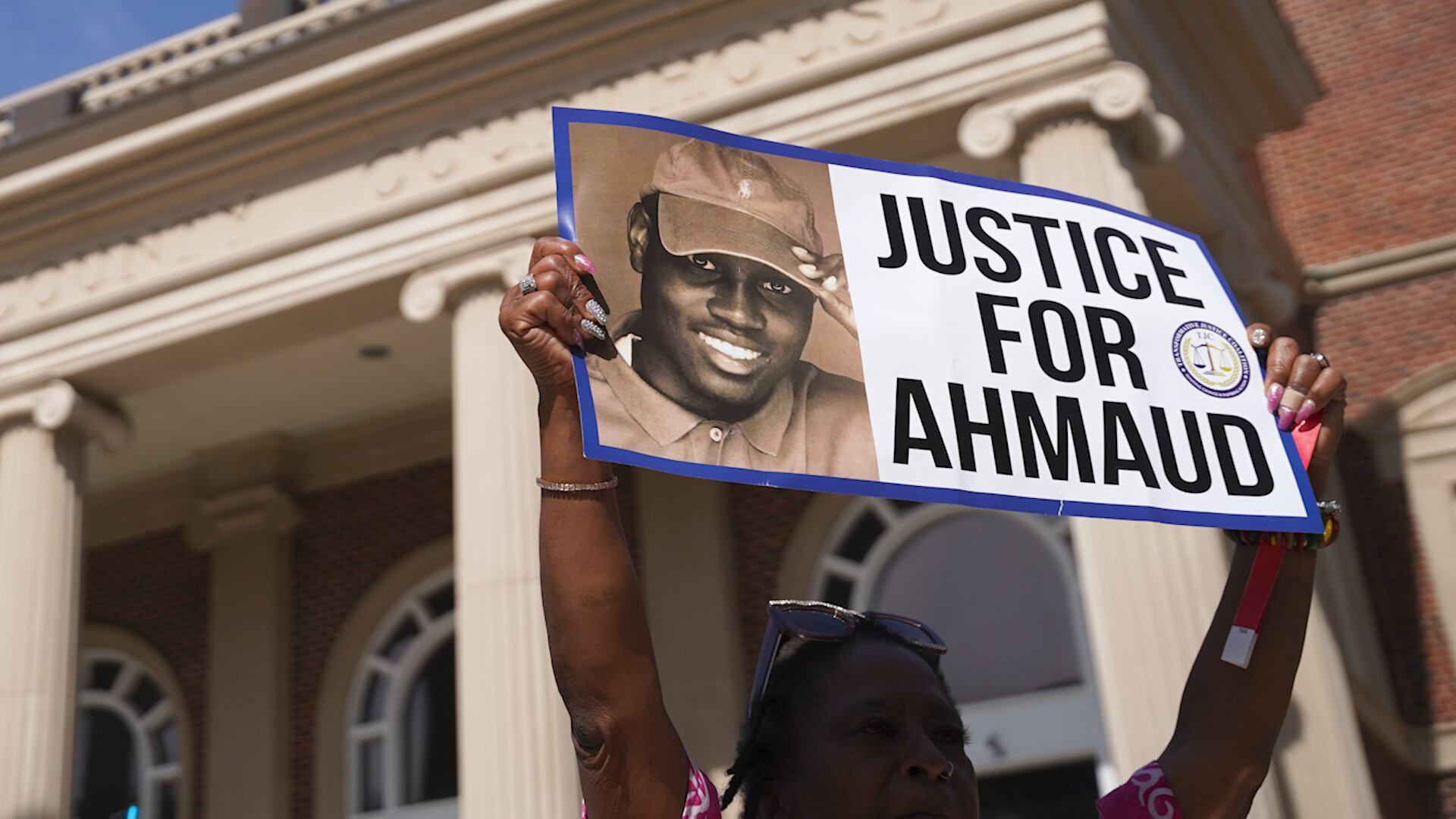
The recent verdicts of the Kyle Rittenhouse and Ahmaud Arbery murder trials have put a spotlight on the country's justice system. Experts have pointed to the explicit racial undertones in the high-profile trials, as well as the increased levels of stress that may be felt by communities of color because of the prevalence of these trials. Kailee Scales, CEO of Pencils of Promise and former first managing director of Black Lives Matter Global Network Foundation, joins Cheddar News to discuss.
Gold Medal ski racer Bode Miller and John Emery, CEO of Alpine-X, discuss the need to make snowsports more affordable and how the new facility in Virginia aims to diversify the sport to urban areas.
Carlos Munoz, Head of Asset Manager Diversity, Equity & Inclusion Engagement at Morgan Stanley Wealth Management, discusses how 'The Equity Collective' is helping to diversify the financial services industry and what the initiative means for racial equity.
Headspace Health has just launched the 'Headspace for Teens' social impact initiative, which will offer free access to the Headspace app for all teens ages 13 - 18 in America. Alice Nathoo, head of social impact at Headspace joins Cheddar News to talk about the program.