The Supreme Court ruled Wednesday that a Pennsylvania public school wrongly suspended a student from cheerleading over a vulgar social media post she made after she didn't qualify for the varsity team.
The court voted 8-1 in favor of Brandi Levy, who was a 14-year-old high school freshman when she expressed her disappointment over not making the varsity cheerleading squad with a string of curse words and a raised middle finger on Snapchat.
Levy, of Mahanoy City, Pennsylvania, was not in school when she made her post, but she was suspended from cheerleading activities for a year anyway. In an opinion by Justice Stephen Breyer, the high court ruled that the suspension violated Levy's First Amendment freedom of speech rights.
But the justices did not foreclose schools from disciplining students for what they say off campus. An earlier federal appeals court ruling in this case would have barred public schools from punishing off-campus speech.
Despite ruling in Levy's favor, Breyer wrote that “we do not believe the special characteristics that give schools additional license to regulate student speech always disappear when a school regulates speech that takes place off campus. The school’s regulatory interests remain significant in some off-campus circumstances.”
The case drew extra interest at a time of remote learning because of the coronavirus pandemic and a rising awareness of the harmful effects of online bullying.
The case arose from Levy's posts, one of which pictured her and a friend with raised middle fingers and included repeated use of a vulgarity to complain that she had been left off the varsity cheerleading squad.
“F——— school f——— softball f——— cheer f——— everything,” she wrote near the end of her freshman year, from a local convenience store and on a Saturday. Now 18, Levy recently finished her first year of college.
Levy's parents filed a federal lawsuit after the cheerleading coach suspended her from the junior varsity team for a year. Lower courts ruled in Levy's favor, and she was reinstated.
The school district appealed to the Supreme Court after the broad appellate ruling that said off-campus student speech was beyond schools' authority to punish.
The dispute is the latest in a line of a cases that began with Tinker v. Des Moines, the Vietnam-era case of a high school in Des Moines, Iowa, that suspended students who wore armbands to protest the war. In a landmark ruling, the Supreme Court sided with the students, declaring they don’t “shed their constitutional rights to freedom of speech or expression at the schoolhouse gate.”
The court also held then that schools retained the authority to restrict speech that would disrupt the school environment.
Breyer wrote that Levy's case seemed less serious than its Vietnam-era predecessor.
“It might be tempting to dismiss B. L.’s words as unworthy of the robust First Amendment protections discussed herein. But sometimes it is necessary to protect the superfluous in order to preserve the necessary,” he wrote, using Levy's initials because that was how she was identified in the original lawsuit. Levy has granted numerous interviews allowing her name to be used.
Justice Samuel Alito wrote in a concurring opinion that school officials in Mahanoy got “carried away” in seeking to discipline Levy. “If today’s decision teaches any lesson, it must be that the regulation of many types of off-premises student speech raises serious First Amendment concerns, and school officials should proceed cautiously before venturing into this territory,” Alito wrote.
In dissent, Justice Clarence Thomas wrote that he would have upheld Levy's suspension.
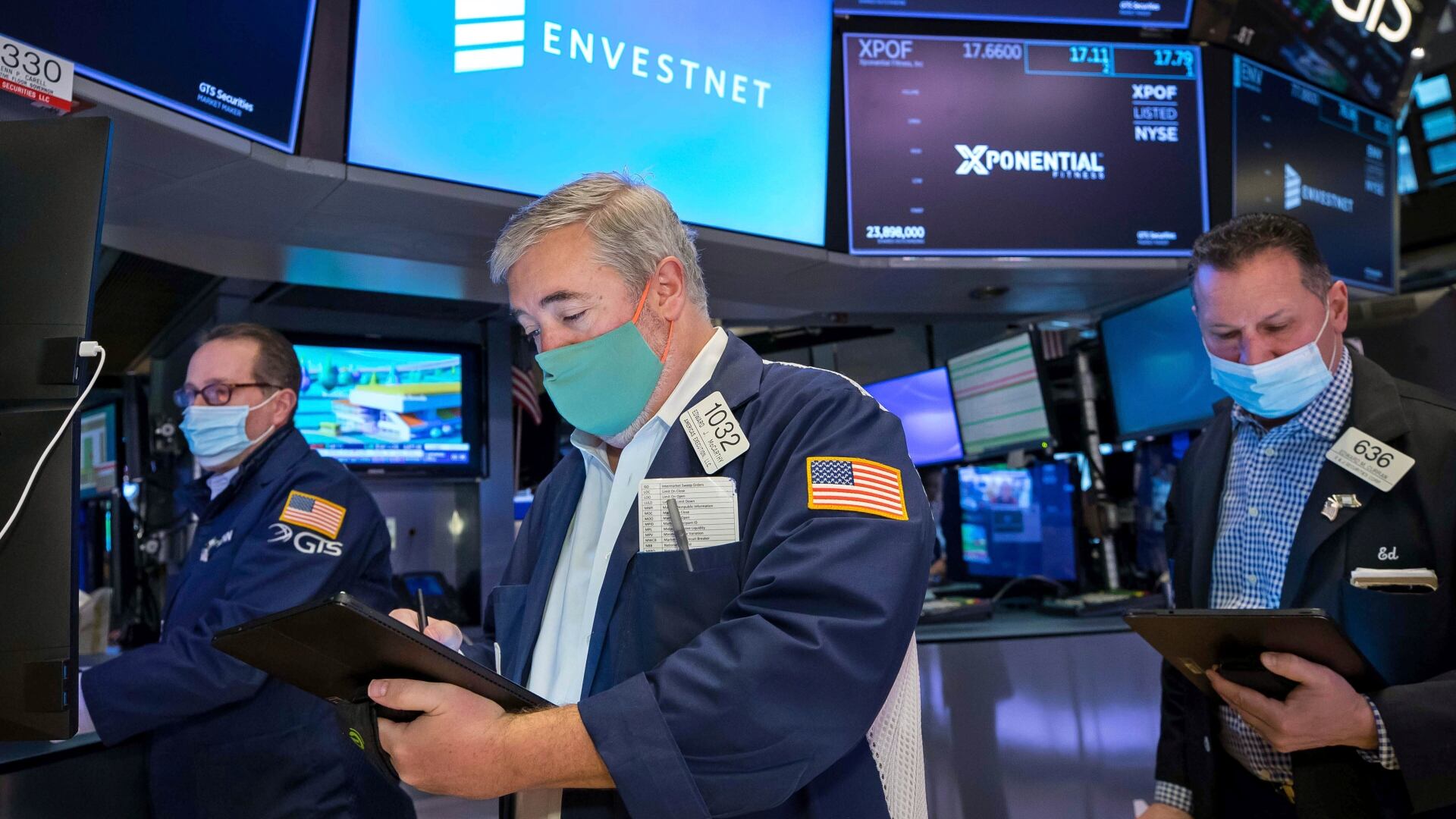
Markets closed the day mixed, and well off their lows of the day following a market meltdown earlier in the session. The Nasdaq staged a comeback late in the day, even amid ongoing worries about the Federal Reserve raising interest rates. Doug Flynn, certified financial planner and co-founder of Flynn Zito Capito, joined Cheddar News' Closing Bell to discuss the markets' close and what's driving the major indexes.
Two companies recently announced a new partnership aimed at addressing the growing demand to borrow against crypto - digital assets capital markets firm CrossTower is partnering with commercial bank, BankProv. The companies are launching a crypto lending platform that will allow Bitcoin miners to receive loans to invest in crypto mining equipment. The companies say the program also addresses the difficulty of breaking into crypto mining due to the high cost. CrossTower research analyst Martin Gaspar joins Cheddar News' Closing Bell to discuss.
Next-gen social sports platform Break the Love recently raised $2.5 million in seed funding. Break the Love's platform and iOS app allows users to discover and book group-based tennis activities, to either learn, train, or compete. The new company has already gotten support from a few big names in the world of tennis, including the coach of Naomi Osaka, as well as the United States Tennis Association and the brand Wilson. Break the Love founder and CEO Trisha Goyal joins Cheddar News' Closing Bell to discuss.
As the Omicron variant continues to sweep across the country. The US Supreme Court is expected to hear arguments at the end of this week on whether or not the Biden administration can force private companies to vaccinate or test millions of their employees. In addition, the National Nurses United has spearheaded legal action to protect nurses and health care workers, patients, and the public while on the job. President of the National Nurses Union, Zenei Cortez, joined Cheddar to discuss more.
China's ongoing crackdown of its own entertainment industry has been raising eyebrows for once now. With the ruling Communist Party instructing media companies to boycott immoral and overly entertaining stars. But the country has gone even further. Now experts warn that this could lead to further issues such as gender-based violence. Professor at the Institute of Sociology at National Tsinghua University, Hsiu-Hua Shen, and Associate Professor of Politics at Keough School of Global Affairs at the University of Notre Dame Joshua Eisenman, joined Cheddar to discuss more.
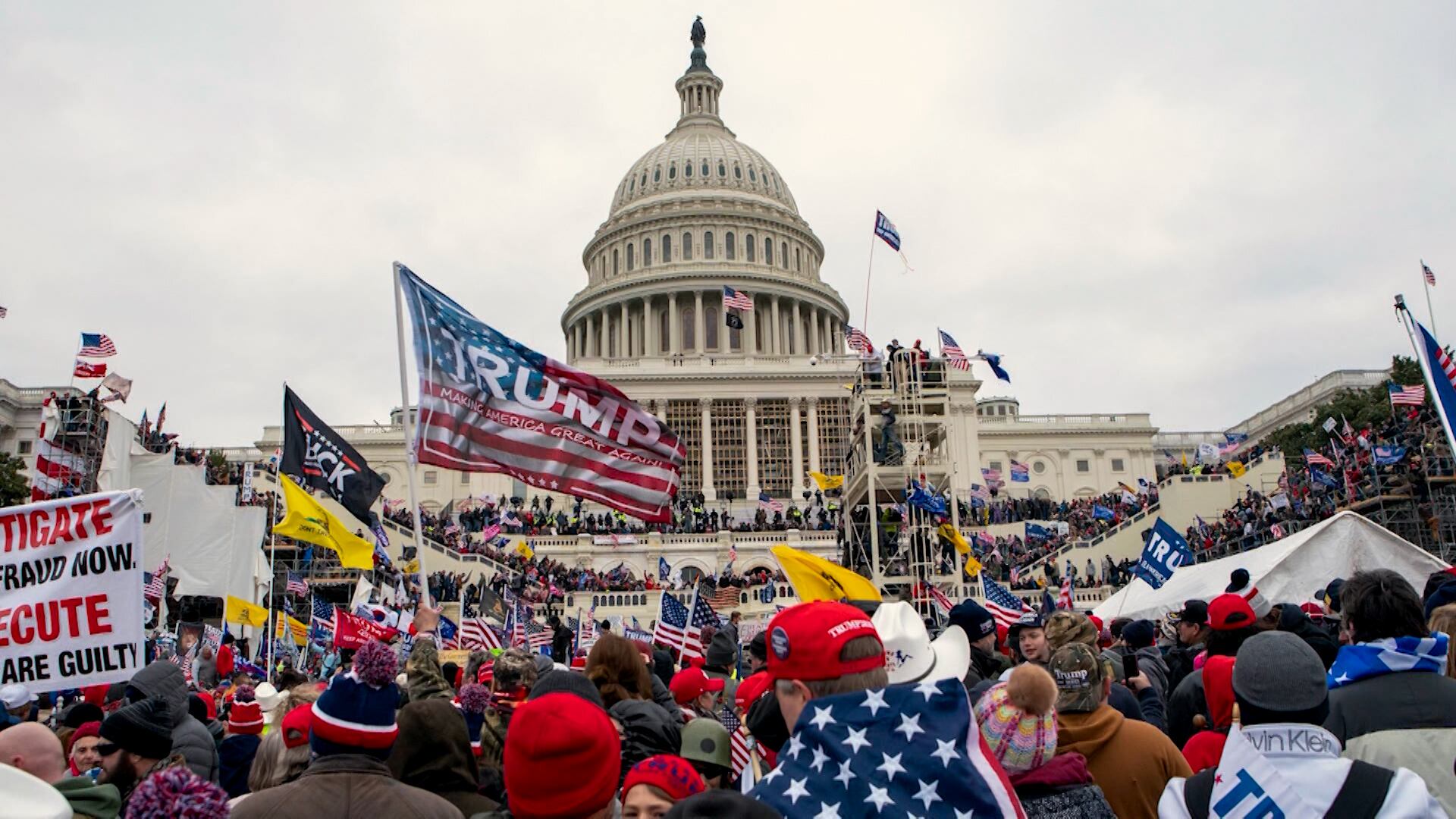
Today marks one year since the January 6 Attack on the United States Capitol. The Country watched as supporters of then-President Trump stormed what was assumed to be the most secure building in the country in an attempt to stop the certification of the 2020 Election. Several lawmakers, including the Vice President, could be seen ducking down as they feared for their lives. Democratic Michigan Representative Dan Kildee, joined Cheddar to discuss more.
Bed Bath & Beyond delivered disappointing fiscal third-quarter results for 2022. Shares initially dove more than 9% in premarket trading on the news but finished the day up nearly 8%. Bed Bath & Beyond has been a meme-stock target for online investors in the past -- so was meme-stock mania a factor in the recent stock movement for the company? Jaime Rogozinski, the founder of the subreddit WallStreetBets, joins Cheddar News' Closing Bell for more, as his forum helped spark the meme stock phenomena. He also discussed some decentralized finance services and trends for the retail investor to watch for in 2022.
Digital medical care provider Pear Therapeutics rang the closing bell on the Nasdaq Friday and President and CEO Dr. Corey McCann, joined Cheddar to talk about how the company plans to grow the business of software-based therapeutics and how the first FDA authorized prescription digital therapeutics company will go about treating illnesses like insomnia and addiction. "These really are pieces of software. In many cases, they're apps and in the cases of our addiction products, these are based on something called cognitive behavioral therapy or CBT," he said. "These products change the patient's brain circuitry to help them be abstinent, to help them stay in treatment, and that's exactly what we see in randomized clinical trials and that's what we see in the real world." He also addressed the ongoing mental health crises brought on by the pandemic. **copy updated to remove IPO information as Pear Therapeutics went public in December**
James Tattersall, director of sales and marketing for Lake Nona Wave Hotel, talks about the hotel's initiatives to foster diversity and how these amenities champion inclusivity in the Orlando area.