Deputy Attorney General Jeffrey Rosen, announces a worldwide crackdown on opioid trafficking on the darknet with FBI Director Christopher Wray, center, and DEA Acting Administrator Timothy Shea, during a press conference at the Department of Justice, Tuesday, Sept. 22, 2020 in Washington. Law enforcement officials have arrested 179 people and seized more than $6.5 million. The operation announced Tuesday mainly occurred in the U.S. and in Europe. Rosen said the takedown showed “there will be no safe haven for drug dealing in cyberspace.” (Olivier Douliery/Pool via AP)
By Michael Balsamo
Law enforcement officials arrested 179 people and seized more than $6.5 million in a worldwide crackdown on opioid trafficking on the darknet, the U.S. Justice Department said Tuesday.
The operation, which mainly occurred in the U.S. and in Europe, comes more than a year after officials took down the "Wall Street Market," which was believed to be one of the largest illegal online marketplaces on the darknet.
The darknet is a part of the internet hosted within an encrypted network and accessible only through specialized anonymity-providing tools, most notably the Tor Browser.
As part of the initiative, law enforcement officials seized over $6.5 million in cash and virtual currency, in addition to 500 kilograms of drugs, the Justice Department said. About 275 kilograms of drugs, including fentanyl, heroin, cocaine, ecstasy, and other opioids, had been seized in the U.S.
The arrests include 121 made in the U.S., two in Canada, 42 in Germany, eight in the Netherlands, four in the United Kingdom, three in Australia, and one in Sweden. The Justice Department said its investigation was ongoing and investigators were still working to identify other individuals behind darknet accounts.
Deputy Attorney General Jeffrey Rosen said the takedown showed "there will be no safe haven for drug dealing in cyberspace."
On this episode of ChedHER: Lissy Hu, CEO and Founder of CarePort, powered by WellSky, breaks down how to avoid 'mom guilt' at work; Katie Hotze, Founder and CEO of Grocery Shopii, explains how she's creating a platform that allows for personalized meal planning and recipes into a grocer's eCommerce platform; Nicole Wegman, Founder and CEO of Ring Concierge, talks how she's creating luxury designs for women, by women.
We are entering yet a new era of work across corporate America. Lissy Hu, CEO and Founder of CarePort, powered by WellSky, joins ChedHER to discuss what this new era means for working mothers, and how to avoid 'mom guilt' at work.
Londoners are facing travel chaos after around 10,000 transport workers walked off their jobs for the second day this week, leaving almost all of the capital’s subway lines suspended or severely disrupted.
The luxury jewelry industry is heavily male-dominated. Nicole Wegman, Founder and CEO of Ring Concierge, joins ChedHER to discuss how she's creating luxury designs for women, by women and how social media has played a major role in building her business.
Independent artists were caught off-guard and the Epic acquisition of Bandcamp quickly sparked fears it could ruin what many saw as their last best hope of getting paid online for their work.
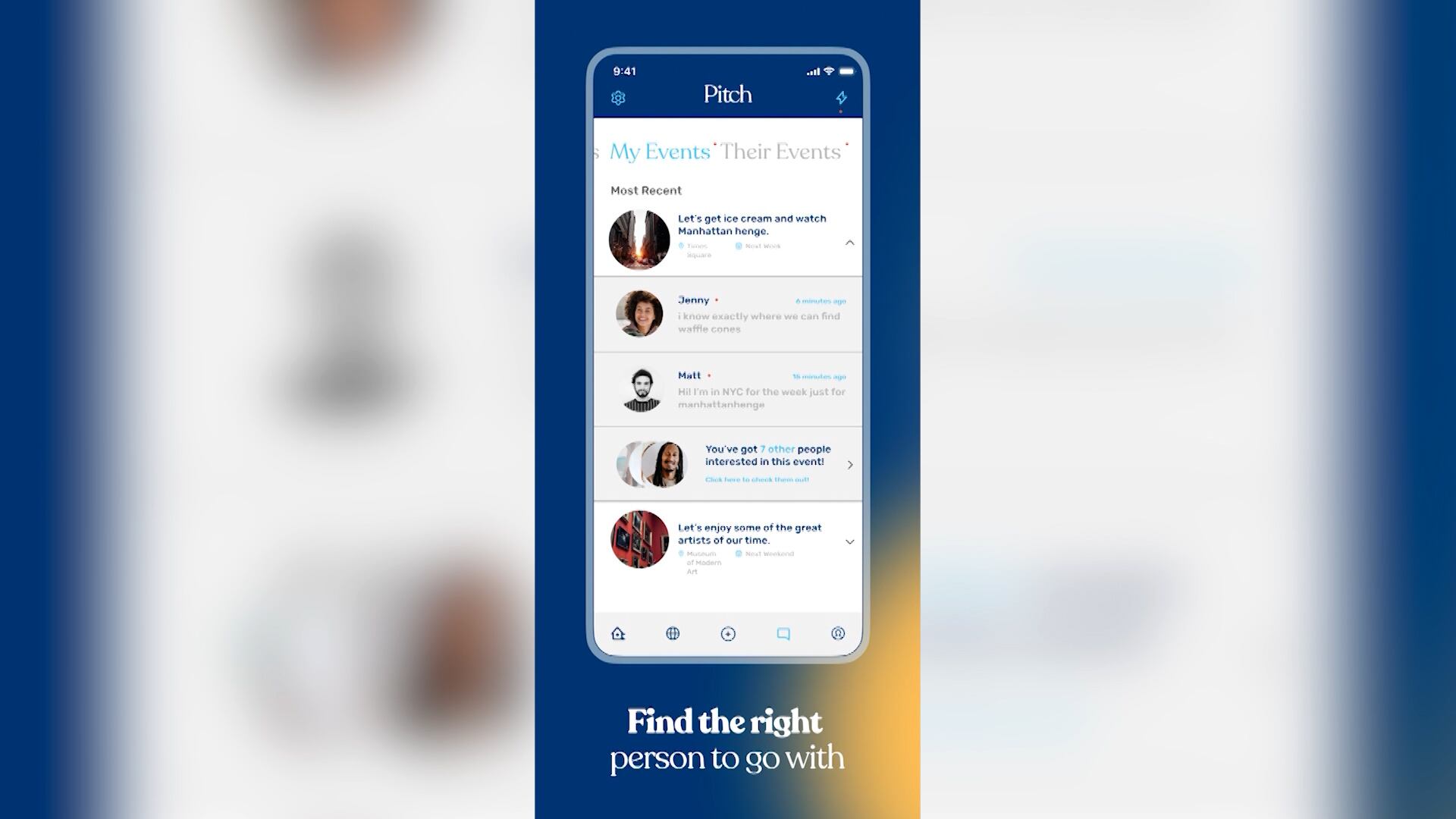
Trying to meet people online has become a predictable routine. Now, one app is switching it up by allowing users to swipe right on plans and outings rather than faces. Pitch Social co-founders Daniel Antonio and Ryan Snowden joins Between Bells to talk about their app.
Playboy released its fourth quarter and full year 2021 results, reporting an annual revenue of $247 million, up 67 percent year-over-year. The venerable lifestyle and entertainment brand had a whirlwind of a year — going public for a second time, completing three acquisitions, and growing its workforce to more than 1,100 employees, all while dealing with ongoing supply chain issues and other COVID-related challenges. CEO Ben Kohn joined Cheddar's Opening Bell to discuss the long pivot away from its legacy print product to digital. "It gives us a truly competitive advantage, especially when you think of this world we live in today with the changes to iOS last year, what you saw happen with Facebook, the lack of performance marketing," he said. "We now have an organic audience in partnership with our creators that we can market other products and services to as well."