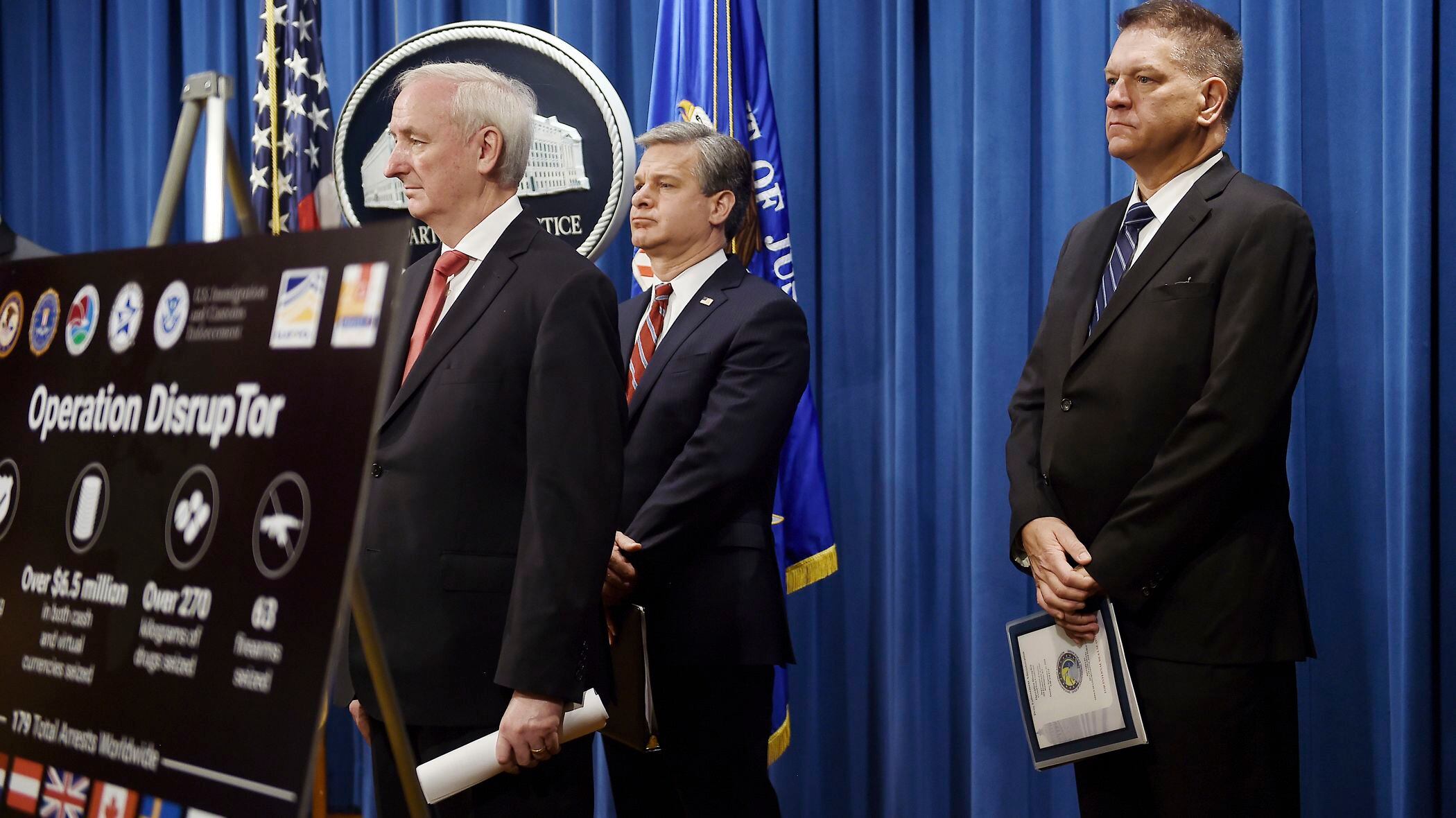
Deputy Attorney General Jeffrey Rosen, announces a worldwide crackdown on opioid trafficking on the darknet with FBI Director Christopher Wray, center, and DEA Acting Administrator Timothy Shea, during a press conference at the Department of Justice, Tuesday, Sept. 22, 2020 in Washington. Law enforcement officials have arrested 179 people and seized more than $6.5 million. The operation announced Tuesday mainly occurred in the U.S. and in Europe. Rosen said the takedown showed “there will be no safe haven for drug dealing in cyberspace.” (Olivier Douliery/Pool via AP)
By Michael Balsamo
Law enforcement officials arrested 179 people and seized more than $6.5 million in a worldwide crackdown on opioid trafficking on the darknet, the U.S. Justice Department said Tuesday.
The operation, which mainly occurred in the U.S. and in Europe, comes more than a year after officials took down the "Wall Street Market," which was believed to be one of the largest illegal online marketplaces on the darknet.
The darknet is a part of the internet hosted within an encrypted network and accessible only through specialized anonymity-providing tools, most notably the Tor Browser.
As part of the initiative, law enforcement officials seized over $6.5 million in cash and virtual currency, in addition to 500 kilograms of drugs, the Justice Department said. About 275 kilograms of drugs, including fentanyl, heroin, cocaine, ecstasy, and other opioids, had been seized in the U.S.
The arrests include 121 made in the U.S., two in Canada, 42 in Germany, eight in the Netherlands, four in the United Kingdom, three in Australia, and one in Sweden. The Justice Department said its investigation was ongoing and investigators were still working to identify other individuals behind darknet accounts.
Deputy Attorney General Jeffrey Rosen said the takedown showed "there will be no safe haven for drug dealing in cyberspace."
Marjorie Woods, Owner of Epic Food Group, joins ChedHER to discuss the story behind her company, challenges during the pandemic, and her plans for growth.
The Department of Justice is suing Texas over the state's new abortion law that prohibits abortions after six weeks, well before many women even know they're pregnant. The lawsuit argues the law is unconstitutional under long-standing Supreme Court precedent. It was filed last week in federal court in Texas, but could go all the way to the high court within weeks. Josh Blackman, a constitutional law professor at South Texas College of Law Houston, discusses the DOJ lawsuit and what it could mean for other abortion laws across the country.
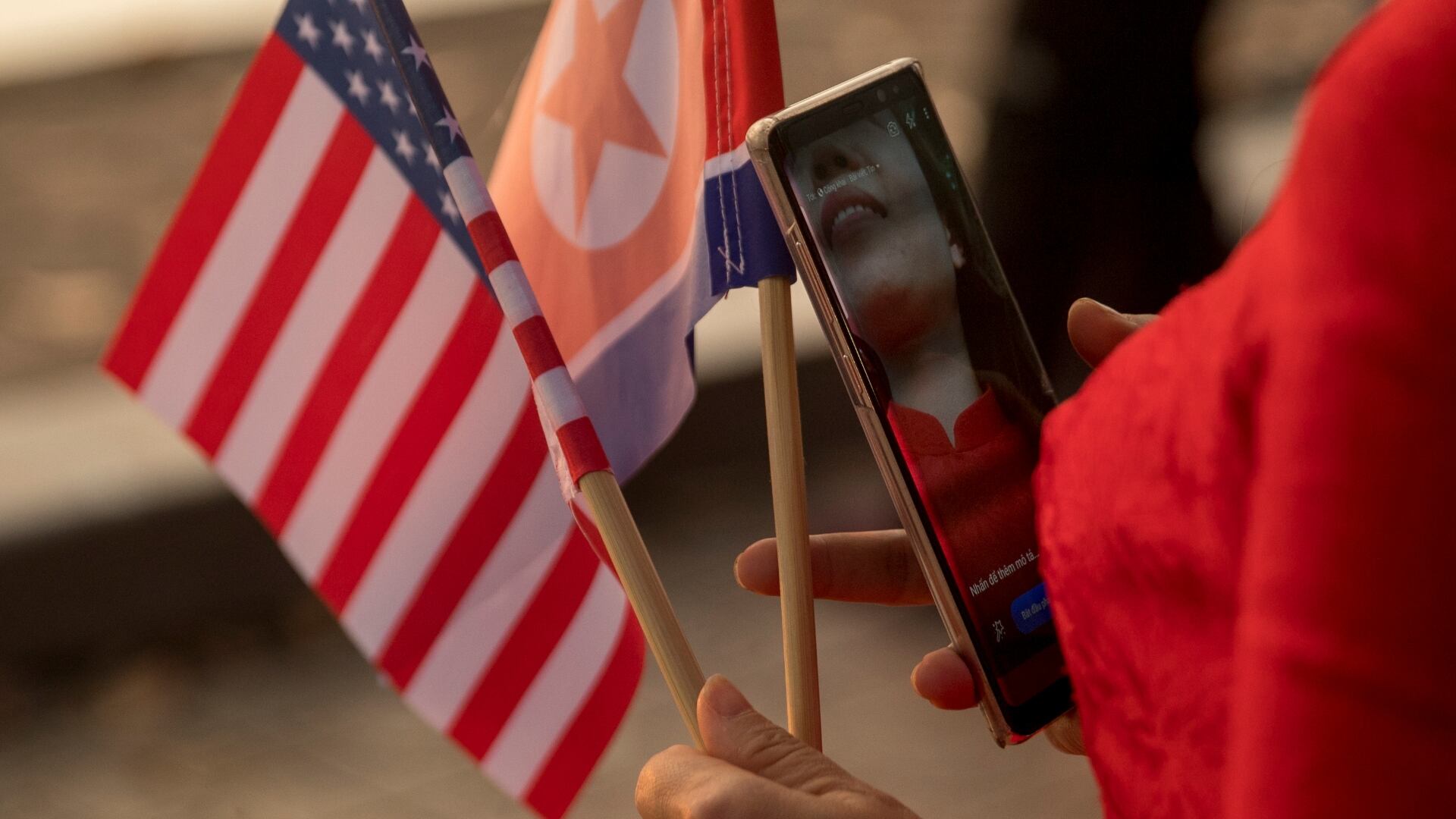
The Biden Administration has officially extended a ban on a Trump-era policy that prohibits traveling with a U.S. passport to North Korea. The extension is expected to last until August 2022. The ban was initially enforced after the death of Otto Warmbier, who entered a vegetative state while in North Korean custody. Advocates against the ban argue that it has caused crippling impacts on Korean Americans who have not been able to reunite with their families back home. Senior Fellow at The Foundation For Defense of Democracies Anthony Ruggiero joined Cheddar's News Wrap to discuss more.
In this edition of Tik Talk None Of The Above's J.D. Durkin breaks down the latest trend on TikTok where people sit down to tape a scholarship application video and it all goes off the rails.