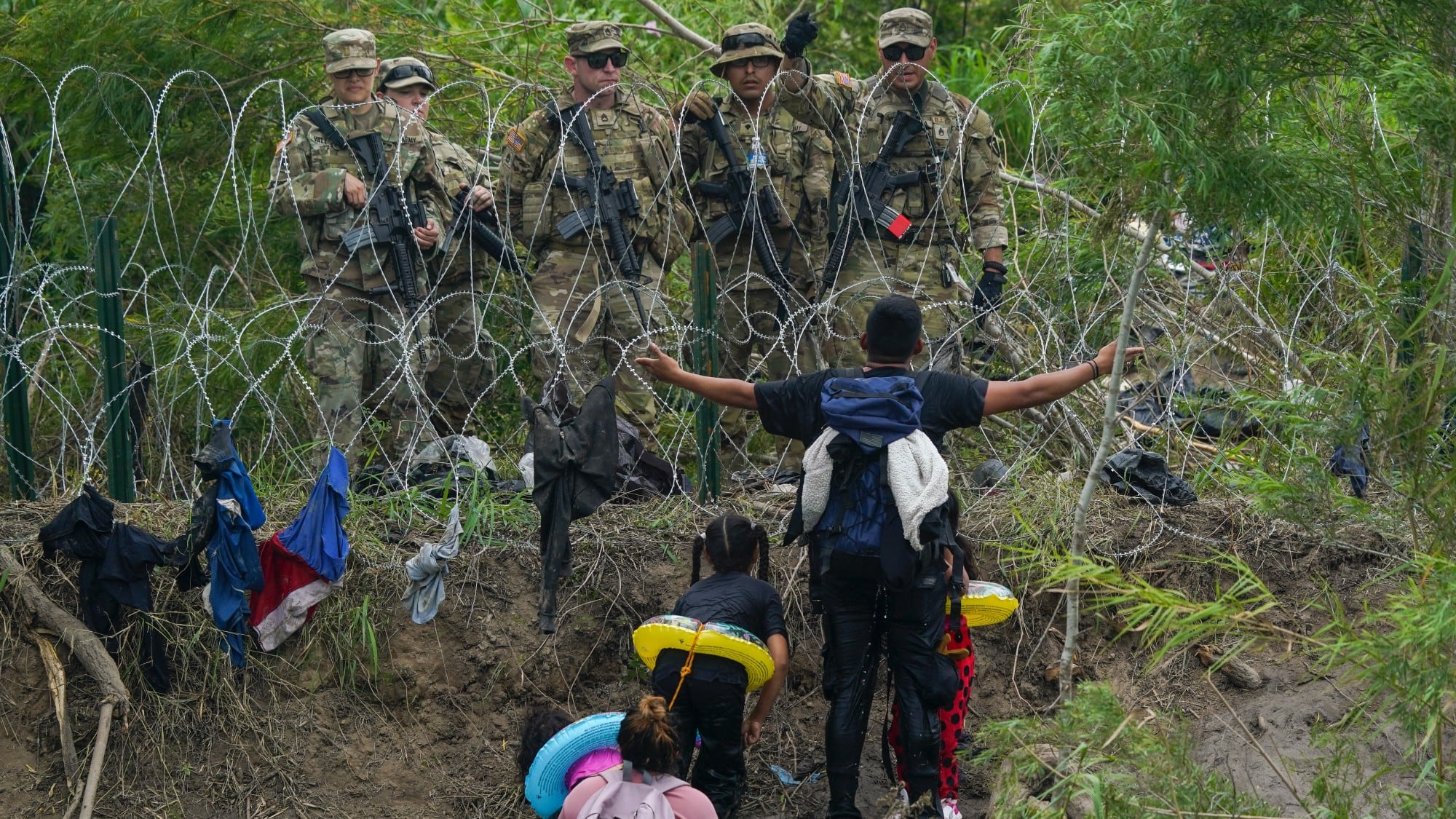
WASHINGTON (AP) — A federal judge on Tuesday blocked a rule that allows immigration authorities to deny asylum to migrants who arrive at the U.S.-Mexico border without first applying online or seeking protection in a country they passed through. But the judge delayed his ruling from taking effect immediately to give President Joe Biden's administration time to appeal.
The order from U.S. District Judge Jon Tigar of the Northern District of California takes away a key enforcement tool set in place by the Biden administration as coronavirus-based restrictions on asylum expired in May. The new rule imposes severe limitations on migrants seeking asylum but includes room for exceptions and does not apply to children traveling alone.
“The Rule — which has been in effect for two months — cannot remain in place,” Tigar wrote in an order that will not take effect for two weeks.
The Justice Department said it would seek to prevent the judge's ruling from taking effect and that it's confident the rule is lawful.
Immigrant rights groups that sued over the the rule applauded the judge's decision.
“The promise of America is to serve as a beacon of freedom and hope, and the administration can and should do better to fulfill this promise, rather than perpetuate cruel and ineffective policies that betray it,” American Civil Liberties Union attorney Katrina Eiland, who argued the case, said in a statement.
The ACLU and other groups had argued the rule violates a U.S. law that protects the right to asylum regardless of how a person enters the country. The groups said it forces migrants to seek protection in countries that don’t have the same robust asylum system and human rights protections as the United States. They also argued that the CBP One app the government wants migrants to use doesn't have enough appointments and isn’t available in enough languages.
The administration had argued that protection systems in other countries that migrants travel through have improved. But Tigar said it's not feasible for some migrants to seek protection in a transit country and noted the violence that many face in Mexico in particular.
“While they wait for an adjudication, applicants for asylum must remain in Mexico, where migrants are generally at heightened risk of violence by both state and non-state actors,” the judge wrote.
He also wrote that the rule is illegal because it presumes that people are ineligible for asylum if they enter the country between legal border crossings. But, Tigar wrote, Congress expressly said that should not affect whether someone is eligible for asylum.
The judge also rejected the administration's arguments that it had provided other avenues for people to come to the U.S. and that should be taken into account. The administration has pointed to a program that allows as many as 30,000 migrants from Cuba, Haiti, Nicaragua and Venezuela if they have a sponsor and fly into the U.S. The judge noted that such pathways are not available to all migrants.
The Biden administration also argued that it was allowing potentially hundreds of thousands of people into the U.S. through the CBP One app. Migrants use the app to schedule an appointment to present themselves at the border to seek entry to the U.S. and request asylum.
Tigar noted that the 1,450 appointments currently available daily outstrips demand, leaving asylum seekers waiting in Mexico where they're at “serious risk of violence.”
The Biden administration said the asylum rule was a key part of its strategy to strike a balance between strict border enforcement and ensuring several avenues for migrants to pursue valid asylum claims. According to Customs and Border Protection, total encounters along the southern border — meaning migrants who either came to one of the ports of entry or tried to cross between them — were down 30% in June compared with the previous month. The agency said it was the lowest monthly total since February 2021.
Critics have argued that the rule is essentially a newer version of efforts by President Donald Trump to limit asylum at the southern border. The Supreme Court eventually allowed the Trump administration to limit asylum for people who don't apply for protection in a country they travel through before coming to the U.S. to go into effect. But another Trump effort to bar people from applying for asylum except at an official border entry point was caught up in litigation and never took effect.