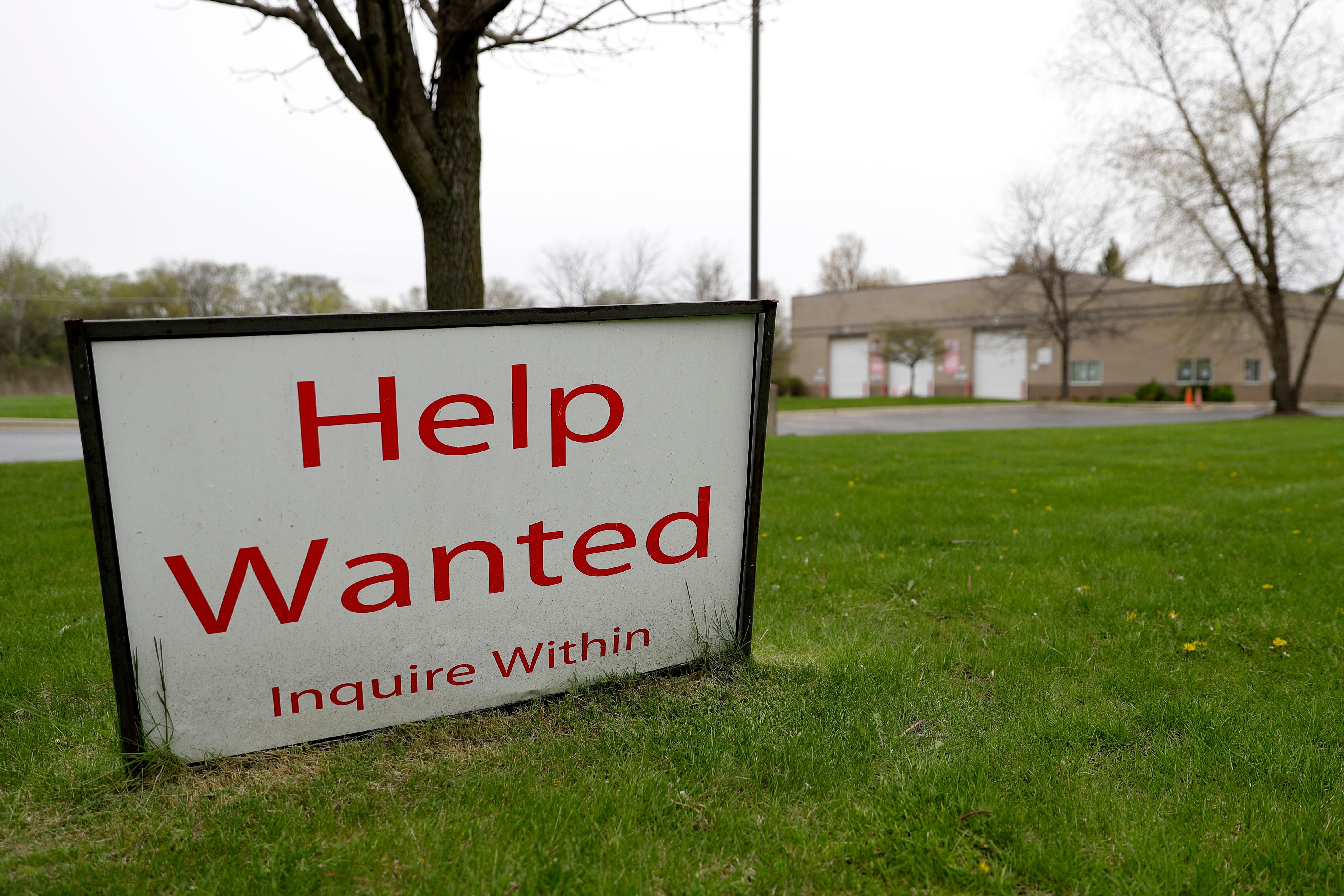
U.S. employers advertised more jobs in June compared with the previous month, but overall hiring fell, painting a mixed picture of the job market. The number of jobs posted on the last day in June jumped 9.6 percent to 5.9 million, the Labor Department said Monday, a solid gain but still below the pre-pandemic level of about 7 million. And employers hired 6.7 million people in June, down from 7.2 million in May, a record high. The figures suggest that restaurants, bars, retail shops, and entertainment venues — businesses that were subject to shutdown orders in April — continued to bring back workers at a healthy pace. Job openings in those industries also rose. But outside those categories, employers remain reluctant to bring on new workers, a trend that could weigh on the economy in the coming months. Hiring slowed sharply in manufacturing, construction, and health care services in June. The government has previously reported that the nation gained 4.8 million jobs in June. That figure, however, is a net total, while Monday's report, known as the Job Openings and Labor Turnover Survey, or JOLTS, provides gross hiring figures, without subtracting layoffs or quits. On Friday, the government said employers added a net 1.8 million jobs, a solid gain but far below June's increase and below the 2.7 million added in May. Employers slashed 22 million positions in March and April, and so far 42 percent of those lost jobs have been regained. The number of people quitting their jobs, meanwhile, rose by one-quarter to nearly 2.6 million, a huge gain that is unusual in the depths of the recession, when workers typically try to hold onto their jobs. Many workers may be reluctant to remain in jobs that they believe put their health at risk. Economists also worry that many women and men are quitting jobs to look after children, a trend that could also hold back job growth.
By Christopher Rugaber
U.S. employers advertised more jobs in June compared with the previous month, but overall hiring fell, painting a mixed picture of the job market.
The number of jobs posted on the last day in June jumped 9.6 percent to 5.9 million, the Labor Department said Monday, a solid gain but still below the pre-pandemic level of about 7 million. And employers hired 6.7 million people in June, down from 7.2 million in May, a record high.
The figures suggest that restaurants, bars, retail shops, and entertainment venues — businesses that were subject to shutdown orders in April — continued to bring back workers at a healthy pace. Job openings in those industries also rose.
But outside those categories, employers remain reluctant to bring on new workers, a trend that could weigh on the economy in the coming months. Hiring slowed sharply in manufacturing, construction, and health care services in June.
The government has previously reported that the nation gained 4.8 million jobs in June. That figure, however, is a net total, while Monday's report, known as the Job Openings and Labor Turnover Survey, or JOLTS, provides gross hiring figures, without subtracting layoffs or quits.
On Friday, the government said employers added a net 1.8 million jobs, a solid gain but far below June's increase and below the 2.7 million added in May. Employers slashed 22 million positions in March and April, and so far 42 percent of those lost jobs have been regained.
The number of people quitting their jobs, meanwhile, rose by one-quarter to nearly 2.6 million, a huge gain that is unusual in the depths of the recession, when workers typically try to hold onto their jobs. Many workers may be reluctant to remain in jobs that they believe put their health at risk. Economists also worry that many women and men are quitting jobs to look after children, a trend that could also hold back job growth.
A new poll finds U.S. adults are more likely than they were a year ago to think immigrants in the country legally benefit the economy. That comes as President Donald Trump's administration imposes new restrictions targeting legal pathways into the country. The Associated Press-NORC Center for Public Affairs Research survey finds Americans are more likely than they were in March 2024 to say it’s a “major benefit” that people who come to the U.S. legally contribute to the economy and help American companies get the expertise of skilled workers. At the same time, perceptions of illegal immigration haven’t shifted meaningfully. Americans still see fewer benefits from people who come to the U.S. illegally.
Shares of Tylenol maker Kenvue are bouncing back sharply before the opening bell a day after President Donald Trump promoted unproven and in some cases discredited ties between Tylenol, vaccines and autism. Trump told pregnant women not to use the painkiller around a dozen times during the White House news conference Monday. The drugmaker tumbled 7.5%. Shares have regained most of those losses early Tuesday in premarket trading.
Scott Trench, host of the BiggerPockets Money Podcast, explores how recent rate cuts, high borrowing costs, and mortgage rates are reshaping U.S. real estate.
A look into how disruption, AI, and global economic trends are transforming the modern supply chain with Jeremy Jansen, Head of Supply Chain at Wells Fargo.
Delta CSO Amelia DeLuca reveals at the Fast Co. Innovation Festival how tech, sustainable aviation fuel, and smart operations are revolutionizing air travel.
Chipmaker Nvidia will invest $100 billion in OpenAI as part of a partnership that will add at least 10 gigawatts of Nvidia AI data centers to ramp up the computing power for the owner of the artificial intelligence chatbot ChatGPT.
Two of the nation’s biggest real estate services companies are combining in a deal that will bring Century 21, Compass and several other major brokerage brands under the same umbrella.