By Isabel DeBre, Edith M. Lederer and Wafaa Shurafa
Palestinians fled in a mass exodus Friday from northern Gaza after Israel’s military told some 1 million people to evacuate to the southern part of the besieged territory ahead of an expected ground invasion in retaliation for the surprise attack by the ruling Hamas militant group nearly a week ago.
The U.N. warned that ordering almost half the Gaza population to flee en masse would be calamitous, and it urged Israel to reverse the unprecedented directive. As airstrikes hammered the territory throughout the day, families in cars, trucks and donkey carts packed with possessions streamed down a main road out of Gaza City.
Hamas’ media office said warplanes struck cars fleeing south, killing more than 70 people. The Israeli military said its troops had conducted temporary raids into Gaza to battle militants and hunted for traces of some 150 people abducted in the Hamas attack.
Hamas told people to ignore the evacuation order, and families in Gaza faced what they feared was a no-win decision to leave or stay, with no safe ground anywhere. Hospital staff said they couldn’t abandon patients.
Unrelenting Israeli strikes over the past week have leveled large swaths of neighborhoods, magnifying the suffering of Gaza, which has also been sealed off from food, water and medical supplies, and under a virtual total power blackout.
“Forget about food, forget about electricity, forget about fuel. The only concern now is just if you’ll make it, if you’re going to live,” said Nebal Farsakh, a spokesperson for the Palestinian Red Crescent in Gaza City, as she broke into heaving sobs.
In the week-old war, the Gaza Health Ministry said Friday that roughly 1,900 people have been killed in the territory — more than half of them under the age of 18, or women. The Hamas assault last Saturday killed more than 1,300 Israelis, most of whom were civilians, and roughly 1,500 Hamas militants were killed during the fighting, the Israeli government said.
ISRAELI TROOPS MAKE FORAY INTO GAZA
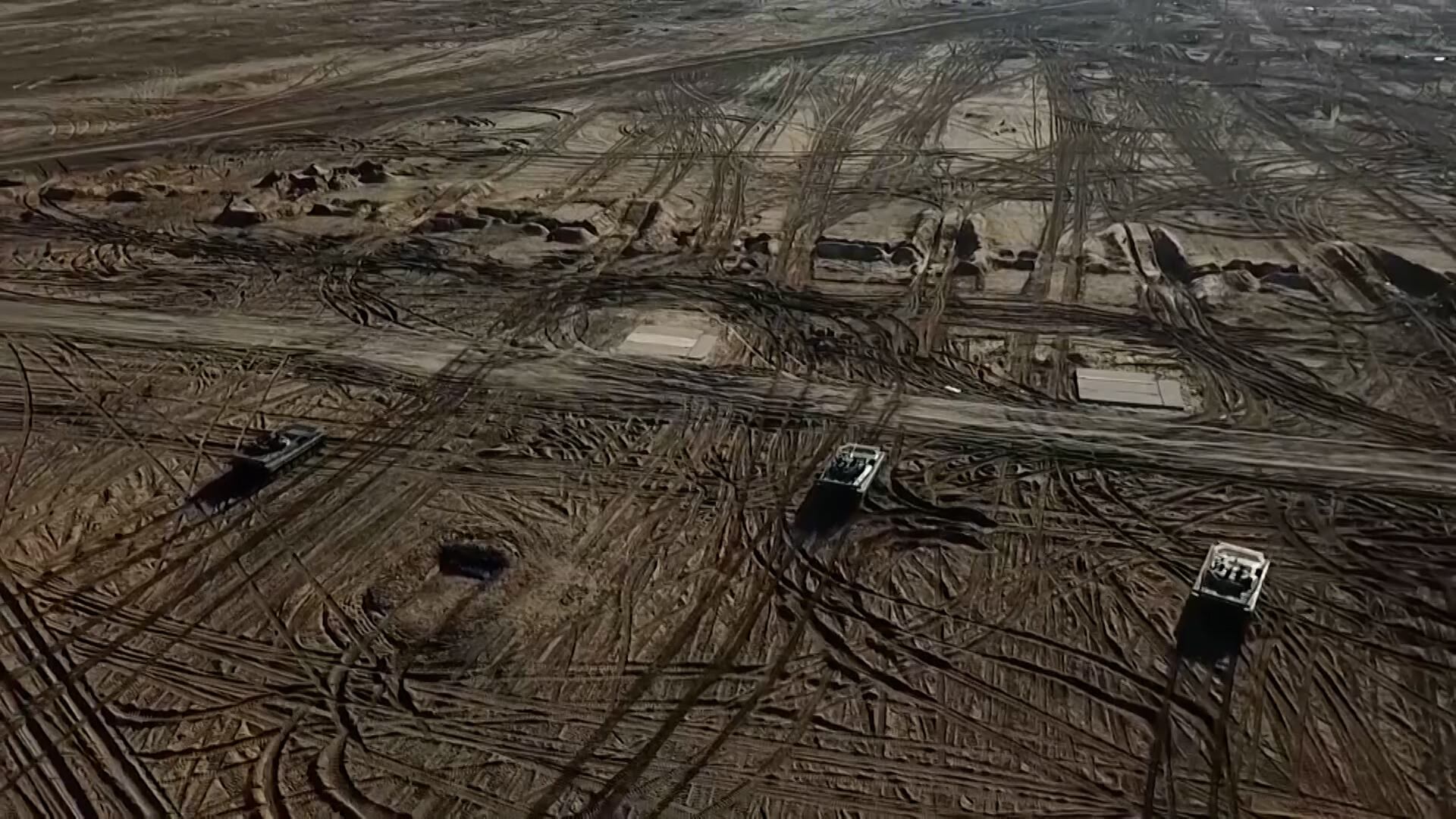
Israel's raid was the first word of troops entering Gaza since Israel launched its round-the-clock bombardment in retaliation for Hamas’ massacre of hundreds of people in southern Israel.
A military spokesman said Israeli ground troops left after conducting the raids. The troop movements did not appear to be the beginning of an expected ground invasion.
The evacuation order was taken as a further signal of an expected Israeli ground offensive, although no such decision has been announced. Israel has been massing troops along the Gaza border.
An assault into densely populated and impoverished Gaza would likely bring even higher casualties on both sides in brutal house-to-house fighting.
“We will destroy Hamas,” Israeli Prime Minister Benjamin Netanyahu vowed Friday night in a speech, adding, “This is only the beginning.”
Hamas said Israel’s airstrikes killed 13 of the hostages in the past day. It said the dead included foreigners but did not give their nationalities. Israeli military spokesperson Rear Adm. Daniel Hagari denied the claim.
In Israel, the public remained in shock over the Hamas rampage and frightened by continual rocket fire out of Gaza. The public is overwhelmingly in favor of the military offensive, and Israeli TV stations have set up special broadcasts with slogans like “together we will win” and “strong together.” Their reports focus heavily on the aftermath of the Hamas attack, stories of heroism and national unity, and they make scant mention of the unfolding crisis in Gaza.
ISRAEL URGES MASS EVACUATION OF GAZA CIVILIANS
The U.N. said the Israeli military's call for civilians to move south affects 1.1 million people. If carried out, that would mean the territory’s entire population would have to cram into the southern half of the 40-kilometer (25-mile) strip.
Israel said it needed to target Hamas’ military infrastructure, much of which is buried deep underground. An Israeli spokesperson, Jonathan Conricus, said the military would take “extensive efforts to avoid harming civilians” and that residents would be allowed to return when the war is over.
Israel has long accused Hamas of using Palestinians as human shields. Israeli Defense Minister Yoav Gallant said Israel wanted to separate Hamas militants from the civilian population.
“So those who want to save their life, please go south,” he said at a news conference with U.S. Defense Secretary Lloyd Austin.
U.N. spokesperson Stephane Dujarric said it would be impossible to stage such an evacuation without “devastating humanitarian consequences.” He called on Israel to rescind any such orders.
PALESTINIANS IN GAZA GRAPPLE WITH WHERE TO GO
Hamas’ media office said airstrikes hit cars in three locations as they headed south from Gaza City, killing 70 people. There was no immediate comment from the Israeli military on the strike.
Two witnesses reported a strike on fleeing cars near the town of Deir el-Balah, south of the evacuation zone and in the area Israel told people to flee to. Fayza Hamoudi said she and her family were driving from their home in the north when the strike hit some distance ahead on the road and two vehicles burst into flames. A witness from another car on the road gave a similar account.
“Why should we trust that they’re trying to keep us safe?” Hamoudi said, her voice choking. “They are sick.”
The Israeli military did not respond to a request for comment on the strike.
Hamas called the evacuation order “psychological warfare” aimed at breaking Palestinian solidarity and urged people to stay. But there was no sign of it preventing the flight.
Gaza City resident Khaled Abu Sultan at first didn’t believe the evacuation order was real, and now isn’t sure whether to move his family to the south. “We don’t know if there are safe areas there,” he said. “We don’t know anything.”
Many expressed concern they would not be able to return or be gradually displaced to Egypt's Sinai Peninsula.
More than half of the Palestinians in Gaza are the descendants of refugees from the 1948 war surrounding Israel’s creation, when hundreds of thousands fled or were expelled from what is now Israel. For many, the mass evacuation order dredged up fears of a second expulsion. Already, at least 423,000 people — nearly 1 in 5 Gazans — have been forced from their homes by Israeli airstrikes, the U.N. said Thursday.
“Where is the sense of security in Gaza? Is this what Hamas is offering us?” said one resident, Tarek Mraish, standing by an avenue as vehicles flowed by. “What has Hamas done to us? It brought us catastrophe,” he said, using the same Arabic word “nakba” used for the 1948 displacement.
HOSPITALS STRUGGLE WITH PATIENTS
Gaza’s Health Ministry said it was impossible to evacuate the many wounded from hospitals, which are already struggling with high numbers of dead and injured. “We cannot evacuate hospitals and leave the wounded and sick to die,” spokesperson Ashraf al-Qidra said.
Farsakh, of the Palestinian Red Crescent, said some medics were refusing to abandon patients and were instead calling colleagues to say goodbye.
“We have wounded, we have elderly, we have children who are in hospitals,” she said.
Al Awda Hospital was struggling to evacuate dozens of patients and staff after the military contacted it and told it do so by Friday night, said the aid group Doctors Without Borders, known as MSF, which supports the facility. The military extended the deadline to Saturday morning, it said.
The U.N. agency for Palestinian refugees, known as UNRWA, said it would not evacuate its schools, where hundreds of thousands have taken shelter. But it relocated its headquarters to southern Gaza, according to spokesperson Juliette Touma.
“The scale and speed of the unfolding humanitarian crisis is bone-chilling. Gaza is fast becoming a hellhole and is on the brink of collapse,” said Philippe Lazzarini, UNRWA’s commissioner general.
Pressed by reporters on whether the army would protect hospitals, U.N. shelters and other civilian locations, Hagari, the Israeli military spokesperson, said the military would keep civilians safe “as much as we can.” But he warned: “It’s a war zone.”
Shurafa reported from Gaza City, Gaza Strip and Lederer from Chicago. Associated Press writers Joseph Krauss in Jerusalem, Samya Kullab in Baghdad, Samy Magdy in Cairo, and Kareem Chehayeb in Beirut contributed to this report.
Updated at 4:52 p.m. October 13 , 2023 with the latest details.