The IRS is showcasing its new capability to aggressively audit high-income tax dodgers as it makes the case for sustained funding and tries to avert budget cuts sought by Republicans who want to gut the agency.
IRS leaders said they collected $38 million in delinquent taxes from more than 175 high-income taxpayers in the past few months.
In one case, an individual had used money owed to the government to buy a Maserati and a Bentley, and roughly 100 high-income people tried to get favorable tax treatment through Puerto Rico without meeting certain tax requirements. Many of those cases are expected to face criminal investigation.
“It just shows you how much money is out there in delinquent taxes, and there are so many more cases for us to tackle," said new IRS Commissioner Daniel Werfel, just four months into the job. “There’s just a significant opportunity there.”
No comparable figures exist for how those high-dollar tax collections compared with previous years, said Jodie Reynolds, speaking for the agency. Rather, the new data reflect an initiative that started after the agency received a new funding stream through the Inflation Reduction Act passed in August by Democrats.
The new data collection “is an example of work we expect to continue to focus on with IRA funding,” she said.
Werfel, in a call with reporters on Thursday, also cited the federal tax collector's enhanced ability to identify tax delinquents from resources provided by the Inflation Reduction Act.
The agency was in line for an $80 billion infusion under the law but that money is vulnerable to potential cutbacks.
House Republicans built a $1.4 billion reduction to the IRS into the debt ceiling and budget cuts package passed by Congress this summer. The White House said the debt deal also has a separate agreement to take $20 billion from the IRS over the next two years and divert that money to other non-defense programs.
Now, the agency is trying to show the value of the Inflation Reduction Act funding for taxpayers as appropriations season closes in, and to show the impact of its efforts to do more to audit high-income taxpayers. Last summer Treasury Secretary Janet Yellen gave the IRS leadership instructions not to increase audit rates on people making less than $400,000 a year annually, and to focus on high-income taxpayers.
The IRS said its workers answered 3 million more phone calls than in the last filing season, cut wait times to 3 minutes from 28 and cleared the backlog of unprocessed 2022 tax returns that had no errors. It is opening new taxpayer assistance centers and holding events to help people who live far from the agency's in-person offices.
“The mixed results here of some taxpayers, still frustrated, and some taxpayers seeing dramatic improvements tells us we have more work to do,” Werfel said.
The IRS’s enforcement staff has shrunk by about one-third since 2010 and has been operating with outdated technology that the agency said it is gradually automating.
In April, the agency released a report outlining how it would spend the money allotted through the Inflation Reduction Act, such as bringing more paper-based systems online and answering taxpayers’ phone calls promptly.
Other plans are more ambitious, including exploring ways to create a government-operated electronic free-file tax return system, which is currently being piloted.
The idea of providing additional money for the agency has been politically controversial since 2013, when the IRS under the Obama administration was found to scrutinize political groups that applied for tax-exempt status.
A Treasury Department inspector general report found that both conservative and liberal groups were chosen for scrutiny.
In February, Senator Jeff Merkley (D-Ore.) and Representative Jamaal Bowman (D-N.Y. 16th District) introduced the Fair College Admissions for Students Act. The bill looks to curb the admissions advantage given to the children of alumni and donors for colleges and universities. Sen. Merkley joined Cheddar news to discuss the push behind the legislation. "My dad was a mechanic. I was applying to schools around the country. I never thought about the fact that those students who came from the most privileged backgrounds also got a special advantage in applying to college," he said. "They take up 10-25 percent of the slots at many of our universities, and so this is kind of affirmative action for those who need it least rather than a level playing field for everyone else." If enacted, the law would amend the Higher Education Act of 1965 doing away with legacy or donor status admissions for any school participating in the federal student aid program.
Nancy Daoud, a private wealth adviser for Ameriprise Financial, joins Cheddar News' Closing Bell, where she discusses what led to a sharp spike on Wall Street during Tuesday's session and what she will be watching for most closely when the Fed announces it latest policy decision on Wednesday.
Russia's economy is effectively at a standstill after it was slapped with extensive western sanctions, and now it has to make the first of four monthly interest payments on dollar bonds. It's likely the country will not be able to pay — so what happens next? Major credit ratings agencies have downgraded Russian sovereign debt, with Fitch issuing a 'C' rating and S&P Global Ratings issuing a 'CCC-' rating. Caleb Silver, Editor in Chief of Investopedia, joins Closing Bell to discuss what a Russian debt default could mean for Russia's economy, U.S. consumers who have pensions with exposure to Russian assets, and whether this could create a global financial crisis.
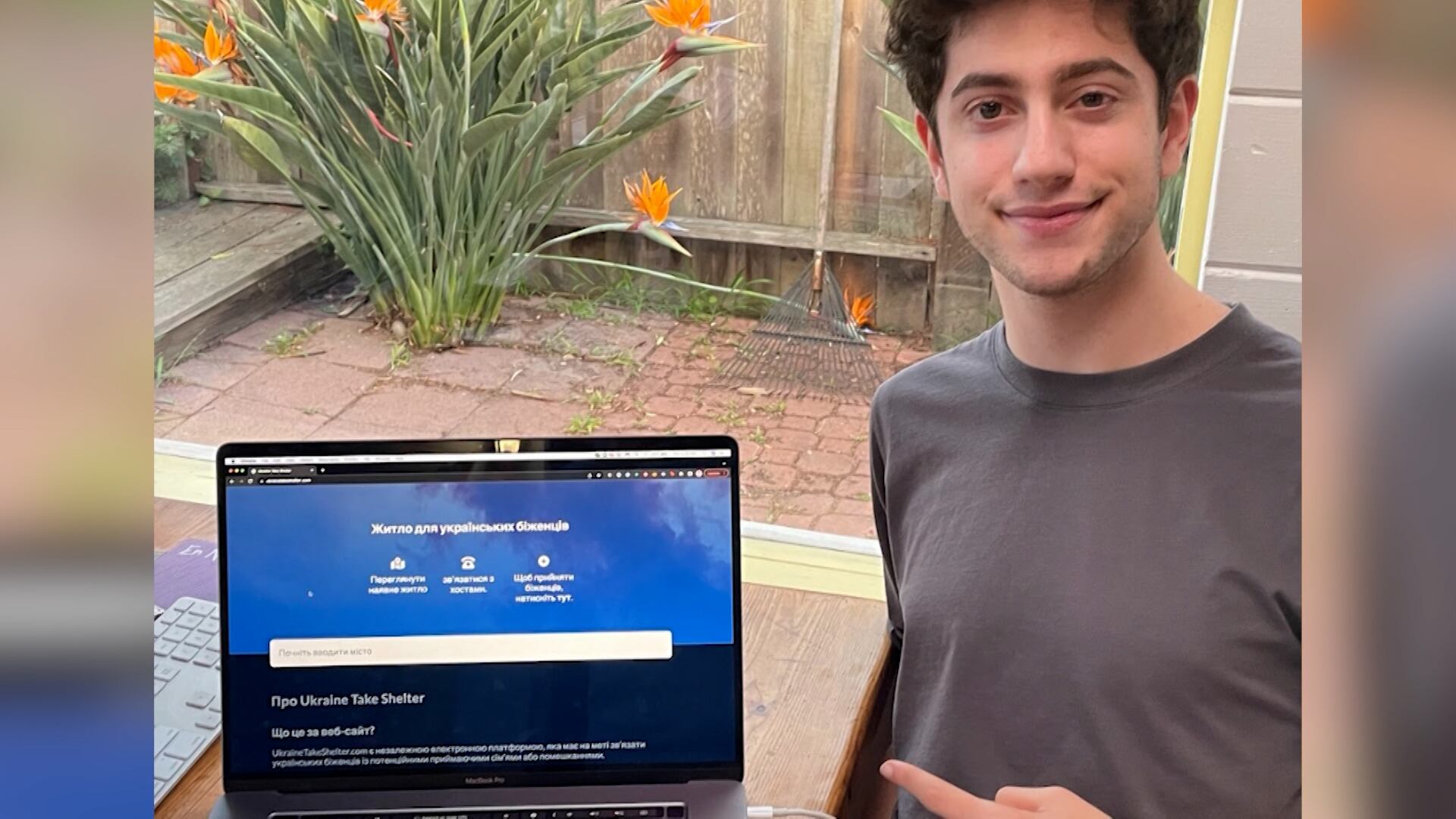
With the number of Ukrainians being displaced due to the Russian invasion surging, two students from Harvard took it on themselves to develop a website to help connect potential hosts with refugees seeking housing. The co-founder of the website Ukraine Takes Shelter, Marco Burstein, joined Cheddar news to discuss working together with fellow freshman Avi Schiffmann to streamline the effort to aid Ukrainian refugees. "We basically worked for three days straight developing the website, and since then the response has been pretty incredible," Burstein said.
Over three weeks ago, WNBA player Brittney Griner was arrested in Russia on drug charges. According to reports, the Star arrived at an airport near Moscow where authorities found Vape cartridges and hashish oil in her luggage. Grindr faces serious charges that could carry a possible sentence of 5-10 years in a Russian prison. Experts warn that Griner's arrest could be used as a bargaining chip. Partner at Stroock & Stroock & Lavan, Thomas Firestone, joined Cheddar to discuss more.
On a live broadcast, an employee on a Russian state news television channel held up a sign protesting propaganda about the war in Ukraine. Ruslan Deynychenko, executive director of the Ukrainian fact-checking organization StopFake, joined Cheddar News to discuss what he called the misinformation spread to the Russian people about the invasion. "They are not about informing people they are about brainwashing people," he said. "Russian government uses their media as an instrument, as a tool, of their foreign policy."
Student loan payments for millions of borrowers are set to resume on May 1st. However, signals from the Department of Education show that the date may be pushed back. Once again, it's been pushed back a few times. Initially, the Biden Administration stated loan payments would resume as the economy continues to show signs of recovery. Student Loan Expert and Author of "How to Appeal for More College Financial Aid", Mark Kantrowitz, joined Cheddar to discuss more.