By Annie Ma and Aaron Morrison
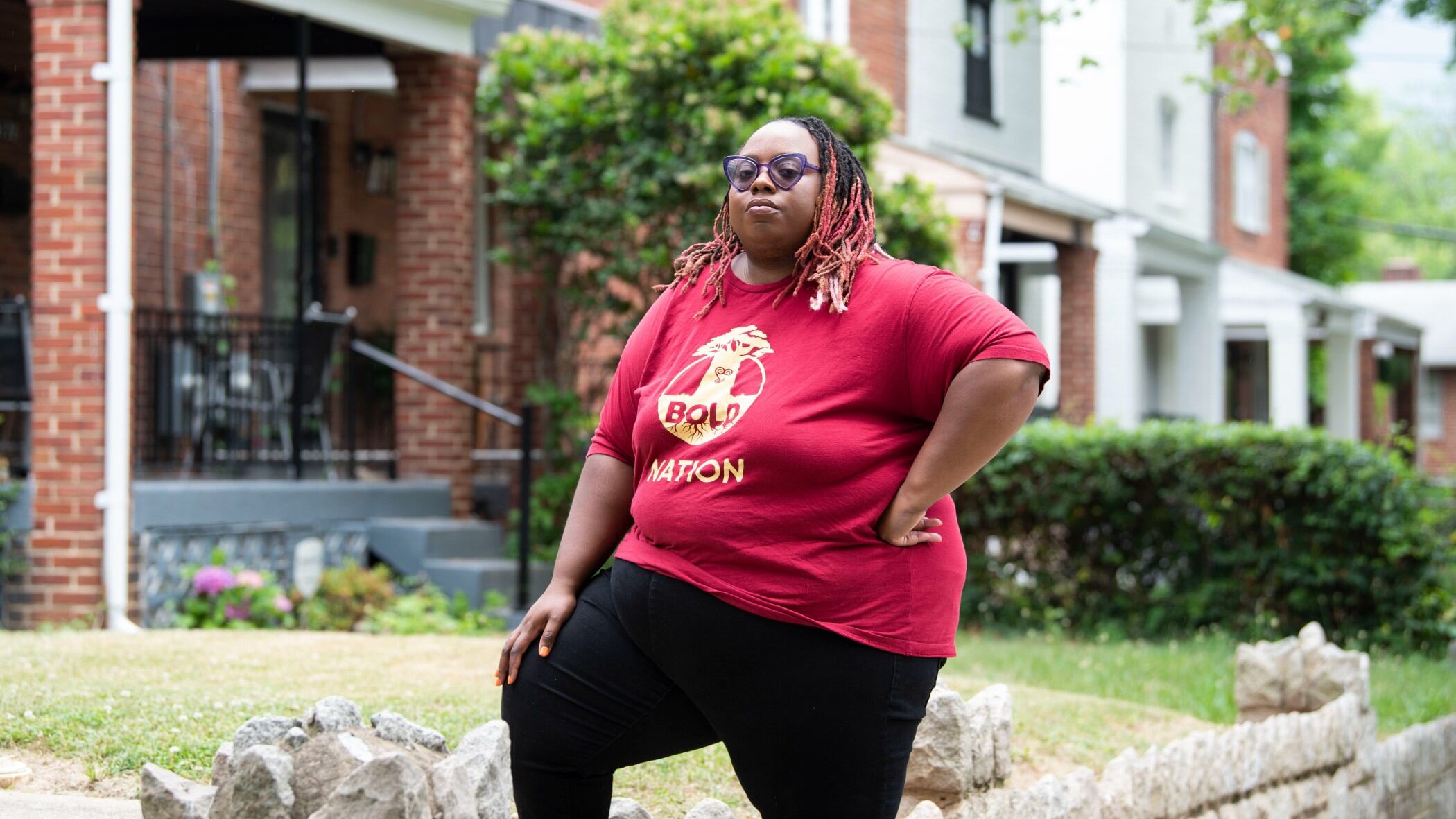
As a Black student who was raised by a single mother, Makia Green believes she benefited from a program that gave preference to students of color from economically disadvantaged backgrounds when she was admitted over a decade ago to the University of Rochester.
As a borrower who still owes just over $20,000 on her undergraduate student loans, she has been counting on President Joe Biden's promised debt relief to wipe nearly all of that away.
Now, both affirmative action and the student loan cancellation plan — policies that disproportionately help Black students — could soon be dismantled by the U.S. Supreme Court. To Green and many other people of color, the efforts to roll them back reflect a larger backlash to racial progress in higher education.
“I feel like working people have been through enough — I have been through enough,” said Green, a community organizer. “From a pandemic, an uprising, a recession, the cost of living price going up. I deserved some relief.”
The rulings could also have political consequences among a generation of young voters of color who took Biden at his word when he promised to cancel debt, said Wisdom Cole, director of NAACP’s youth and college program.
“Year after year, we have elected officials, we have advocates, we have different politicos coming to our communities making promises. But now it’s time to deliver on those promises,” he said.
The president's plan forgives up to $10,000 in federal student debt for borrowers, and doubles the debt relief to $20,000 for borrowers who also received Pell Grants. About half of the average debt held by Black and Hispanic borrowers would be wiped out, according to the White House. Six Republican-led states filed a legal challenge questioning whether the president, a Democrat, has authority to forgive the debt.
In the affirmative action cases, the court is considering the use of race-conscious admissions policies that many selective colleges have used for decades to help build diversity on their campuses. The cases were brought by a conservative activist who argues the Constitution forbids the use of race in college admissions.
The high court is expected to rule in each of the cases by the end of June.
Both cases focus on policies that address historic racial disparities in access to higher education, as Black borrowers tend to take on disproportionately more debt to afford college, said Dominique Baker, an education policy professor at Southern Methodist University.
Backlash to racial progress tends to follow periods of social change and advancement, Baker said. In a study published in 2019, Baker and her co-authors found states were more likely to adopt bans on affirmative action when white enrollment at public flagship universities dropped.
“These are policy tools that have an explicit aim around reducing the power of white supremacy,” Baker said. The two court challenges, she said, can be seen “as linked backlash to two attempts towards racial justice.”
Green, who grew up in a low-income household in Harlem, New York, graduated from Rochester with about $40,000 in federal loan debt. Some of that was erased under a public service forgiveness program when she completed two terms with Americorps, and she whittled it down further with monthly installments until the government paused repayment due to the pandemic.
Green said she sees both court cases as connected to conservative attacks on diversity, equity and inclusion programs. Critics say opposition to such programs is rooted in questions of fairness and in white grievances over the advancement of nonwhite people.
“This is white supremacy at work,” Green said. “This is a long tactic of conservative, white supremacist-leaning groups to use education and limit Black people’s access to education, as a way to further control and oppress us.”
In the 1960s and 1970s, many colleges developed affirmative action plans to address the fact that many predominantly white schools struggled to attract people from historically disadvantaged and underrepresented communities. Policies were also created to promote greater inclusion of women.
Since the late 1970s, the Supreme Court has three times upheld affirmative action in college admissions on grounds that institutions have a compelling interest to address past discrimination that shut nonwhite students out of higher learning. Justices have also agreed with arguments that more diverse student bodies promoted cross-racial understanding.
But with the Supreme Court skewing more ideologically conservative, some former students and advocates worry how a ruling against affirmative action might affect diversity on campuses.
Tarina Ahuja, a rising senior at Harvard College, said being part of a diverse student body has been a crucial part of her undergraduate experience. She recalled classes where students discussed their lived experiences on topics such as police violence, colonialism and labor movements — discussions that would have fallen flat without a diverse range of student perspectives.
“The decision is going to very likely be something that is scary to a lot of us,” she said.
In anticipation of a possible ruling against race-conscious admissions, some colleges are considering adding more essays to get a better picture of an applicant’s background. Others are planning to boost recruiting in racially diverse areas. But in states that have already banned affirmative action, similar efforts at selective colleges have largely failed to maintain diversity gains.
Jonathan Loc, a graduate student at Harvard who helped organize teach-ins in support of affirmative action, said that for students of color, it's impossible to speak about their lives without mentioning race, whether through hardships faced or simply their pride in their cultural heritage.
“I grew up as the son of refugees in a low-income community and a single parent family burdened with the model minority myth,” he said. “But I think that that kind of narrative also helps me to be an Asian American focused on racial justice, focused on making sure that everyone who has a unique story related to their racial background or any background has that story heard.”
If the court rules against affirmative action, it will be important for colleges to find ways to show they see the students as more than a number on paper, said Damon Hewitt, president and executive director of the Lawyers’ Committee for Civil Rights Under Law.
“We need the schools to say, ’Look, the court says we can’t consider race, but we still see you,'” said Hewitt, whose organization defended affirmative action before the Supreme Court in October.
Kristin McGuire, the executive director of Young Invincibles, said that she could not overlook the decisions looming over the upcoming Juneteenth holiday, which marks the emancipation of enslaved people in Texas two years after the Emancipation Proclamation. For two years after abolition, Black Americans were kept as laborers and denied the freedom to begin building generational wealth, McGuire said.
“If both of these are struck down, it will send a very clear signal that our court system does not support the most vulnerable populations, especially those who helped build this country,” McGuire said.