While reports of COVID-19 outbreaks have shut down factories or disrupted supply chains for the traditional meat industry, plant-based meat company Impossible Foods has found itself expanding its reach -- this time through a new partnership with Starbucks.
The coffee chain announced this week it will be featuring the Impossible Breakfast Sandwich on its summer menu.
"Something like one-third of all the 18- to 29-year-olds in the country hit a Starbucks at least once a quarter," David Lee, Impossible Foods' chief financial officer, told Cheddar. "And so for us to be available in this way, to have nearly 20,000 locations serve our Impossible Sausage products, is a wonderful milestone for us."
Lee explained that Impossible's co-manufacturing partnerships, such as the one it shares with food supplier OSI Group, provides enough scalability to supply the market for its meat alternatives.
"It means that we can meet the large demand we expect from Starbucks, Burger King, many other partners, but also a really rapid rollout in grocery stores, which we began to speed up sometime around March or so this year," he said.
The CFO was also confident the company was addressing challenges from the coronavirus pandemic by selling Impossible Burgers that can be delivered straight to customers' homes. He reported that grocery sales of its products had grown 30 times over since March when most stay-at-home orders began, in addition to the orders made directly to Impossible.
"The theme has been scaling to meet unprecedented demand. As a result we feel relatively well-prepared to handle how this current pandemic has changed the way meat-eaters like to get their meat," he said. "We're seeing folks order it directly from us to be shipped to their home, which is why we created our direct-to-consumer business."
Still, Impossible Foods has had to weather the pandemic like many other businesses, including the meatpacking industry. According to Lee, however, the stark differences in the businesses give plant-based meat an advantage.
"Unlike many of those unfortunate meat plants, we bypass a lot of the problems they face," he noted. "We don't grow animals, slaughter them, transport them, process them, so we don't have the same challenging conditions the meat industry faces."
Lee also agreed with Impossible Foods founder and CEO Pat Brown, who predicted on Tuesday that the meat industry will be facing its own extinction in just 15 years.
"I believe in the meat-eater," Lee said. "We meat-eaters are pretty sophisticated. You give us a better product that hits the spot, that's better for our health, that's better for the world -- we vote with our stomachs."
"I think the consumer will determine the future and will determine it pretty quickly."
In March, Impossible raised $500 million in Series F funding but despite the aggressive scaling and partnerships Lee described, he said there are no current plans to join fellow plant-based meat company, Beyond, as a public company.
Mario Stefanidis, Vice President of Research at Roundhill Investments, joins Cheddar News' Closing Bell, where he explains why shares of GameStop soared on Wall Street despite mixed results. Stefanidis also breaks down GameStop's NFT plans, which the company is expected to launch over this summer.
Neonvest is a platform connecting startups and entrepreneurs with experts in the VC space. The startup says it's in the process of raising a seed round of approximately $2.5 million from a mix of angel and institutional investors. Aakash Shah, co-founder of NeonVest, joins Cheddar News' Closing Bell to discuss.
The Russia-Ukraine conflict is becoming a global one: as the West isolates Russia's economy with sanctions and China contemplates an alliance of sorts with Russia, global trade relationships and globalization as we know it could change dramatically. John Leer, Chief Economist at Morning Consult, joins Closing Bell to discuss what the invasion means for globalization, global trade and growth, the U.S. economy and consumer, and more.
March Madness kicked off this month as more and more states are legalizing sports betting — and some major upsets almost immediately busting many a bracket. Jay Croucher, the director of trading at the sportsbook PointsBet, joined Cheddar News to talk about the tournament and the current top picks. "There's not too much difference in terms of the busiest days of the year between the Super Bowl and the first day of March Madness," he said.
The Bill Gates-founded Breakthrough Energy company invested $80 million in Verdox Inc. to facilitate efficient, lower-cost technolog to remove carbon from the air and emission sources. CEO of Verdox, Brian Baynes, joined Cheddar News to discuss the investment, how the company's tech works, and where he sees it going. "We anticipate that with technologies like ours, we potentially can get to the scale of about a million tons per year within 5-10 years," he said. "And then ultimately we need to be doing this at the scales of billions of tons per year and ultimately about 10 billion tons per year in the year 2050."
Amazon closed its deal to buy MGM's many content brands for $8.5 billion, and Michael Pachter, a managing director at Wedbush Securities, joined Cheddar News to discuss the e-commerce giant's second-largest acquisition to date and how he thinks it will all pay off. "To make a movie today, you just can't even think about it for less than 30 million bucks, so 4,000 movies, I mean that's several billion dollars worth of assets," he said, noting how it would also add to Amazon's little-known ad-supported IMDb TV service. "I don't know that the IMDb TV guys actually talk to the Amazon Prime Video guys, but a lot of content, it makes the value of a Prime subscription much, much greater, and people are far, far less likely to churn even if they're only buying one package every three months."
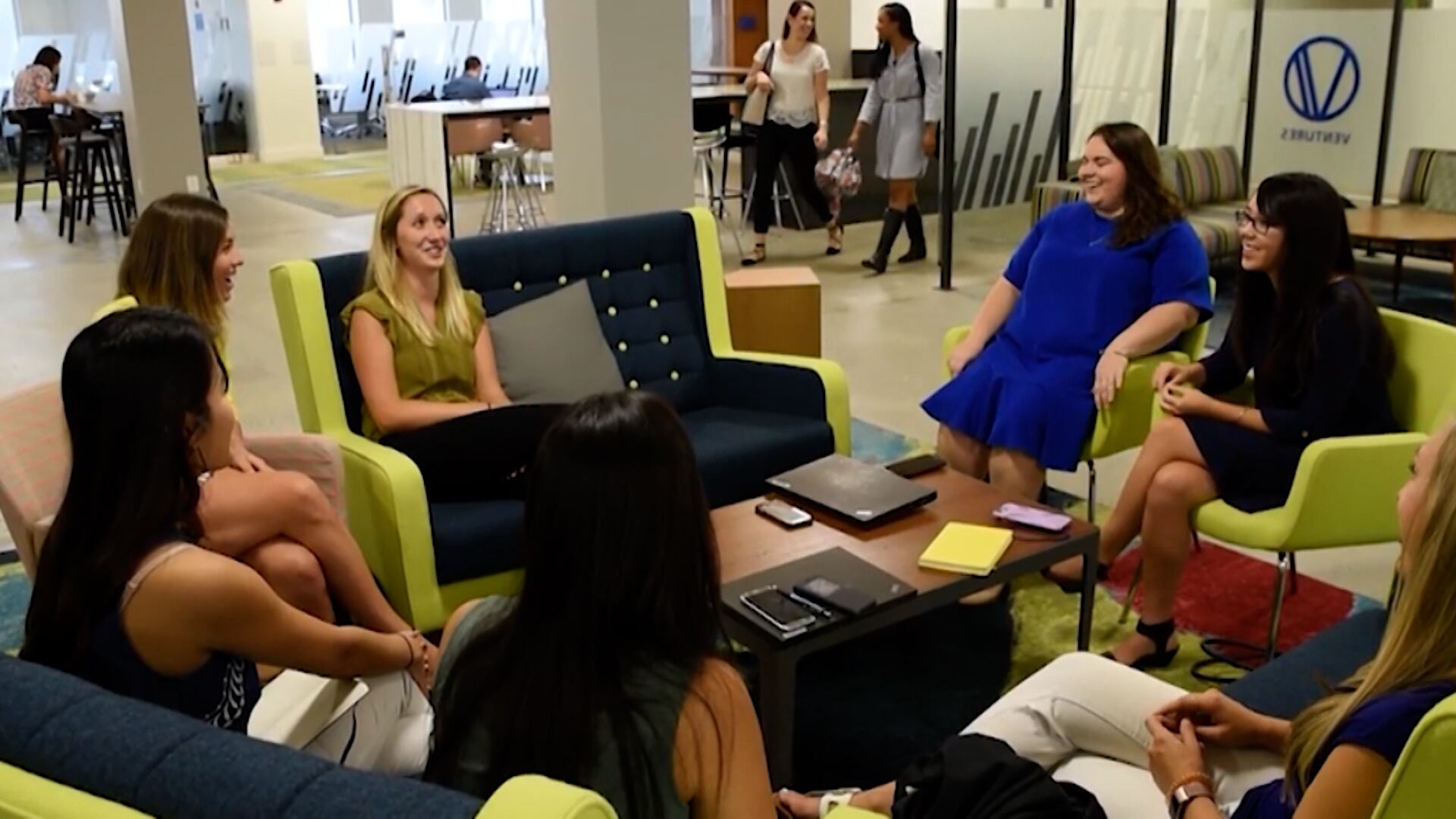
Rachel Thomas, the co-founder and CEO of the non-profit Lean In, joined Cheddar amid Women's History Month, to discuss how the organization is taking on issues that continue to impact the workplace through its Circles program. "These are a program that brings women together in small groups, usually 8 to 12, for support, camaraderie, and to learn together," she said. "We also we have a lot of curriculum so women can learn how to navigate workplace biases, how to negotiate with women." Thomas also applauded President Biden's recent call to action on equal pay for women, noting that businesses must do more to be cognizant of inherent gender and racial biases.
From Wall Street to Silicon Valley, these are the top stories that moved markets and had investors, business leaders, and entrepreneurs talking this week on Cheddar.
Beer brand Heineken recently revealed its foray into the metaverse was something of a joke, but how serious are brands taking the latest craze in general? Cheddar's Alex Vuocolo takes a closer look.