While reports of COVID-19 outbreaks have shut down factories or disrupted supply chains for the traditional meat industry, plant-based meat company Impossible Foods has found itself expanding its reach -- this time through a new partnership with Starbucks.
The coffee chain announced this week it will be featuring the Impossible Breakfast Sandwich on its summer menu.
"Something like one-third of all the 18- to 29-year-olds in the country hit a Starbucks at least once a quarter," David Lee, Impossible Foods' chief financial officer, told Cheddar. "And so for us to be available in this way, to have nearly 20,000 locations serve our Impossible Sausage products, is a wonderful milestone for us."
Lee explained that Impossible's co-manufacturing partnerships, such as the one it shares with food supplier OSI Group, provides enough scalability to supply the market for its meat alternatives.
"It means that we can meet the large demand we expect from Starbucks, Burger King, many other partners, but also a really rapid rollout in grocery stores, which we began to speed up sometime around March or so this year," he said.
The CFO was also confident the company was addressing challenges from the coronavirus pandemic by selling Impossible Burgers that can be delivered straight to customers' homes. He reported that grocery sales of its products had grown 30 times over since March when most stay-at-home orders began, in addition to the orders made directly to Impossible.
"The theme has been scaling to meet unprecedented demand. As a result we feel relatively well-prepared to handle how this current pandemic has changed the way meat-eaters like to get their meat," he said. "We're seeing folks order it directly from us to be shipped to their home, which is why we created our direct-to-consumer business."
Still, Impossible Foods has had to weather the pandemic like many other businesses, including the meatpacking industry. According to Lee, however, the stark differences in the businesses give plant-based meat an advantage.
"Unlike many of those unfortunate meat plants, we bypass a lot of the problems they face," he noted. "We don't grow animals, slaughter them, transport them, process them, so we don't have the same challenging conditions the meat industry faces."
Lee also agreed with Impossible Foods founder and CEO Pat Brown, who predicted on Tuesday that the meat industry will be facing its own extinction in just 15 years.
"I believe in the meat-eater," Lee said. "We meat-eaters are pretty sophisticated. You give us a better product that hits the spot, that's better for our health, that's better for the world -- we vote with our stomachs."
"I think the consumer will determine the future and will determine it pretty quickly."
In March, Impossible raised $500 million in Series F funding but despite the aggressive scaling and partnerships Lee described, he said there are no current plans to join fellow plant-based meat company, Beyond, as a public company.
The La Niña effect in the Pacific Ocean is leading to rough forecasts this winter in the Northern Hemisphere. Suketu Gandhi, supply chain partner at Kearney, joined Cheddar to discuss the likelihood food prices and shipping get disrupted amid the meteorological event especially considering existing supply chain problems. "The global supply chains are going to be truly disrupted with La Niña," he said, pointing to COVID-19 and political changes as factors. "So, the Jenga called 'supply chain' is just one brick away from falling down completely." In 2011, the last significant La Niña year, food prices reached record highs.
Emily Tisch Sussman, senior advisor at Paid Leave US, joined Cheddar's "Between Bells" to discuss paid leave being stripped from the latest budget bill and why it is crucial for parents to have paid time off. Sussman said the pandemic, in particular, highlighted the disparity between women, who left the work force in droves to care for family, and men who continue to work and be rehired as impacted sectors of the economy return.
Amid weeks of recent controversy, Facebook this week announced it would be changing its corporate name to Meta as it pivots to the metaverse and virtual reality products. Dan Ives, Managing Director of Equity Research at Wedbush Securities, joins Cheddar News' Closing Bell to discuss the rebrand, whether chief Mark Zuckerberg can separate his identity from the company, and what the rebrand means for shareholders.
The Dow, S&P, and Nasdaq each ended Friday's session at a record high as stocks rallied into the green. Chris Vecchio, Senior Analyst at DailyFX, joins Cheddar News' Closing Bell, where he says this was an 'October to remember' for Wall Street.
Cryptocurrency platform Blockchain.com launched margin trading on its exchange earlier this month. The company's Chief Business Officer, Lane Kasselman, joins Cheddar News' Closing Bell, where he discusses how margin trading works in the crypto space and what users will be able to do on the platform.
Apple reported strong fourth quarter earnings, but sales fell below expectations. CEO Tim Cook said chip shortages and manufacturing delays cost the company $6 billion. The issues have led to the newly-launched iPhone 13 Pro being in short supply around the world, as well as to back orders for Apple's new Macbook Pro. Exponential Investment Partners Managing Partner Kevin Riley joined Cheddar News' Closing Bell to discuss.
Electric bike company Dance recently raised $19.4 million, just weeks after rolling out its e-bike subscription service in Berlin. Dance allows users to subscribe to use an e-bike for around €79, or about $91, a month. Dance says its subscription model allows the company to reuse and refurbish its products, and further its mission to build more sustainable and livable cities. Dance founder and CEO Eric Quidenus-Wahlforss joined Cheddar News' Closing Bell to discuss.
Project management platform ClickUp raised $400 million in Series C funding this week, and founder and CEO Zeb Evans joined Cheddar's "Closing Bell" to talk about taking the added funds to help make the workplace more efficient by being a one-stop-shop for office needs. He also discussed a growing demand for his company's services during the pandemic as companies seek solutions to keep their employees on the same page.
How much real money would you pay for a virtual plot of land? Developing technology is introducing everyone in the real world to new, virtual worlds, like Decentraland. In this metaverse economy, users are buying virtual real estate at high value – and it’s not just the average Joe that’s looking to invest. Company's like Facebook are betting big.
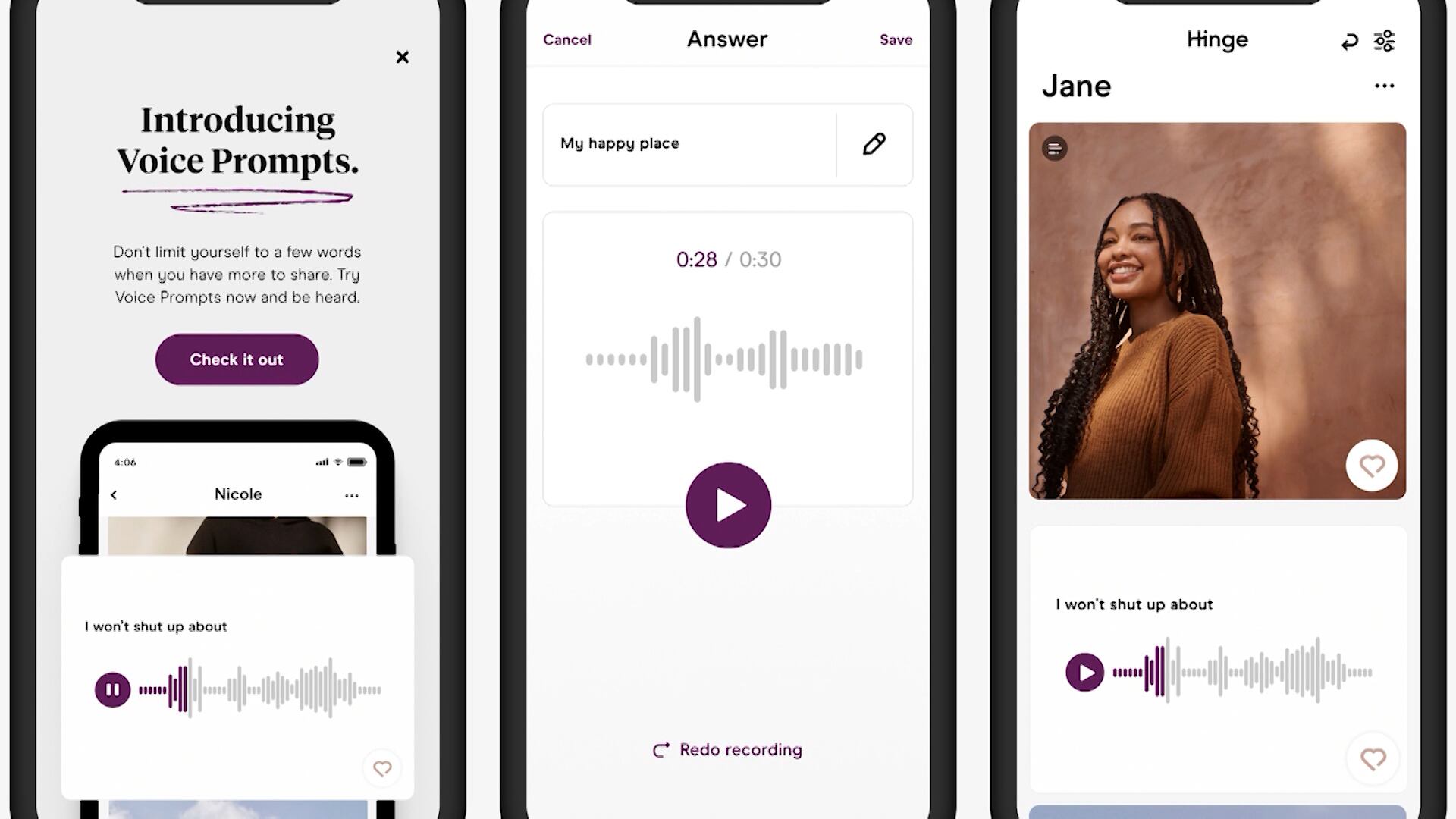
The dating app Hinge says it's taking online dating to the next level by introducing a voice prompt feature for profiles. Michelle Parsons, chief product officer, joined Cheddar to talk about providing the question prompts for users to make accounts more personable in their own voice. She also went into how much the pandemic has had an impact on engagement.