*By Michael Teich*
Uber is driving itself to the center of the scooter scuffle with its strategic partnership with Lime, a deal that will allow users to eventually request an electric scooter through its app.
Axios reporter Dan Primack, who broke the story, says there's a key advantage to the bike-sharing company choosing Uber as a partner over rival Lyft.
"One of the big reasons Lime wanted to partner with Uber is because Uber has much deeper geographic penetration, especially internationally," Primack said in an interview on Cheddar Tuesday. On top of that, "Uber has the deepest pockets right now. "
A fragile relationship with city officials, though, could hold back Uber and Lime from a complete transportation takeover. San Francisco is only granting five permits for companies to operate a dock-less, rentable electric scooter programs on city streets. While Primack said it's still unclear whether either company will be one of the chosen, he noted that Lime's survival does not depend on the SF market because it is already in 80 other regions.
"It wouldn't be end of world if they didn't get into San Francisco."
Despite sky-high valuations for scooter companies such as Lime and Bird, Primack told Cheddar it is unlikely that the industry is in a bubble. He also does not expect the deals in the scooter business to lose momentum, predicting that we could soon see Uber fully acquire Lime.
"My guess is that it would happen quick," he said.
For the full segment, [click here.](https://cheddar.com/videos/primack-uber-best-positioned-in-scooter-wars)
Facebook parent Meta’s miss on Q4 earnings raised alarm bells amongst investors. The tech giant lost users for the first time as it invests a lot into the metaverse, its virtual realm, in the hopes that consumers will move their social media consumption there. The stock dropped around 25 percent on the report, and CEO Mark Zuckerberg chalked it up to people flocking toward apps like TikTok, even as his own platform attempts to make a big pivot to the metaverse future. "It's gonna take a long time to develop and it's gonna take a long time to bring to fruition," Rebecca Walser, president of Walser Wealth Management told Cheddar. "In the meantime, the world is moving on. We have a very short attention span, especially on social media, and we want the short little videos. And Tiktok has just taken off."
Wall Street saw another volatile day after the Federal Reserve left rates unchanged for now, with plans to raise rates in March at its next meeting in order to ease inflation. Fed Chair Jerome Powell said the Fed has not made decisions on the size of rate increases, adding that the Fed is not trying to get inflation below two-percent. Ken Johnson, CFA and Investment Strategy Analyst explains why Powell thinks that high inflation is a significant threat to the labor market.
Ed Butowsky, managing partner at Chapwood Investments, joined Wake Up With Cheddar to break down the disappointing takeaways from Spotify's Q4 earnings report, which sent the stock plunging.
Anu Gaggar, global investment strategist for Commonwealth Financial Network, joined Cheddar News to discuss how global supply chains could be disrupted even further by an armed conflict in Ukraine.
Google parent company Alphabet saw yet another successful quarter reporting its final earnings report for 2021 on Tuesday. The tech giant beat Wall Street expectations across the board with much of that success owed to not only the growth of its cloud business, but also its multi-platform advertising. Joanna O'Connell, Principal Analyst at Forrester explains why advertising may be one of the keys to Alphabet’s future success.
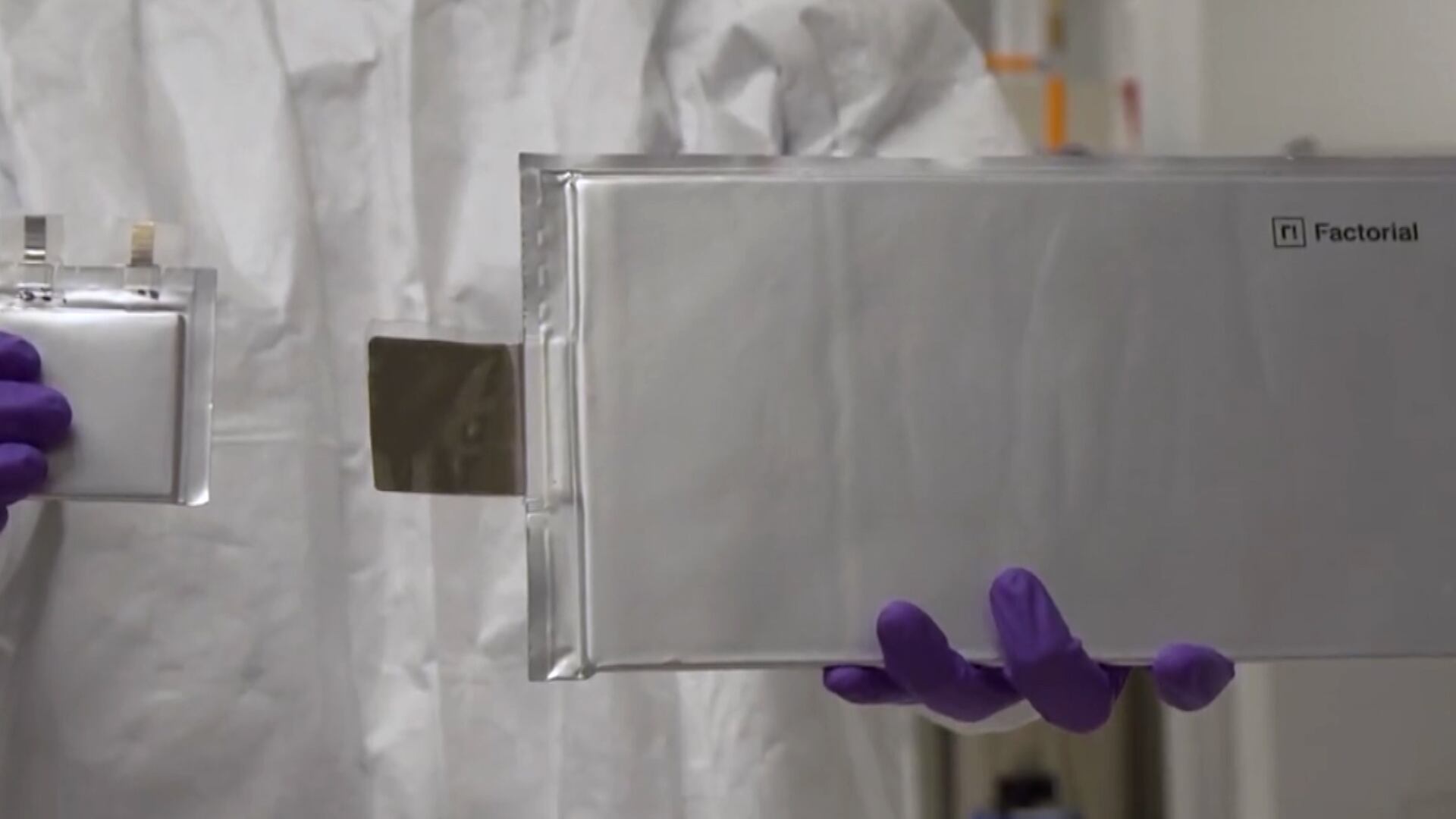
Solid-state battery maker Factorial Energy recently raised $200 million in a Series D round led by Mercedes-Benz and Stellantis. Factorial says the funding will be used to accelerate commercial production and deployment of its solid-state battery technology, which the company says is safer, and offers up to 50% more driving range than current lithium-ion technology. Factorial also has joint development agreements (announced in late 2021) with Mercedes-Benz, Stellantis, and Hyundai, three of the top 10 global automotive manufacturers, to commercialize its batteries. Factorial CEO Siyu Huang joined Cheddar News' Closing Bell to discuss.