How the #MeToo Movement is Impacting America's Newsrooms
At the helm of the top media outlets in the nation are all men. The Washington Post's Media Columnist Margaret Sullivan explains the conditions facing women in news, and ways to close the gender gap in newsroom mastheads.
"I think there are more women in powerful positions in media than there ever have been before," says Sullivan. "The problem is at the very, very top of those very powerful news organizations it's pretty rare for a woman to have broken through."
Men wrote 52 percent of bylined news articles and opinion pieces about reproductive issues in the nation’s 12 most widely circulated newspapers and news wires. Meanwhile, women penned 37 percent, according to the 2017 Women's Media Center Report. Men won 84 percent of a century’s worth of Pulitzer Prizes, while women won only 16 percent according to Women's Media Center.
On how the #MeToo movement has impacted newsrooms, Sullivan says, "to say this whole thing gone too far is really misguided." She goes on to say, "I think what's really going to rule the day is that this major reckoning we're having in our society and how extremely important it is and how it was brought about by courageous journalists and courageous women."
Every few years, the Olympics roll around to prove that, yes, the world’s best athletes can jump farther, swim faster, and generally crush records that would’ve been impossible just a few decades ago. Take ski jumping - the world record has increased by well over 200 meters in fewer than 100 years. Responsible for this is a lot of intentional engineering of equipment and hills, but perhaps the biggest change is thanks to one act of human daring. Watch to find out how!
YouTube creator platform Spotter recently announced $200 million in Series D financing at a valuation of $1.7 billion, led by SoftBank Vision Fund 2. Spotter allows YouTubers to license the rights to their video catalogs in exchange for large sums of cash paid upfront. The company's clients include some of YouTube's most popular personalities, with a combined total of more than 1.2 billion subscribers. Aaron Debevoise, founder and CEO of Spotter, joins Cheddar News' Closing Bell to discuss.
What if we added the equivalent of over 1300 football fields to the tip of Manhattan? This was the proposal of a recent op-ed in The New York Times - increasing the size of the borough by about 12% in order to mitigate two of its most pressing problems. There’s evidence from all over the world that doing this can be a useful technique for crowded ocean-side cities. But the process to do so - reclaiming land from the ocean - is rife with potential downsides. So is this a proportional response to gigantic problems? Or a zany harebrained scheme that’ll do more harm than good?
Marti Bledsoe Post, executive director of On Our Sleeves, joins Cheddar News to discuss the latest study finding the impact children's mental health can have on working parents.
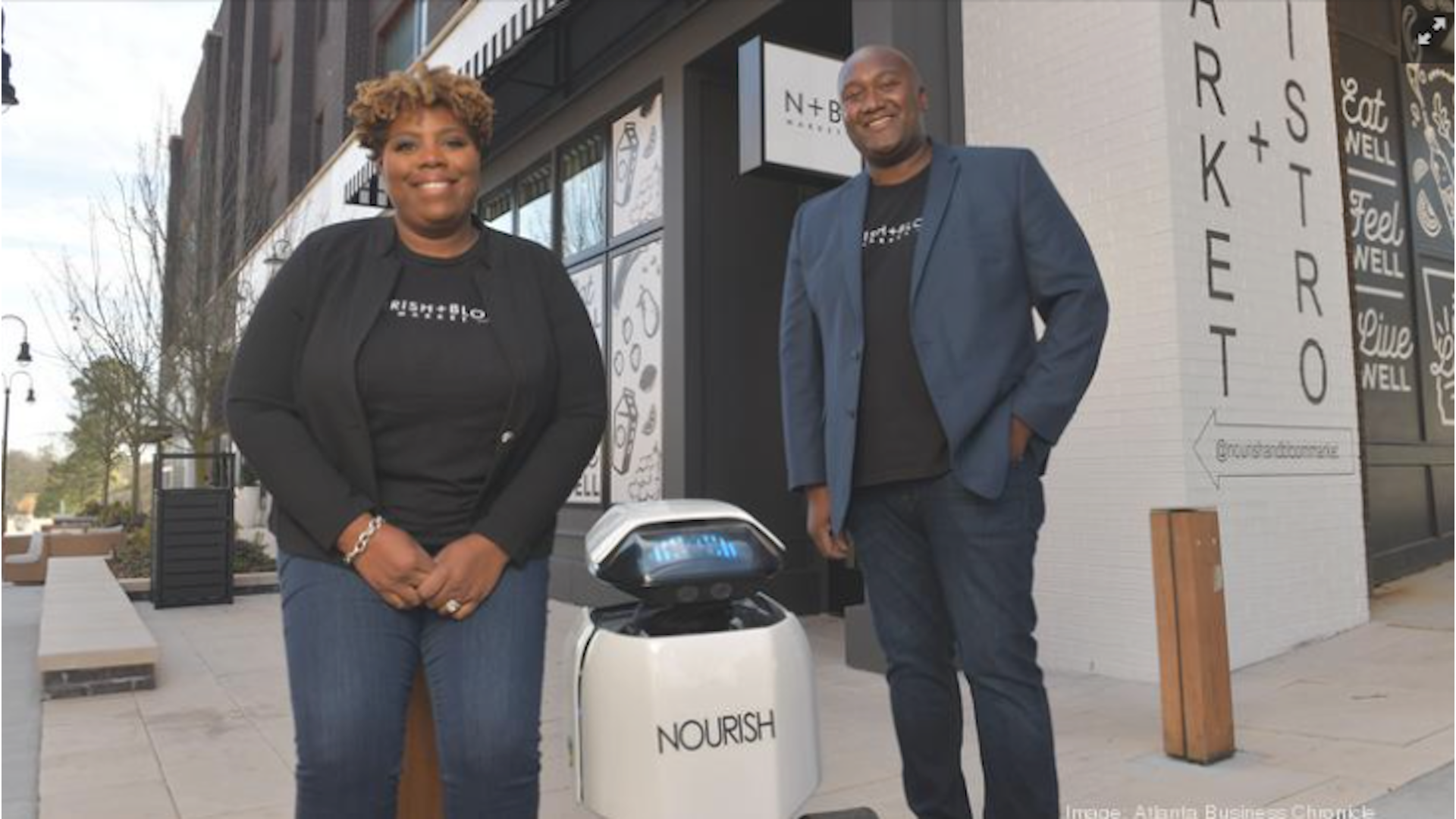
Jamie Hemmings and Jilea Hemmings, owners and founders of Nourish + Bloom Market, join Cheddar News to talk about the inspiration behind creating their cashierless grocery store.
Bartholomew Jones and Renata Henderson, co-owners of Cxffeeblack, join Cheddar News to discuss how they are merging Black culture with coffee in Memphis.
Dr. Daniel Bober, psychiatrist and certified addiction medicine physician, joins Cheddar News to offer tips on how parents and guardians can talk to their children about what's happening in Ukraine.
Abigail Pringle serves as president, international and chief development officer at Wendy’s. She joins Cheddar News to discuss the company's Q4 earnings and its diversity initiative for franchise owners.
Brad Pitt’s production company “Plan B” wants to bring “Beetlejuice” back to the big screen. The sequel concept is in its earliest stages as there is no word of a script yet. The production company is also set to produce “Parasite” director Bon Joon-ho’s newest film as well.