By Stephen Groves and Lisa Mascaro
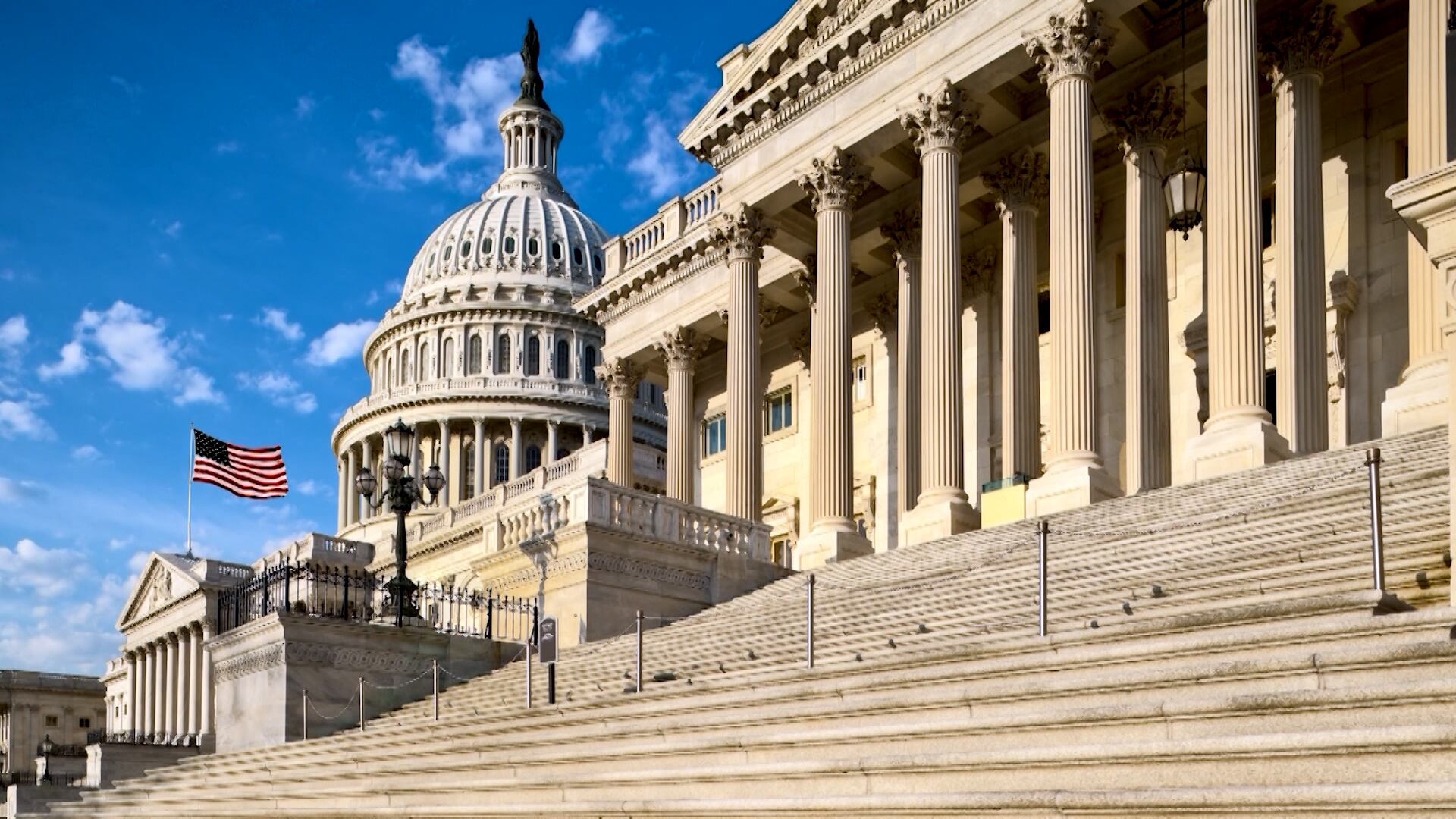
The House voted overwhelmingly Tuesday to prevent a government shutdown after new Republican Speaker Mike Johnson was forced to reach across the aisle to Democrats when hard-right conservatives revolted against his plan.
Johnson's proposal to temporarily fund the government into the new year passed on a bipartisan 336-95 tally, but 93 Republicans voted against it. It was the first time the new speaker had to force vital legislation through the House, and he showed a willingness to leave his right-flank Republicans behind — the same political move that cost the last House speaker, Kevin McCarthy, his job just weeks ago.
For now, Johnson of Louisiana appeared on track for a better outcome. His approach, which the Senate is expected to approve by week’s end, effectively pushes a final showdown over government funding to the new year.
“Making sure that government stays in operation is a matter of conscience for all of us. We owe that to the American people," Johnson said earlier Tuesday at a news conference at the Capitol.
The new Republican leader faced the same political problem that led to McCarthy's ouster — angry, frustrated, hard-right GOP lawmakers rejected his approach, demanded budget cuts and voted against the plan. Rather than the applause and handshakes that usually follow passage of a bill, several hardline conservatives animatedly confronted the speaker as they exited the chamber.
Without enough support from his Republican majority, Johnson had little choice but to rely on Democrats to ensure passage to keep the federal government running.
Johnson's proposal puts forward a unique — critics say bizarre — two-part process that temporarily funds some federal agencies to Jan. 19 and others to Feb. 2. It’s a continuing resolution, or CR, that comes without any of the deep cuts conservatives have demanded all year. It also fails to include President Joe Biden’s request for nearly $106 billion for Ukraine, Israel, border security and other supplemental funds.
“We're not surrendering,” Johnson assured after a closed-door meeting of House Republicans Tuesday morning, vowing he would not support another stopgap. “But you have to choose fights you can win.”
Johnson, who announced his endorsement Tuesday of Donald Trump as the Republican nominee for president, hit the airwaves to sell his approach and met privately Monday night with the conservative Freedom Caucus.
Johnson says the innovative approach would position House Republicans to “go into the fight” for deeper spending cuts in the new year, but many Republicans are skeptical there will be any better outcome in January.
Rep. Chip Roy, a Texas Republican who is part of the House Freedom Caucus, did not hold back on his opinion of the stopgap bill: “It’s crap.”
He said he would give “a little bit of room” to Johnson, who is three weeks into the job of speaker. But Roy threatened to seize control of the House floor if conservative demands for cuts are not met in the months ahead.
The opposition from hardline conservatives left Johnson with few other options than to skip what's typically a party-only procedural vote, and rely on another process that requires a two-thirds tally with Democrats for passage.
House Democratic leader Hakeem Jeffries said Democrats were willing to find common ground with Republicans “while pushing back against Republican extremism whenever necessary.”
In a statement with the other the top Democratic leaders, Jeffries pointed out that a federal shutdown “would hurt the economy, our national security and everyday Americans." He had noted in a letter to colleagues that the GOP package met Democratic demands to keep funding at current levels without steep reductions or divisive Republican policy priorities.
Winning bipartisan approval of a continuing resolution is the same move that led McCarthy’s hard-right flank to oust him in October, days after the Sept. 30 vote to avert a federal shutdown. For now, Johnson appears to be benefiting from a political honeymoon in one of his first big tests on the job.
“Look, we’re going to trust the speaker’s move here," said Rep. Drew Ferguson, R-Ga.
But Rep. Marjorie Taylor Greene, R-Ga., a McCarthy ally who opposed his ouster, said Johnson should be held to the same standard. “What’s the point in throwing out one speaker if nothing changes? The only way to make sure that real changes happen is make the red line stay the same for every speaker.”
The Senate, where Democrats have a slim majority, has signaled its willingness to accept Johnson's package ahead of Friday's deadline to fund the government.
Senate Republican leader Mitch McConnell called the House package “a solution” and said he expected it to pass Congress with bipartisan support.
“It’s nice to see us working together to avoid a government shutdown," he said.
But McConnell, R-Ky., has noted that Congress still has work to do toward Biden's request to provide U.S. military aid for Ukraine and Israel and for other needs. Senators are trying to devise a separate package to fund U.S. supplies for the overseas wars and to bolster border security, but it remains a work in progress.
If approved, passage of the continuing resolution would be a less-than-triumphant capstone to the House GOP's first year in the majority. The Republicans have worked tirelessly to cut federal government spending only to find their own GOP colleagues unwilling to go along with the most conservative priorities. Two of the Republican bills collapsed last week as moderates revolted.
Instead, the Republicans are left funding the government essentially on autopilot at the levels that were set in bipartisan fashion at the end of 2022, when Democrats had control of Congress but the two parties came together to agree on budget terms.
All that could change in the new year when 1% cuts across the board to all departments would be triggered if Congress failed to agree to new budget terms and pass the traditional appropriation bills to fund the government by springtime.
The 1% automatic cuts, which would take hold in April, are despised by all sides — Republicans say they are not enough, Democrats say they are too steep and many lawmakers prefer to boost defense funds. But they are part of the debt deal McCarthy and Biden struck earlier this year. The idea was to push Congress to do better.
The legislation also extends farm bill programs through September, the end of the current fiscal year. That addition was an important win for some farm-state lawmakers. Rep. Mark Pocan, D-Wis., for example, warned that without the extension, milk prices would have soared and hurt producers back in his home state.
“The farm bill extension was the biggest sweetener for me,” said Pocan.
Associated Press writers Kevin Freking, Farnoush Amiri and Mary Clare Jalonick contributed to this report.