By Farnoush Amiri and Lindsay Whitehurst
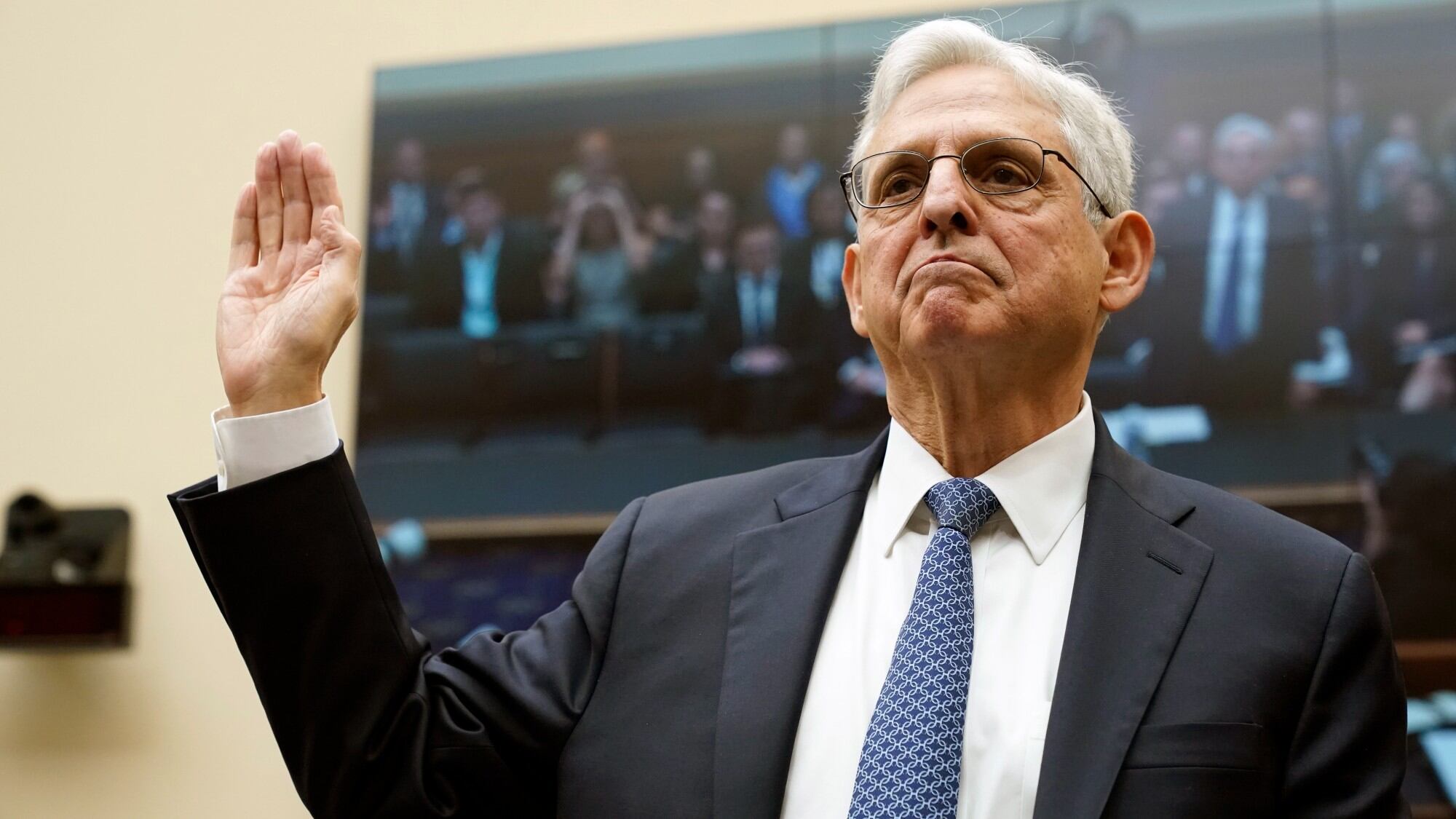
House Republicans clashed with Attorney General Merrick Garland on Wednesday, accusing him and the Justice Department of the “weaponization” of the department's work in favor of President Joe Biden 's son Hunter.
Garland’s appearance before the House Judiciary Committee was his first in two years and came at an unprecedented moment in the department’s history: He’s overseeing two cases against Donald Trump, the first former president to face criminal charges, and another against the sitting president's son.
Republicans on the committee — led by chairman Jim Jordan of Ohio — set the tone with accusations that the Justice Department is favoring the Biden family while targeting his likely 2024 opponent, Trump.
“There’s one investigation protecting President Biden. There’s another one attacking President Trump,” Jordan declared. “The Justice Department’s got both sides of the equation covered.”
Garland — carefully and deliberately — defended the country’s largest law enforcement agency of more than 115,000 employees at a time when political and physical threats against agents and their families are on the rise.
“Our job is not to take orders from the president, from Congress, or from anyone else, about who or what to criminally investigate,” the attorney general said. “I am not the president’s lawyer. I will also add that I am not Congress’ prosecutor. The Justice Department works for the American people."
Questioning in the Republicans' arsenal focused on allegations that the Justice Department interfered in the yearslong case into Hunter Biden and that the prosecutor in charge of that case did not have the full authority he needed to bring necessary charges.
Republican Mike Johnson of Louisiana asked Garland whether he had talked with anyone at FBI headquarters about the Hunter Biden investigation. The attorney general’s response began with a long pause before he said: “I don’t recollect the answer to that question,” later adding “I don’t believe that I did.”
Garland then said repeatedly that he purposely kept the details of the investigation at arms length, to keep his promise not to interfere.
His testimony came just over a week after House Speaker Kevin McCarthy, R-Calif., launched an impeachment inquiry into Garland's boss, President Biden, with a special focus on the Justice Department’s handling of Hunter Biden’s case.
The White House has dismissed the impeachment inquiry as baseless and has worked to focus the conversation on policy instead.
“These sideshows won’t spare House Republicans from bearing responsibility for inflicting serious damage on the country,” Ian Sams, a White House spokesperson, said in a statement Wednesday.
Hunter Biden’s legal team, on the other hand, has gone on the offensive against GOP critics, most recently filing suit against the Internal Revenue Service after two of its agents raised whistleblower claims to Congress about the handling of the investigation.
Republicans contend that the Justice Department — both under Trump and now Biden — has failed to fully probe the allegations against the younger Biden, ranging from his work on the board of Ukrainian energy company Burisma to his tax filings in California and Washington D.C.
An investigation into Hunter Biden had been run by the U.S. Attorney for Delaware, Trump appointee David Weiss, who Garland kept on to finish the probe and insulate it from claims of political interference. Garland granted Weiss special counsel status last month, giving him broad authority to investigate and report his findings.
Last week, Weiss used that new authority to indict Hunter Biden on federal firearms charges, putting the case on track toward a possible trial as the 2024 election looms.
When asked by Rep. Dan Bishop, R-N.C., whether he had tried to figure out if Weiss was facing any hurdles in bringing charges against the president’s son, Garland said he had purposely kept his distance to keep a promise not to interfere.
“The way to not interfere was to not investigate an investigation,” Garland said.
One Republican during the more than five-hour hearing came to Garland's defense
Rep. Ken Buck of Colorado, a former Justice Department prosecutor, told Garland that he was in an impossible situation after inheriting an investigation into the president’s son and would have been criticized no matter what.
“Do you know what people would have said if you had asked for U.S. Attorney Weiss’ resignation when you became attorney general?” Buck asked Garland. “They would have said that you were obstructing the Hunter Biden investigation and you were firing a Republican appointee so that you could appoint a Democrat to slow walk this investigation.”
He added, “You would have been criticized either way, whether you acted or did not act in that situation.”
Weiss, since 2018, has overseen the day-to-day running of the probe, while another special counsel, Jack Smith, is in charge of the Trump investigation, though Garland retains final say on both as attorney general.
Garland said no one at the White House had given him or other senior officials at the Justice Department direction about the handling of the Hunter Biden investigation. Asked whether he had spoken with Weiss, Garland said he had followed his pledge not to interfere in the investigation but declined to say whether or how often he had spoken with the newly named special counsel, citing the ongoing investigation.
Democrats, for their part, sought to focus on other criminal-justice issues, including domestic terrorism, hate crimes and gun violence. Rep. Jerry Nadler, the top Democrat on the committee, decried what he called Republicans’ focus on “long discredited conspiracy theories” about Hunter Biden and a laptop said to have belonged to him.
“That is their goal. They want to divide this country and make our government appear like it’s broken,” Nadler said.
Jordan, along with the Republican chairmen of the Oversight and Ways and Means committees, launched an investigation into Weiss’ handling of the case, which was first opened in 2018, after two IRS agents claimed in congressional testimony in May that the Justice Department improperly interfered with their work.
Gary Shapley, a veteran IRS agent assigned to the case, testified to Congress that Weiss said in October 2022 that he was not the “deciding person whether charges are filed” against Hunter Biden. That testimony has been disputed by two FBI agents also in that meeting who told lawmakers that they have no recollection of Weiss saying that.