Burdened by over five months of civil unrest, Hong Kong has fallen into a recession, the city's financial secretary said Sunday.
"The economy has entered a technical recession, and the negative growth rate has significantly expanded," Secretary Paul Chan wrote in a blog post. "The blow to our economy is comprehensive."
Chan added that official quarterly GDP figures would be released Thursday, but that preliminary analysis shows consecutive economic contractions. It will be "extremely difficult," he wrote, for Hong Kong to reach its previously forecasted growth rate.
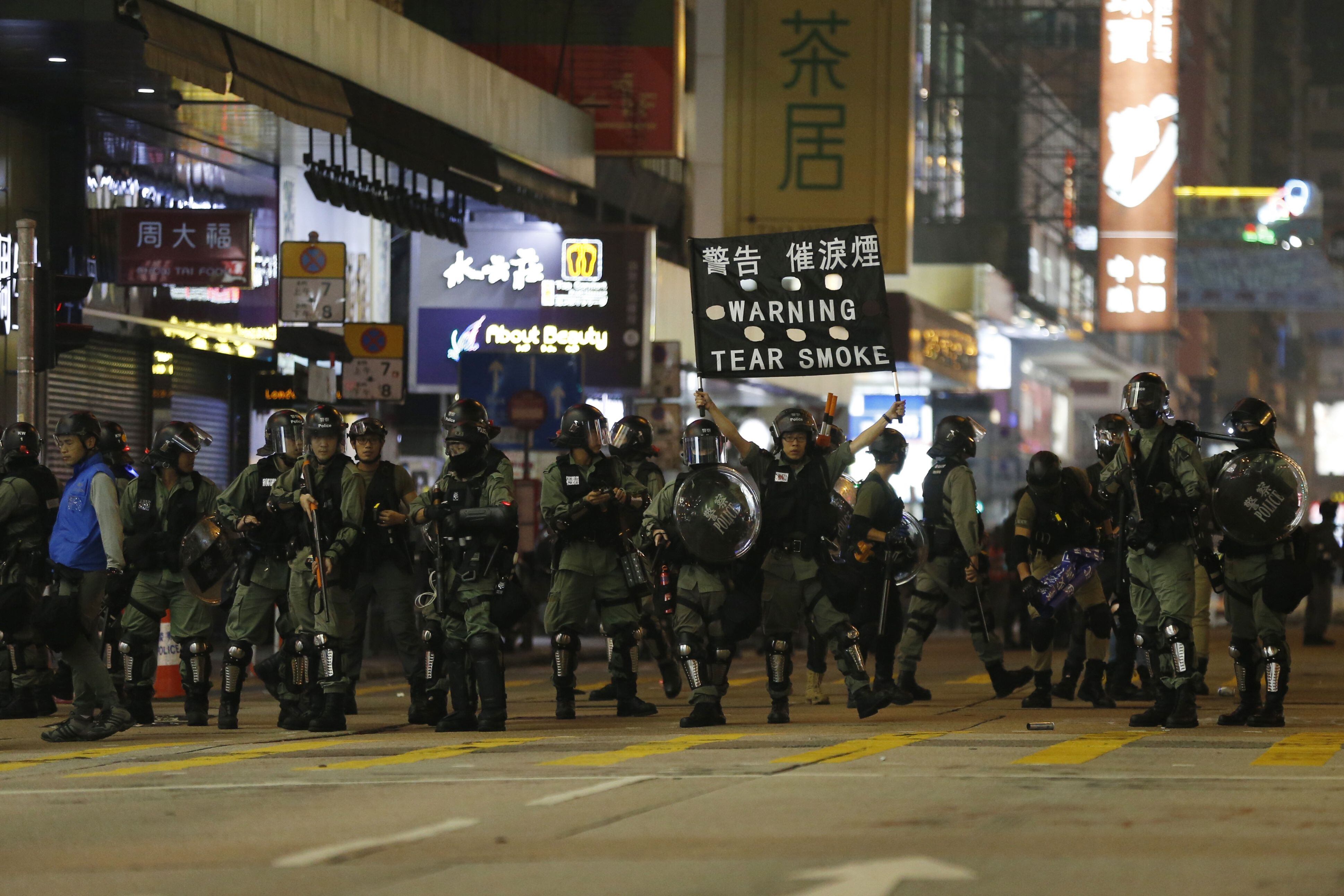
The bleak report coincided with chaotic demonstrations over the weekend that saw shops set ablaze and petrol bombs thrown at police, who responded heavily with water cannons and tear gas. In a statement Monday, police said that protesters overstepped the "bottom line of any civilized society." Unrest in Hong Kong, which first broke in June in opposition to a proposed extradition bill, has escalated significantly in recent months as residents continue to protest China's growing influence over the city and call for more democratic rights.
Chan on Sunday called on demonstrators to keep order and allow industry and commerce to operate freely. "Our society and the economy need to take a breather and need to get back on the road," he wrote.
<i>Police and protesters in Hong Kong on Sunday. Photo Credit: JEROME FAVRE/EPA-EFE/Shutterstock</i>
As a Chinese special administrative region since 1997, Hong Kong has enjoyed relative autonomy from Beijing in recent decades and has grown into one of the world's most significant financial and commercial hubs. In 2018, Hong Kong was home to the highest number of ultrawealthy ($30 million or more net worth) residents of any city in the world, according to Wealth-X's annual report. New York surpassed Hong Kong just slightly in 2019.
Earlier this month, Hong Kong's richest resident, Li Ka-shing, donated 1 billion Hong Kong dollars ($128 million) to support local business affected by the city's "unprecedented challenges."
"I hope that HK$1 billion donation will spark more support for the embattled [Small and Medium Enterprises]," Li said in a statement. "All suggestions are welcome and let's work together during these difficult times."
The Hong Kong government has also implemented a series of measures to help alleviate financial pains. Secretary Chan announced earlier this month a 19 billion Hong Kong dollar ($2.4 billion) relief package, which included significant rent reductions.
In announcing the recession Sunday, Chan cited plummeting tourism and retail sales figures. The number of visitors to Hong Kong fell by 37 percent in August and September, and by 50 percent in the first half of October. Tourism's decline constitutes an "emergency," Chan wrote. The decline of retail sales volume fell by 13.1 percent in July to 25.3 percent in August.
"We will continue to closely monitor the external economic situation and the political and economic situation in Hong Kong and try our best to further study the relief measures," Chan added in his Sunday blog post.
Investors, however, seem to be sticking with Hong Kong. The Hong Kong Stock Exchange's Hang Seng Index remains up more than 4 percent year-to-date.
With the resurgence in COVID cases and the uncertainty of the Omicron variant, many companies, like Apple, Ford, Google, and countless others, are delaying their return-to-office dates. This means employees will continue to work from home full time or continue a hybrid approach, which can cause some challenges. Executive coach Stefania Romeo joined Cheddar to discuss how companies can best manage the difficulties of hybrid work.
Rebecca Minkoff is launching a new initiative through her non-profit, Female Founder Collective. A former Wall Street analyst and financial strategist will be coaching new founders to focus on their financial transformation, from getting their business financially organized to uncovering opportunities to increase revenue. The renowned founder and fashion designer joined Cheddar to discuss this new program and the advice she gives to female founders hoping to get their business off the ground.
Omicron is on course to become the dominant COVID strain in the U.S., even as Delta is causing another spike in cases. According to Johns Hopkins University data, cases across the country are up 40% from last month, with New York City as a major hotspot. Outbreaks are now causing Broadway performances to be canceled, colleges and universities to shift to online classes, sports leagues to postpone games, and more. Dr. Jen Caudle, family physician and associate professor at Rowan University, joined Cheddar to discuss the surge in cases and how we can best protect ourselves against the new variant.
As supply chain issues continue to impact holiday shopping, many consumers are discovering that certain items are harder to find and are more expensive than in past years. However, secondary market platforms are one solution to that problem, offering shoppers an alternative place to find their favorite gifts. Jesse Einhorn, StockX senior economist, joined Cheddar to discuss how are platforms like StockX are a viable way for shoppers to avoid supply chain delays this holiday season.
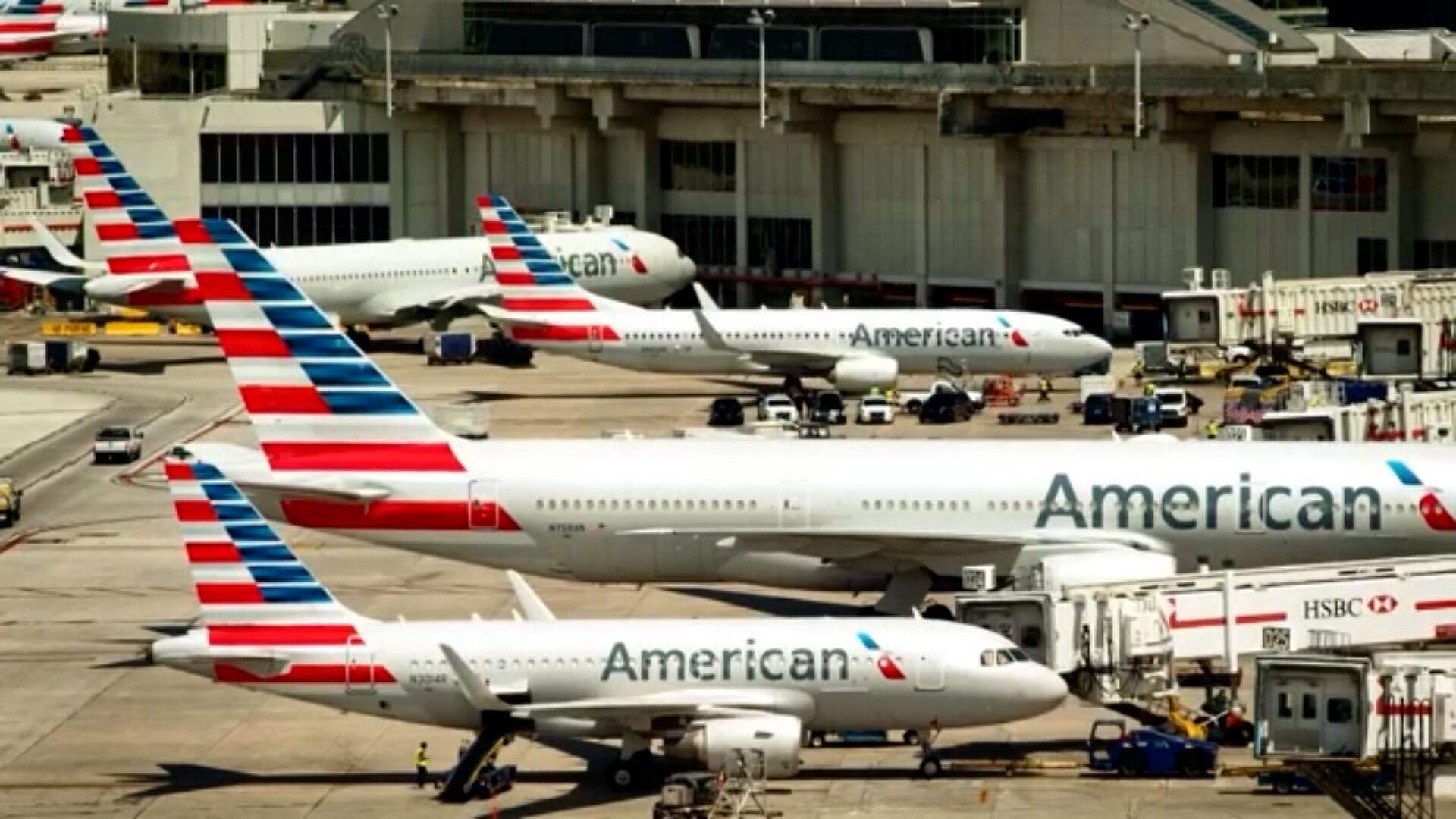
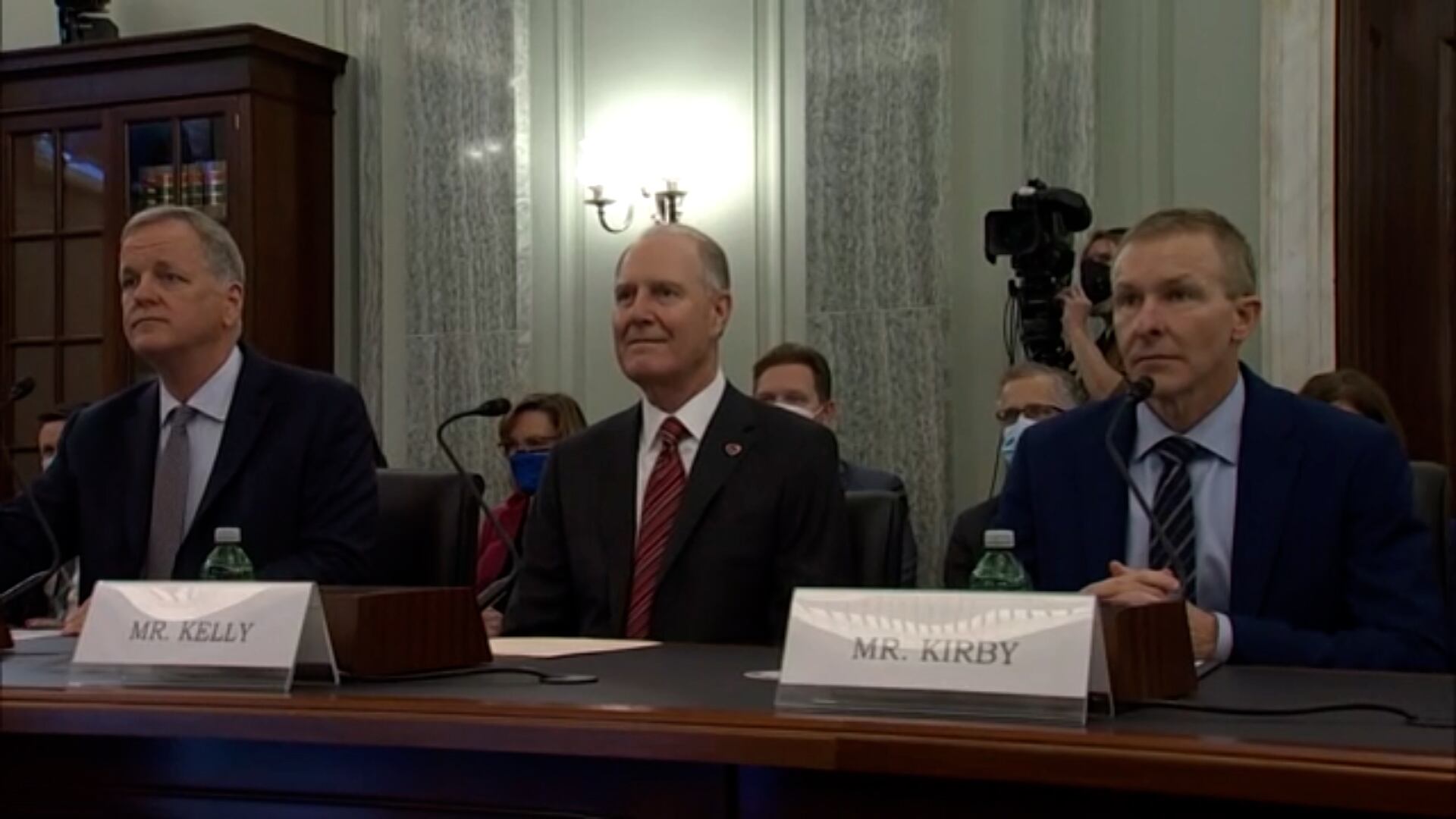
Airline executives faced tough questions from Congress on Wednesday, with the Senate panel grilling top CEOs on how they used that $54 billion Covid-19 government lifeline.
This hearing comes as airlines continue to face staffing shortages and widespread delays. Jason Ader, Leisure Analyst and CEO of SpringOwl Asset Management joined Cheddar's Opening Bell to discuss.
Cockroach Labs Chief Product Officer Nate Stewart joined Wake Up With Cheddar to break down the company's Series F funding and the opportunities for growth it helps open up.
Airline executives faced tough questions from a Senate panel on Wednesday after receiving a $54 billion dollar Covid-19 government lifeline. Congress approved the fund in three rounds covering much of US airlines’ payroll costs for 18 months. During the hearing lawmakers asked CEO’s how they used the federal bailout funds, about staffing issues, flight cancellations, and delays. U.S. airlines reported a record $35 billion dollar loss last year when travel came to an abrupt halt because of the pandemic. Michael Boyd, CEO at the Boyd Group International explains why customers may not be returning to the skies quite so soon.