Burdened by over five months of civil unrest, Hong Kong has fallen into a recession, the city's financial secretary said Sunday.
"The economy has entered a technical recession, and the negative growth rate has significantly expanded," Secretary Paul Chan wrote in a blog post. "The blow to our economy is comprehensive."
Chan added that official quarterly GDP figures would be released Thursday, but that preliminary analysis shows consecutive economic contractions. It will be "extremely difficult," he wrote, for Hong Kong to reach its previously forecasted growth rate.
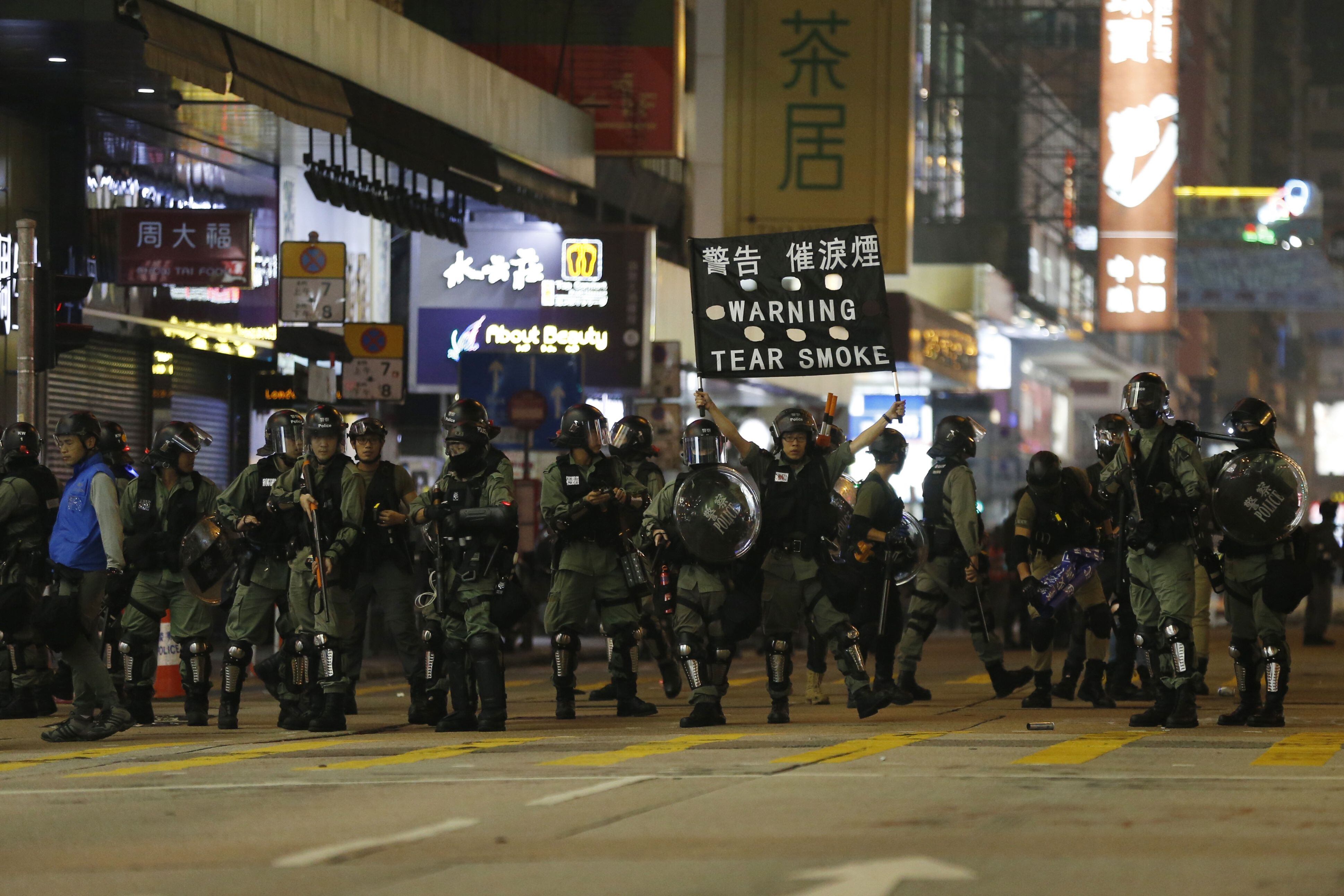
The bleak report coincided with chaotic demonstrations over the weekend that saw shops set ablaze and petrol bombs thrown at police, who responded heavily with water cannons and tear gas. In a statement Monday, police said that protesters overstepped the "bottom line of any civilized society." Unrest in Hong Kong, which first broke in June in opposition to a proposed extradition bill, has escalated significantly in recent months as residents continue to protest China's growing influence over the city and call for more democratic rights.
Chan on Sunday called on demonstrators to keep order and allow industry and commerce to operate freely. "Our society and the economy need to take a breather and need to get back on the road," he wrote.
<i>Police and protesters in Hong Kong on Sunday. Photo Credit: JEROME FAVRE/EPA-EFE/Shutterstock</i>
As a Chinese special administrative region since 1997, Hong Kong has enjoyed relative autonomy from Beijing in recent decades and has grown into one of the world's most significant financial and commercial hubs. In 2018, Hong Kong was home to the highest number of ultrawealthy ($30 million or more net worth) residents of any city in the world, according to Wealth-X's annual report. New York surpassed Hong Kong just slightly in 2019.
Earlier this month, Hong Kong's richest resident, Li Ka-shing, donated 1 billion Hong Kong dollars ($128 million) to support local business affected by the city's "unprecedented challenges."
"I hope that HK$1 billion donation will spark more support for the embattled [Small and Medium Enterprises]," Li said in a statement. "All suggestions are welcome and let's work together during these difficult times."
The Hong Kong government has also implemented a series of measures to help alleviate financial pains. Secretary Chan announced earlier this month a 19 billion Hong Kong dollar ($2.4 billion) relief package, which included significant rent reductions.
In announcing the recession Sunday, Chan cited plummeting tourism and retail sales figures. The number of visitors to Hong Kong fell by 37 percent in August and September, and by 50 percent in the first half of October. Tourism's decline constitutes an "emergency," Chan wrote. The decline of retail sales volume fell by 13.1 percent in July to 25.3 percent in August.
"We will continue to closely monitor the external economic situation and the political and economic situation in Hong Kong and try our best to further study the relief measures," Chan added in his Sunday blog post.
Investors, however, seem to be sticking with Hong Kong. The Hong Kong Stock Exchange's Hang Seng Index remains up more than 4 percent year-to-date.
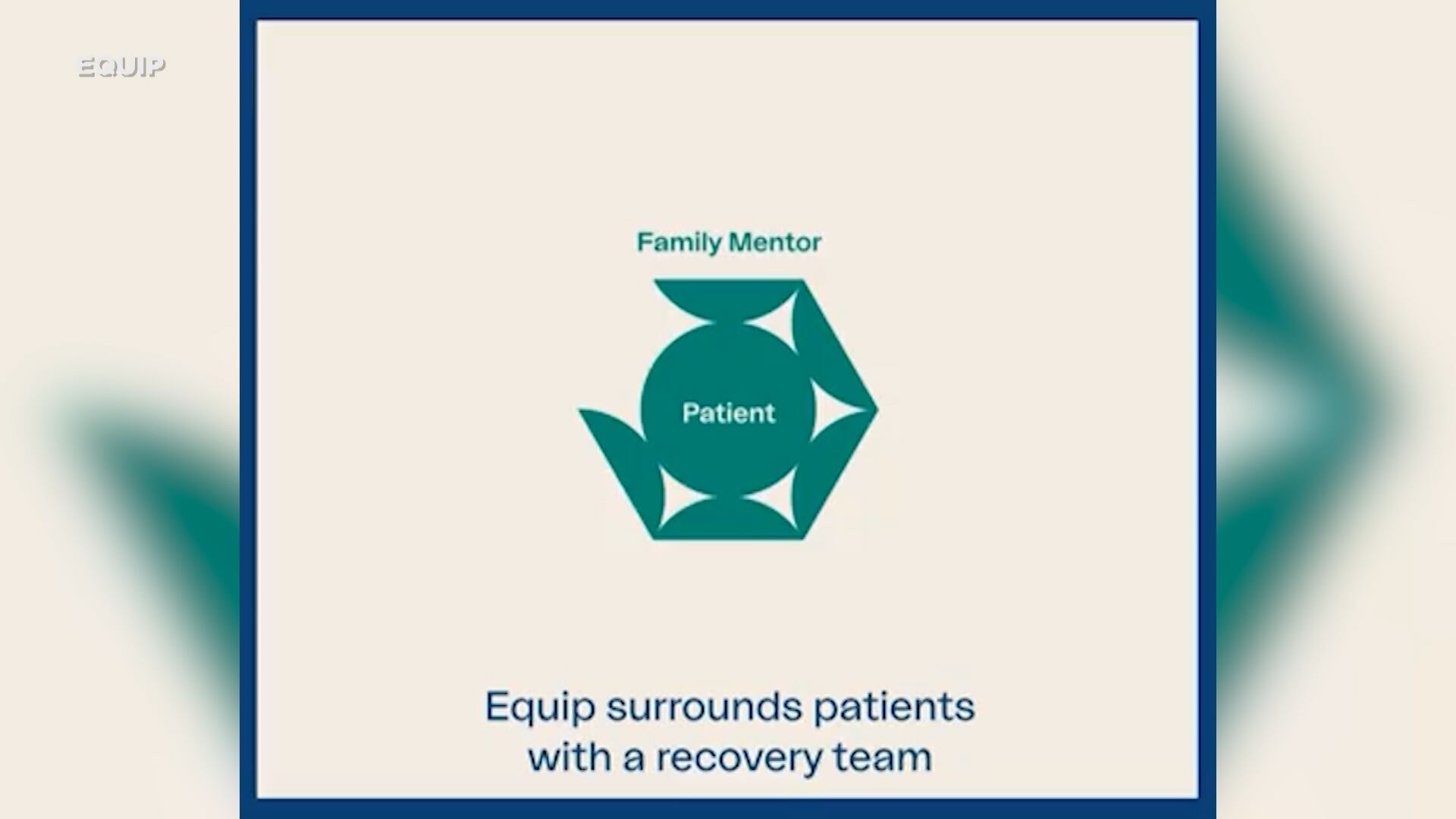
Equip is a virtual treatment platform for eating disorders, and recently raised $58 million in a Series B round led by The Chernin Group. The company aims to revolutionize treatment for eating disorders by delivering virtual care teams and clinical expertise directly to families' homes. Equip says the need for its platform has only been exacerbated by the COVID-19 pandemic. The National Eating Disorder Association's helpline has had a 107% increase in contacts since the start of the pandemic. Kristina Saffran, CEO and co-founder of Equip, joins Cheddar News' Closing Bell to discuss.
U.S. stocks ended today's session sharply lower on the heels of rising geopolitical tensions between Russia and Ukraine. Melissa Brown, Managing Director of Applied Research at Qontigo, joins Cheddar News' Closing Bell to discuss.
President Joe Biden said Tuesday that the U.S. will begin to impose sanctions on Russia, calling recent troop movement into Ukraine an 'invasion.' Biden and other government officials including from the State Department have begun to classify the Russian troop movement as an invasion after Russian President Vladimir Putin ordered troops to two independent Ukrainian areas in an alleged "peacekeeping" mission — which the West considers an act of aggression. Biden said Russia will continue to pay 'an even steeper price' if it continues sending troops into Ukraine. What happens next? Will Putin find a way around these sanctions? Ariel Cohen, senior fellow at the Atlantic Council, joins Closing Bell to discuss Biden's remarks, how the West will protect Ukraine since it doesn't belong to NATO, and more.
Apple retail employees are reportedly looking to unionize, with groups at two locations so far coordinating with major national labor organizations and prepping to file paperwork with the National Labor Relations Board. This comes after a broader push for unionization as Starbucks workers in recent months have voted to unionize, and workers at Amazon are set to hold another vote soon. As the popularity of unions returns after a decades-long slump, will we see more retail and consumer-facing workforces move to unionize? Michael Farren, a research fellow at the Mercatus Center, joins Closing Bell to discuss Apple retail employees' efforts, what a union would mean inside Apple, the broader push for unionization, and more.
A just-released Harris Poll revealed that there are some differences of opinion among workers on returning to the office. The survey showed that 52 percent of women would still prefer to work from home versus 41 percent of men. The report also showed that 52 percent of black workers and 50 percent of women see it as being better when it comes to career advancement. Dr. Laura Morgan Roberts, professor of practice at the University of Virginia’s Darden School of Business, joined Cheddar News to explain the report. "The first set of observations are about infrastructure and flexibility. The second are about inclusion," she said. "And so what we've learned from many non-white workers are that they appreciate the opportunity to focus more on their tasks and to be buffered in a sense from some of the hostilities and the exclusive environment and practice that they had to navigate for many years in their in-person offices."