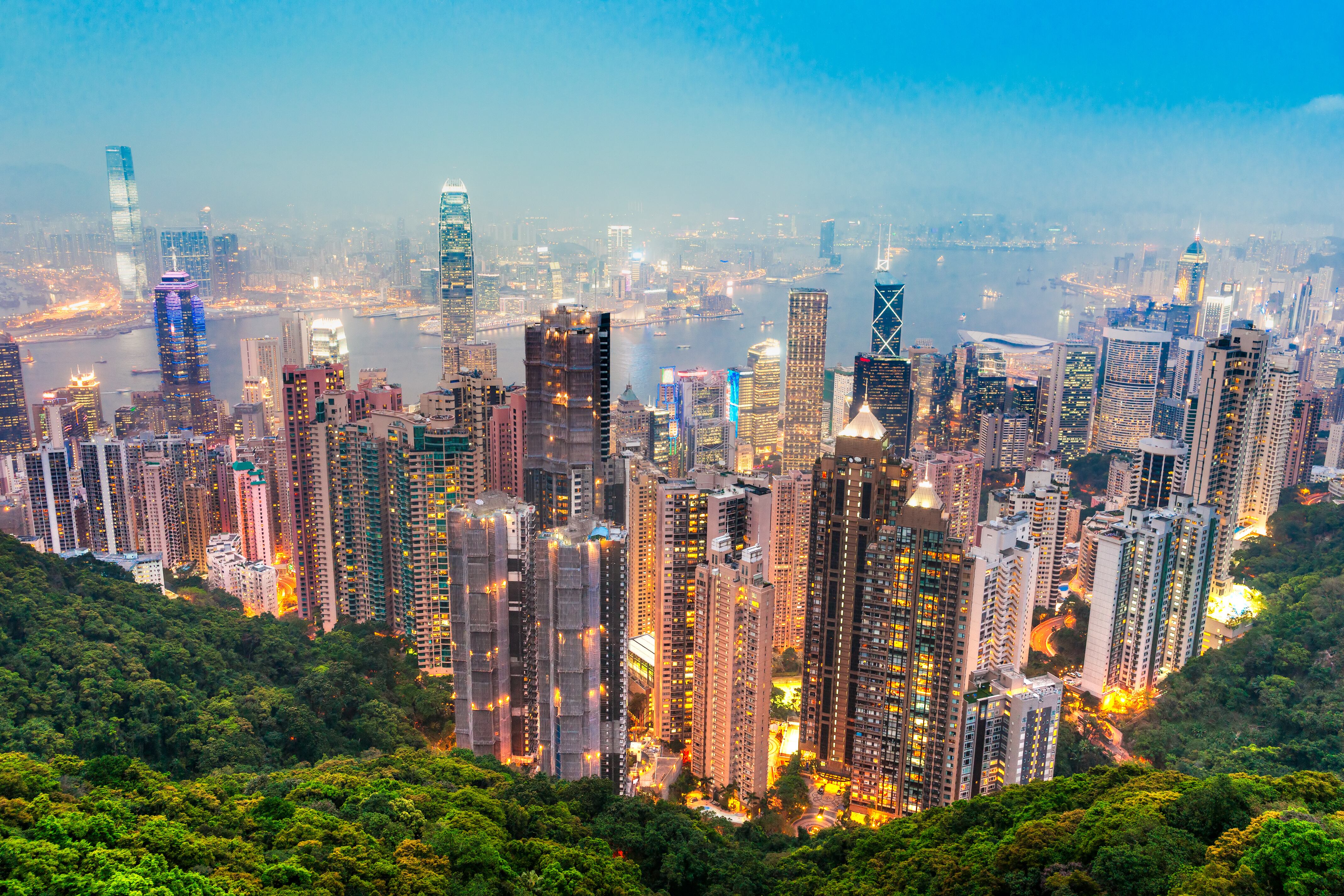
Burdened by over five months of civil unrest, Hong Kong has fallen into a recession, the city's financial secretary said Sunday.
"The economy has entered a technical recession, and the negative growth rate has significantly expanded," Secretary Paul Chan wrote in a blog post. "The blow to our economy is comprehensive."
Chan added that official quarterly GDP figures would be released Thursday, but that preliminary analysis shows consecutive economic contractions. It will be "extremely difficult," he wrote, for Hong Kong to reach its previously forecasted growth rate.
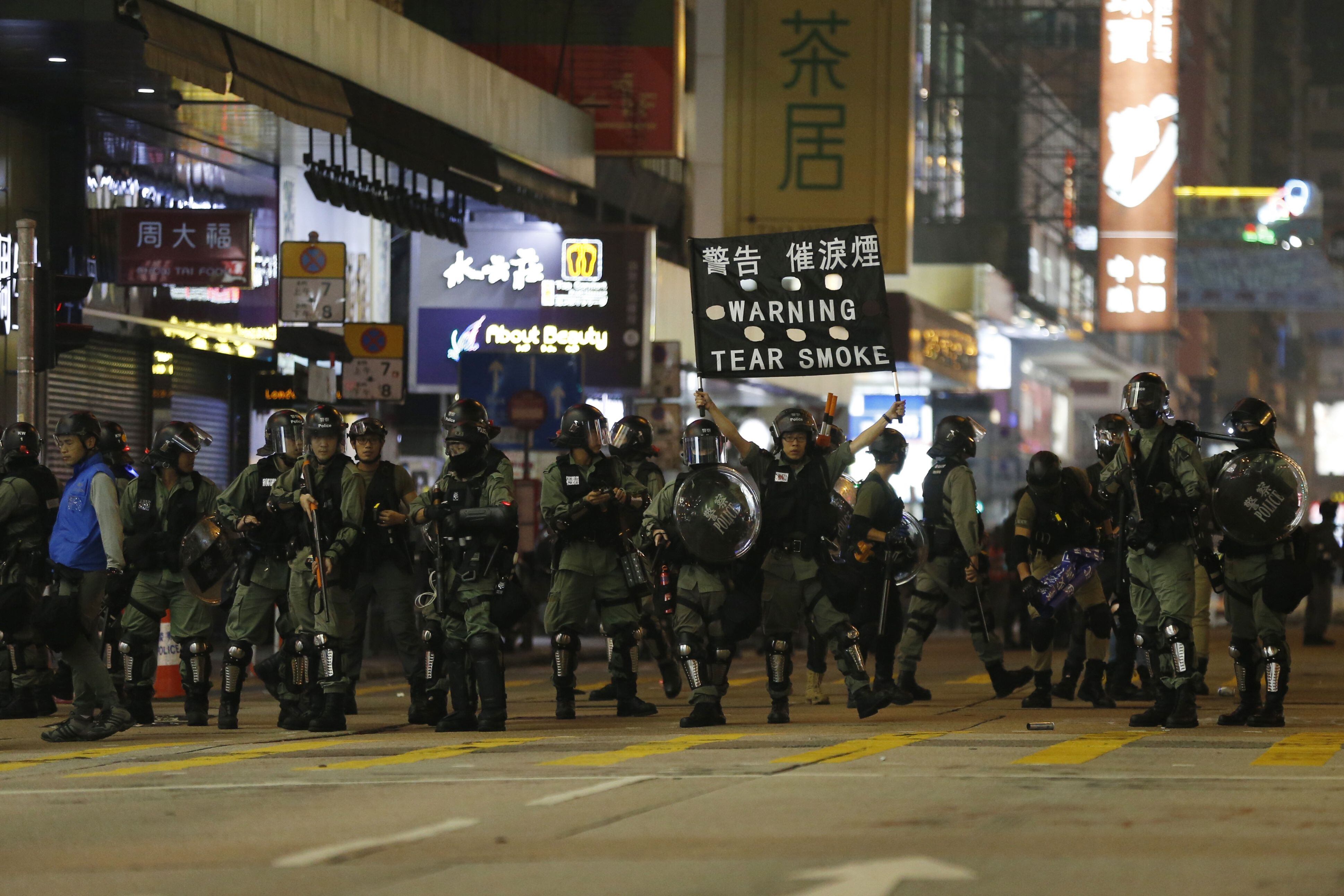
The bleak report coincided with chaotic demonstrations over the weekend that saw shops set ablaze and petrol bombs thrown at police, who responded heavily with water cannons and tear gas. In a statement Monday, police said that protesters overstepped the "bottom line of any civilized society." Unrest in Hong Kong, which first broke in June in opposition to a proposed extradition bill, has escalated significantly in recent months as residents continue to protest China's growing influence over the city and call for more democratic rights.
Chan on Sunday called on demonstrators to keep order and allow industry and commerce to operate freely. "Our society and the economy need to take a breather and need to get back on the road," he wrote.
<i>Police and protesters in Hong Kong on Sunday. Photo Credit: JEROME FAVRE/EPA-EFE/Shutterstock</i>
As a Chinese special administrative region since 1997, Hong Kong has enjoyed relative autonomy from Beijing in recent decades and has grown into one of the world's most significant financial and commercial hubs. In 2018, Hong Kong was home to the highest number of ultrawealthy ($30 million or more net worth) residents of any city in the world, according to Wealth-X's annual report. New York surpassed Hong Kong just slightly in 2019.
Earlier this month, Hong Kong's richest resident, Li Ka-shing, donated 1 billion Hong Kong dollars ($128 million) to support local business affected by the city's "unprecedented challenges."
"I hope that HK$1 billion donation will spark more support for the embattled [Small and Medium Enterprises]," Li said in a statement. "All suggestions are welcome and let's work together during these difficult times."
The Hong Kong government has also implemented a series of measures to help alleviate financial pains. Secretary Chan announced earlier this month a 19 billion Hong Kong dollar ($2.4 billion) relief package, which included significant rent reductions.
In announcing the recession Sunday, Chan cited plummeting tourism and retail sales figures. The number of visitors to Hong Kong fell by 37 percent in August and September, and by 50 percent in the first half of October. Tourism's decline constitutes an "emergency," Chan wrote. The decline of retail sales volume fell by 13.1 percent in July to 25.3 percent in August.
"We will continue to closely monitor the external economic situation and the political and economic situation in Hong Kong and try our best to further study the relief measures," Chan added in his Sunday blog post.
Investors, however, seem to be sticking with Hong Kong. The Hong Kong Stock Exchange's Hang Seng Index remains up more than 4 percent year-to-date.
No matter what you're in the market for this holiday season, there is one way that you can put some cash back in your pocket and stretch your gift budget a little bit further this year. With Lolli, for every gift you buy for someone else, you get the gift of free bitcoin back. CEO of Lolli, Alex Adelman, joins Cheddar News.
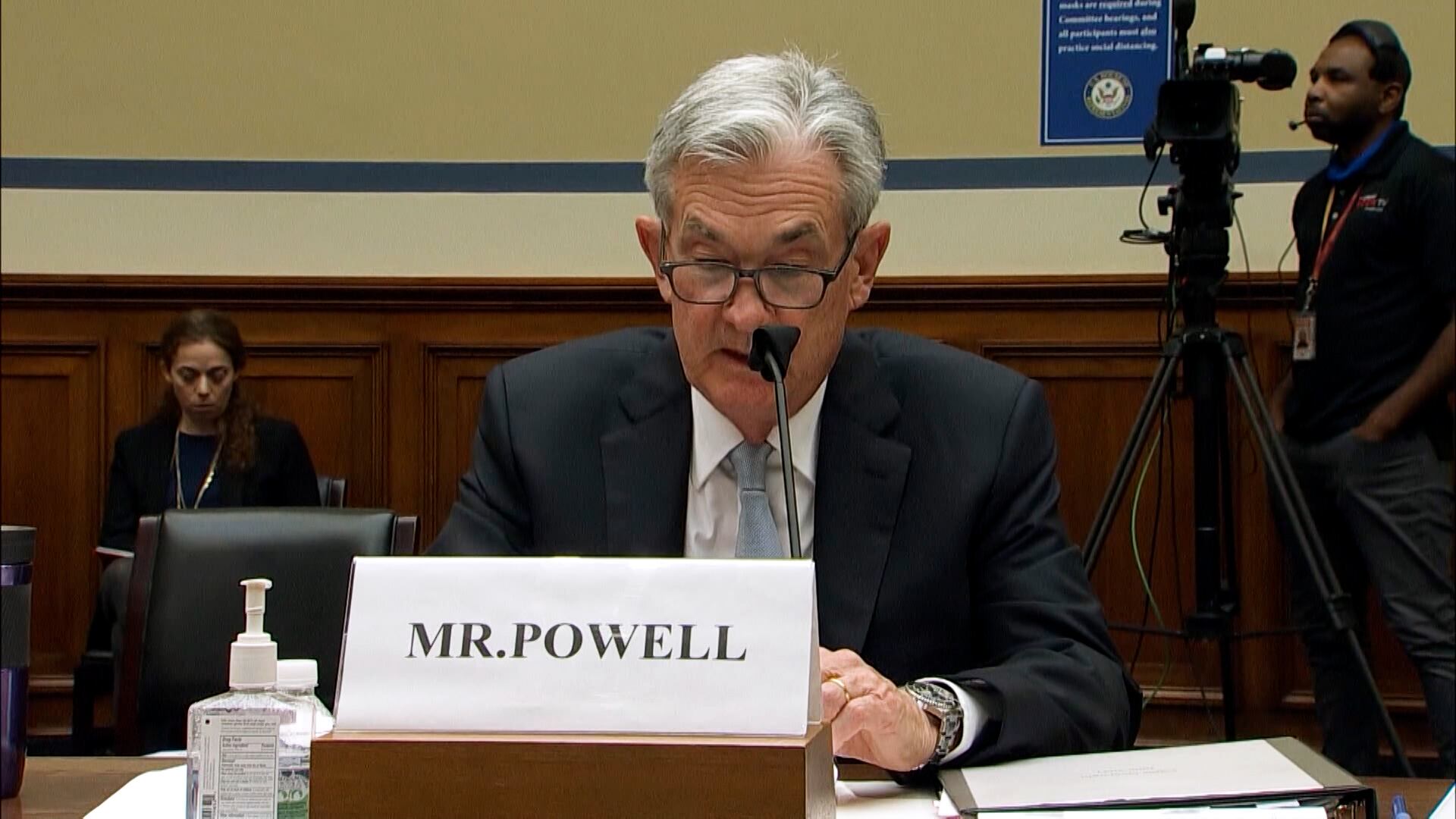
Just about a week after being re-nominated, Federal Reserve Chair Jermone Powell is changing his tune. After nearly a year of referring to inflation as 'transitory,' Powell said he will retire the 'T' word as inflation remains elevated. Christopher Russo, Post-Graduate Research Fellow, Mercatus Center joined Cheddar's Opening Bell to discuss.
With the delta variant, financial uncertainty, political polarization and more, companies have had to get creative in order to stay afloat this year. During times of stress and anxiety, consumers tend to stick with more established brands or products they already use. That sentiment is reflected in data intelligence company Morning Consult's annual list of the Fastest Growing Brands, which measures growth for both emerging and established companies. Joanna Piacenza, head of industry intelligence at Morning Consult, joined Cheddar to break down the key findings of the report.
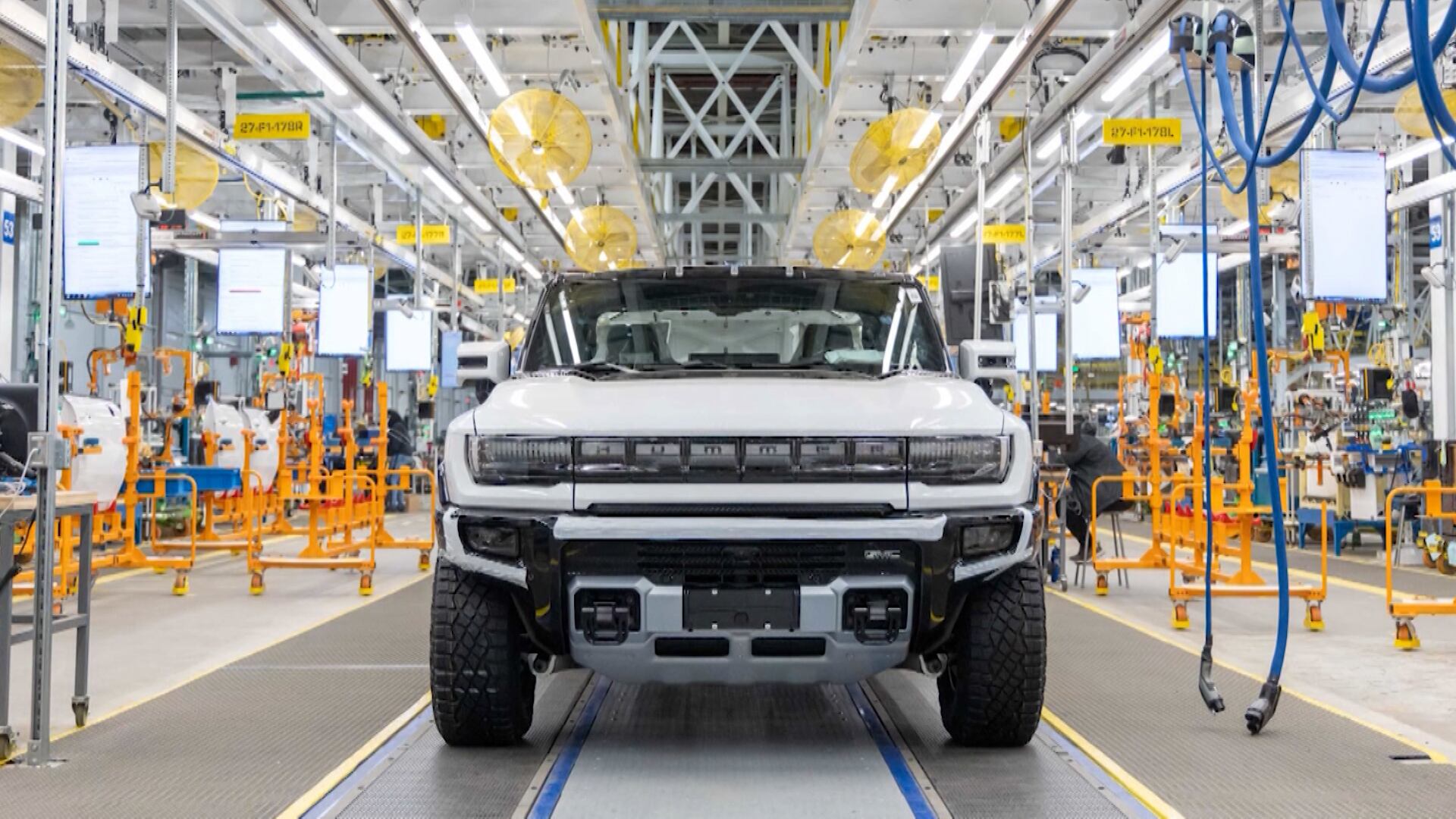
Iwao Fusillo, Chief Data & Analytics Officer, GM, joins Cheddar News to dispel myths and cut straight to the facts about GM's role in an all-electric future.
Goldman Sachs is rolling out an Amazon Web Service for trading firms called GS Financial Cloud for Data with Amazon Web Services. The move comes as Wall Street looks to keep up with today's evolving tech.
Online ad-tech company Innovid made its public debut on the New York Stock Exchange. CEO and co-founders Zvika Netter joined Cheddar's "Opening Bell" to discuss factors that drove the company to launch an IPO via a SPAC deal. He noted that the rapid growth of connected TV advertising (CTV) made it an opportune time for his business to go public. While the company is profitable, Netter also explained the various avenues it will take to increase total revenue.
Lululemon is accusing Peloton of copying a number of patented apparel designs and has filed a lawsuit. Julie Zerbo, founder and Editor-In-Chief at The Fashion Law, joined Cheddar to discuss whether or not Lululemon has a valid case. The lawsuit comes as sales for Peloton's premiere products, like its treadmills, have been slowing and it looks to provide more offerings. Zerbo also discussed a co-branding partnership between the two companies that ended amicably earlier this year and how it could play into the outcome of the case.
Airbnb has come under fire after an Axios report found that the rental company has properties available in China's Xinjiang region where the nation has been accused of committing genocide against Uyghur Muslims, demolishing their homes, and replacing them with tourist attractions.
With the emergence of the omicron variant, the U.S. is considering tightening international travel guidelines. The CDC said it might reduce the window for foreign travelers to submit a negative COVID-19 test from three days prior to one day before allowing entry.