Burdened by over five months of civil unrest, Hong Kong has fallen into a recession, the city's financial secretary said Sunday.

"The economy has entered a technical recession, and the negative growth rate has significantly expanded," Secretary Paul Chan wrote in a blog post. "The blow to our economy is comprehensive."

Chan added that official quarterly GDP figures would be released Thursday, but that preliminary analysis shows consecutive economic contractions. It will be "extremely difficult," he wrote, for Hong Kong to reach its previously forecasted growth rate.

The bleak report coincided with chaotic demonstrations over the weekend that saw shops set ablaze and petrol bombs thrown at police, who responded heavily with water cannons and tear gas. In a statement Monday, police said that protesters overstepped the "bottom line of any civilized society." Unrest in Hong Kong, which first broke in June in opposition to a proposed extradition bill, has escalated significantly in recent months as residents continue to protest China's growing influence over the city and call for more democratic rights.

Chan on Sunday called on demonstrators to keep order and allow industry and commerce to operate freely. "Our society and the economy need to take a breather and need to get back on the road," he wrote.
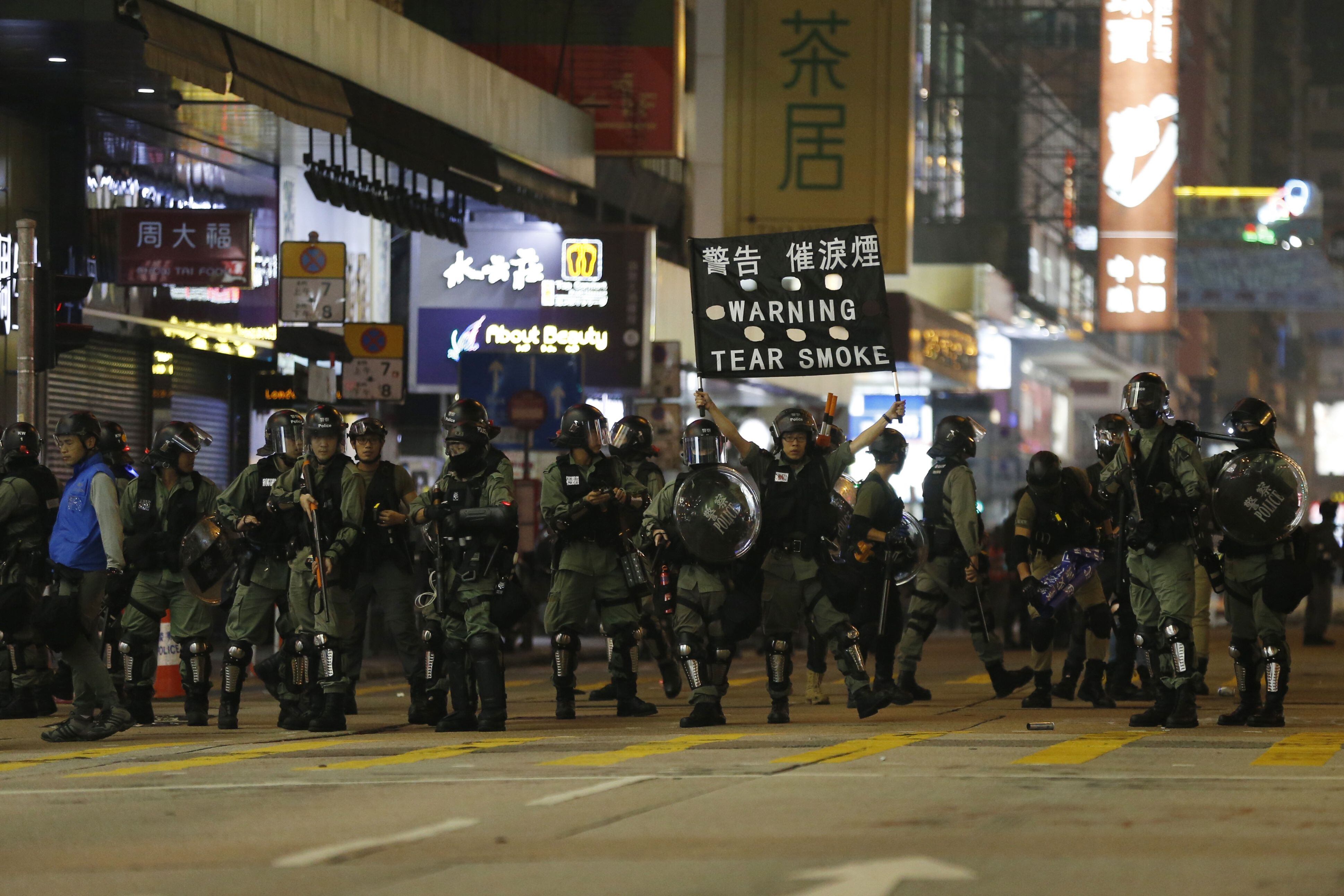
<i>Police and protesters in Hong Kong on Sunday. Photo Credit: JEROME FAVRE/EPA-EFE/Shutterstock</i>

As a Chinese special administrative region since 1997, Hong Kong has enjoyed relative autonomy from Beijing in recent decades and has grown into one of the world's most significant financial and commercial hubs. In 2018, Hong Kong was home to the highest number of ultrawealthy ($30 million or more net worth) residents of any city in the world, according to Wealth-X's annual report. New York surpassed Hong Kong just slightly in 2019.

Earlier this month, Hong Kong's richest resident, Li Ka-shing, donated 1 billion Hong Kong dollars ($128 million) to support local business affected by the city's "unprecedented challenges."

"I hope that HK$1 billion donation will spark more support for the embattled [Small and Medium Enterprises]," Li said in a statement. "All suggestions are welcome and let's work together during these difficult times."

The Hong Kong government has also implemented a series of measures to help alleviate financial pains. Secretary Chan announced earlier this month a 19 billion Hong Kong dollar ($2.4 billion) relief package, which included significant rent reductions.

In announcing the recession Sunday, Chan cited plummeting tourism and retail sales figures. The number of visitors to Hong Kong fell by 37 percent in August and September, and by 50 percent in the first half of October. Tourism's decline constitutes an "emergency," Chan wrote. The decline of retail sales volume fell by 13.1 percent in July to 25.3 percent in August.

"We will continue to closely monitor the external economic situation and the political and economic situation in Hong Kong and try our best to further study the relief measures," Chan added in his Sunday blog post.

Investors, however, seem to be sticking with Hong Kong. The Hong Kong Stock Exchange's Hang Seng Index remains up more than 4 percent year-to-date.
Share:
More In Business
EV Stocks Fall after Biden's Build Back Better Plan Falters
Electric vehicle companies took a tumble Monday after Senator Joe Manchin killed Biden's 'Build Back Better' plan. Shares of Tesla, Lucid, and Rivian all fell rapidly as the plan had included significant incentives for the growing EV sector. Rich Steinberg, former executive at Nissan, BMW and Electrify America joined Cheddar's Opening Bell to discuss.
Stocks Bounce Back, Close Sharply Higher Amid Omicron Concerns
Michael Robinson, Chief Technology Strategist at Money Map Press, joins Cheddar News' Closing Bell, where he explains why small and mid-cap stocks heating up during Tuesday's session is a very good sign for a stock market that ended the day's session sharply higher.
Could 2022 Be the Year Average Consumers Are Exposed to Crypto Transactions?
As the popularity of Bitcoin and other digital tokens grew this year, more financial institutions and payment apps added ways for customers to trade or make payments using cryptocurrency. Meanwhile, companies like theater chain AMC started accepting major cryptocurrencies for tickets and concessions, and retailers are rumored to be entering the space soon. What does this mean for cryptocurrency's wider adoption — and will 2022 be the year that the average consumer is exposed to digital coin payments on a regular basis? João Almeida, Co-Founder and CTO of OpenNode joins Cheddar News' Crypto Craze: The Year of the Token to discuss.
Bitcoin Set Up for Success in 2022, Altcoins Could Gain in Popularity
Bitcoin had a successful 2021: reaching a new high of nearly $70,000, a $1 trillion market cap, and becoming legal tender in El Salvador. Investors also got the chance to invest in three Bitcoin futures-backed ETFs once they were approved. These developments set up the world's best-known digital coin for more success in 2022, but could altcoins like Ethereum, Litecoin, and others move into the top spot or impact Bitcoin's value? Matt Hougan, CIO of Bitwise Asset Management, joins Cheddar's Crypto Craze: The Year of the Token to discuss his 2022 outlook for Bitcoin, whether we could see an ETF backed by a physical coin, and more.
Crypto Craze: Historic 2021 Campaign Paves Way for Continued Mainstream Adoption
Coming off a 2021 campaign where the prices of Bitcoin, Ether, and other cryptocurrencies reached unpreceded levels, Bitwise Asset Management CIO Matt Hougan and OpenNode Co-Founder & CTO João Almeida join Cheddar News' Crypto Craze: The Year of the Token to discuss the ways the crypto market can soar even higher in 2022.
Metaverse an Opportunity for Brands to 'Stay Refreshed' in Evolving Landscape
Howard Yu, LEGO professor of management and innovation at IMD Business School and author of "Leap: How to Thrive in a World Where Everything Can Be Copied," joined Cheddar to discuss the mania surrounding the concept of the metaverse. He particularly noted how companies in the retailing sector like Nike are leveraging it. "I think metaverse really opens up a window for brands to think about how can they, ongoing-wise, engage with the consumer, engage with the target audience, so their brand continues to stay refreshed in the changing environment," Yu said.
Load More