By Elliot Spagat
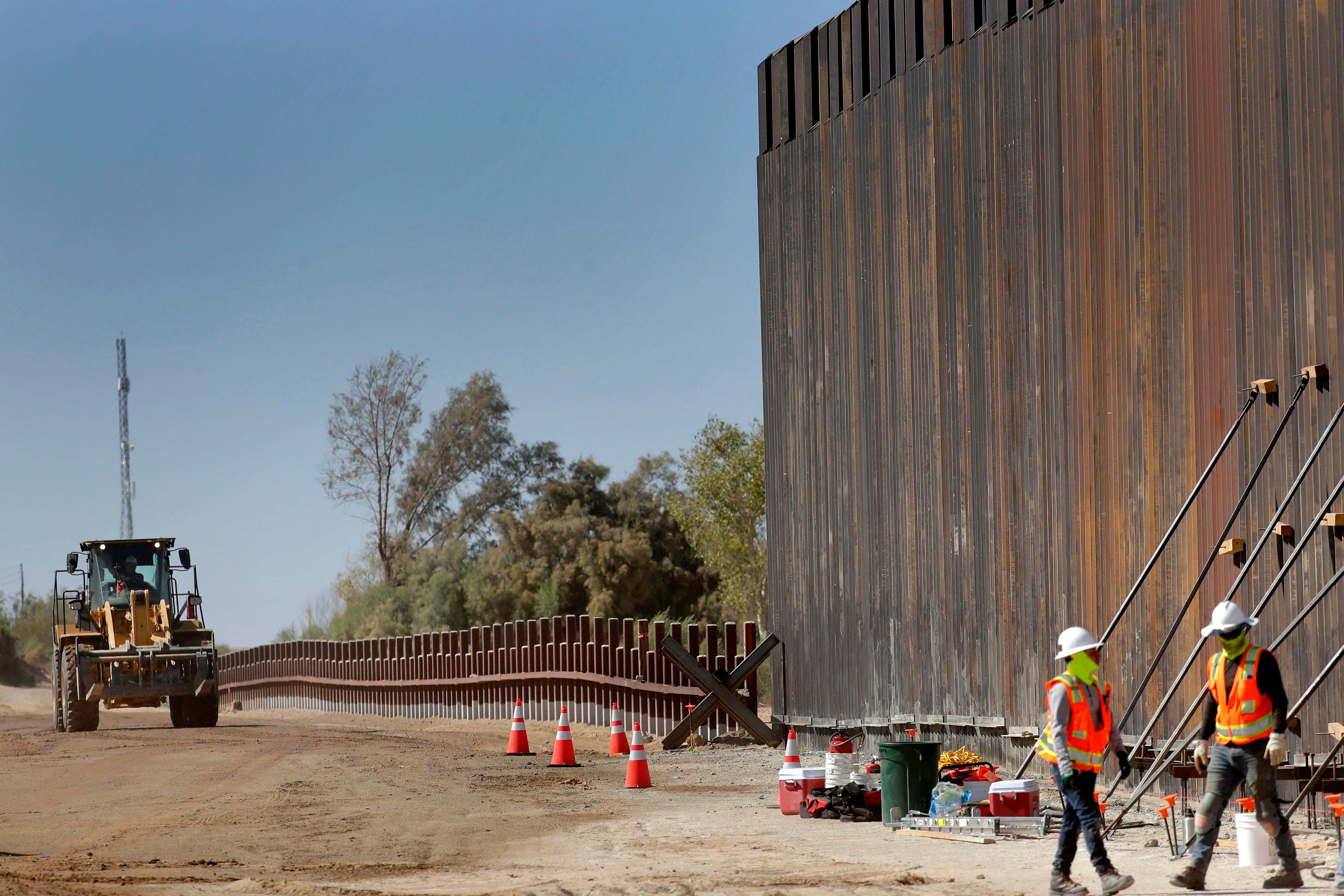
The Trump administration said Tuesday that it will waive federal contracting laws to speed construction of a wall at the U.S.-Mexico border.
The Department of Homeland Security said waiving procurement regulations will allow 177 miles (283 kilometers) of wall to be built more quickly in California, Arizona, New Mexico and Texas. The 10 waived laws include requirements for having open competition, justifying selections, and receiving all bonding from a contractor before any work can begin.
The acting Homeland Security secretary, Chad Wolf, is exercising authority under a 2005 law that gives him sweeping powers to waive laws for building border barriers.
“We hope that will accelerate some of the construction that's going along the Southwest border,” Wolf told Fox News Channel's “Fox & Friends” on Tuesday.
Secretaries under President Donald Trump have issued 16 waivers, and President George W. Bush issued five, but Tuesday's announcement marks the first time that waivers have applied to federal procurement rules. Previously they were used to waive environmental impact reviews.
The Trump administration said it expects the waivers will allow 94 miles (150 kilometers) of wall to be built this year, bringing the Republican president closer to his pledge of about 450 miles (720 kilometers) since taking office and making it one of his top domestic priorities. It said the other 83 miles (133 kilometers) covered by the waivers may get built this year.
“Under the president’s leadership, we are building more wall, faster than ever before,” the department said in a statement.
The move is expected to spark criticism that the Trump administration is overstepping its authority, but legal challenges have failed. In 2018, a federal judge in San Diego rejected arguments by California and environmental advocacy groups that the secretary's broad powers should have an expiration date. An appeals court upheld the ruling last year.
Congress gave the secretary power to waive laws in areas of high illegal crossings in 2005 in a package of emergency spending for wars in Iraq and Afghanistan and minimum standards for state-issued identification cards. The Senate approved it unanimously, with support from Joe Biden, Barack Obama and Hillary Clinton. The House passed it with strong bipartisan support; then-Rep. Bernie Sanders voted against it.
The waivers, to be published in the Federal Register, apply to projects that the U.S. Army Corps of Engineers will award in six of nine Border Patrol sectors on the Mexican border: San Diego and El Centro in California; Yuma and Tucson in Arizona; El Paso, which spans New Mexico and west Texas, and Del Rio, Texas.
The administration said the waivers will apply to contractors that have already been vetted. In May, the Army Corps named 12 companies to compete for Pentagon-funded contracts.
The Army Corps is tasked with awarding $6.1 billion that the Department of Defense transferred for wall construction last year after Congress gave Trump only a fraction of the money. The administration has been able to spend that money during legal challenges.