By Andrew Dalton
Hollywood's writers strike was declared over after nearly five months Tuesday night when board members from their union approved a contract agreement with studios, bringing the industry at least partly back from a historic halt in production.
The governing boards of the eastern and western branches of the Writers Guild of America and their joint negotiating committee all voted to accept the deal, two days after the tentative agreement was reached with a coalition of Hollywood's biggest studios, streaming services and production companies. After the vote they declared that the strike would be over and writers would be free to start on scripts at 12:01 a.m. Wednesday.
Late-night talk shows — the first to go dark when writers walked out on May 2 — are likely the first shows that will resume. Scripted shows will take longer to return, with actors still on strike and no negotiations yet on the horizon.
The writers still have to vote to ratify the contract themselves in early October, but lifting the strike will allow them to work during that process, the guild told members in an email.
After Tuesday's board votes, the contracts were released for the first time to the writers, who had not yet been given any details on the deal, which their leaders called “exceptional.”
The three-year agreement includes significant wins in the main areas writers had fought for – compensation, length of employment, size of staffs and control of artificial intelligence – matching or nearly equaling what they had sought at the outset of the strike.
The union had sought minimum increases in pay and future residual earnings from shows of between 5% and 6%, depending on the position of the writer. The studios had wanted between 2% and 4%. The compromise deal was a raise of between 3.5% and 5%.
The guild also negotiated new residual payments based on the popularity of streaming shows, where writers will get bonuses for being a part of the most popular shows on Netflix, Max and other services, a proposal studios initially rejected. Many writers on picket lines had complained that they weren’t properly paid for helping create heavily watched properties.
The writers also got the requirement they sought that shows intended to run at least 13 episodes will have at least six writers on staff, with the numbers shifting based on the number of episodes. They did not get their desire for guaranteed staffs of six on shows that had not yet been ordered to series, settling instead for a guaranteed three.
Writers also got a guarantee that staffs on shows in initial development will be employed for at least 10 weeks, and that staffs on shows that go to air will be employed for three weeks per episode.
On artificial intelligence, the writers got the regulation and control of the emerging technology they had sought. Under the contract, raw, AI-generated storylines will not be regarded as “literary material” — a term in their contracts for scripts and other story forms a screenwriter produces. This means they won't be competing with computers for screen credits. Nor will AI-generated stories be considered “source” material, their contractual language for the novels, video games or other works that writers may adapt into scripts.
Writers have the right under the deal to use AI in their process if the company they are working for agrees and other conditions are met. But companies cannot require a writer to use AI.
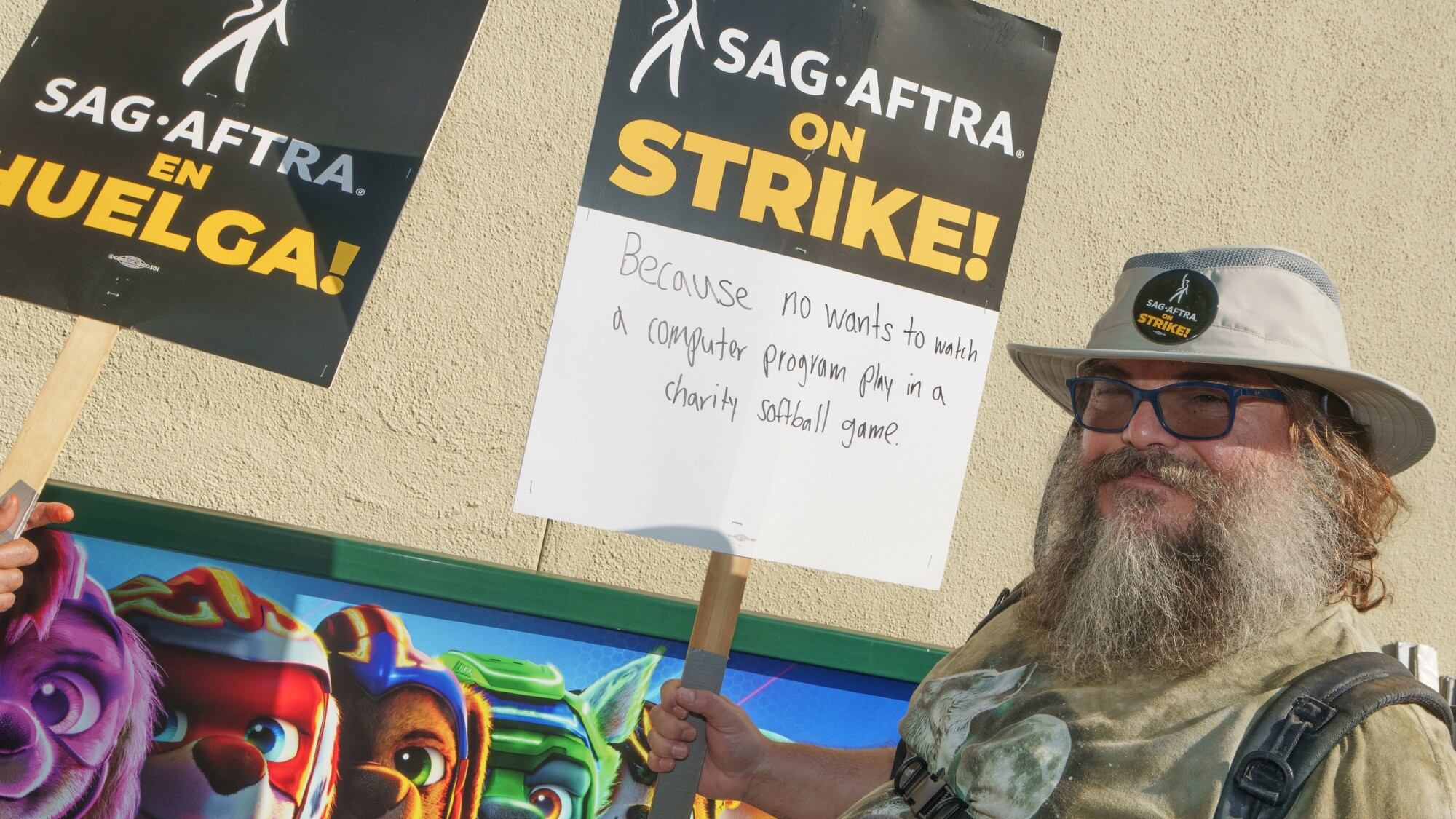
Still-striking members of the Screen Actors Guild-American Federation of Television and Radio Artists returned to the picket lines earlier Tuesday for the first time since the writers struck their tentative deal, and they were animated by a new spirit of optimism.
“For a hot second, I really thought that this was going to go on until next year,” said Marissa Cuevas, an actor who has appeared on the TV series “Kung Fu” and “The Big Bang Theory.” “Knowing that at least one of us has gotten a good deal gives a lot of hope that we will also get a good deal.”
Writers’ picket lines had been suspended, but they were encouraged to walk in solidarity with actors, and many were on the lines Tuesday, including “Mad Men” creator Matthew Weiner, who picketed alongside friend and “ER” actor Noah Wyle as he has throughout the strikes.
“We would never have had the leverage we had if SAG had not gone out,” Weiner said. “They were very brave to do it.”
The Alliance of Motion Picture and Television Producers, which represents the studios in negotiations, chose to deal with the longer-striking writers first, and leaders of SAG-AFTRA said they had received no overtures on resuming talks. That's likely to change soon.
Actors also voted to authorize their leadership to potentially expand their walkout to include the lucrative video game market, a step that could put new pressure on Hollywood studios to make a deal with the performers who provide voices and stunts for games.
SAG-AFTRA announced the move late Monday, saying that 98% of its members voted to go on strike against video game companies if ongoing negotiations are not successful.
Acting in video games can include a variety of roles, from voice performances to motion capture work as well as stunts.
Some of the same issues are at play in the video game negotiations as in the film and TV strike, including wages, safety measures and protections on the use of artificial intelligence. The companies involved include gaming giants Activision, Electronic Arts, Epic Games, Take 2 Productions as well as Disney and Warner Bros.′ video game divisions.
“It’s time for the video game companies to stop playing games and get serious about reaching an agreement on this contract,” SAG-AFTRA President Fran Drescher said in a statement.
Audrey Cooling, a spokesperson for video game producers, said they are “continuing to negotiate in good faith” and have reached tentative agreements on more than half of the proposals on the table.
Associated Press video journalists Leslie Ambriz and Krysta Fauria in Los Angeles contributed to this report.