The WallStreetBets forum on the Reddit Inc. website on a laptop computer arranged in Hastings-On-Hudson, New York, U.S., on Friday, Jan. 29, 2021. Photographer: Tiffany Hagler-Geard/Bloomberg via Getty Images
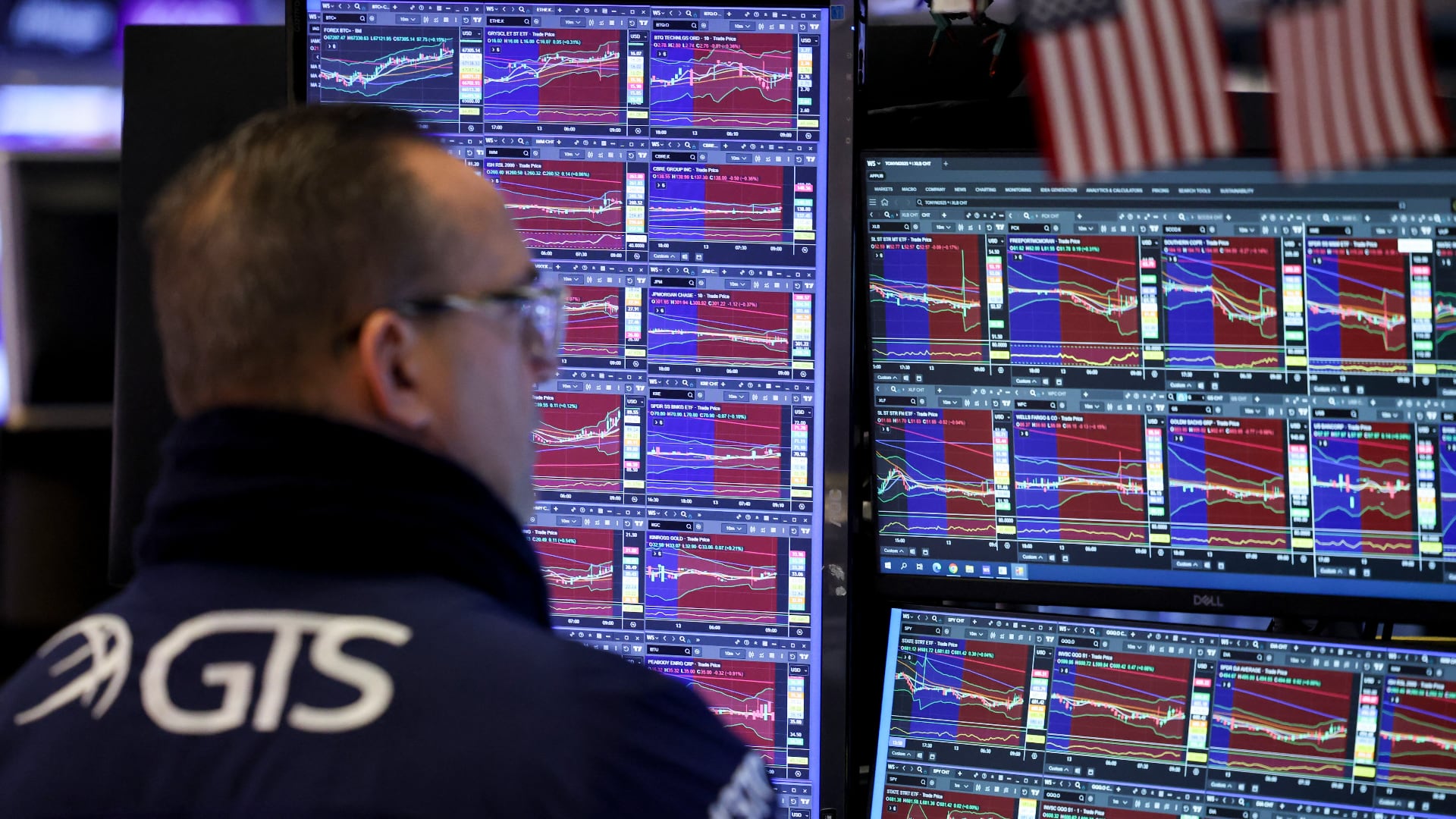
The race is on for hedge funds to better understand how social media is moving markets or risk the same fate as the short-sellers who were clobbered by the rally in GameStop shares.
One way to get ahead of these trends is to more closely track subreddits such as /WallStreetBets, which sparked off the recent buying frenzy and is keeping it rolling with a steady stream of messages telling members to "hold the line" on their investment.
But reading every Reddit post is a tough sell for a hedge fund or institutional investor engaged in high-speed, high-volume trading. That's why brothers Christopher and James Kardatzke, founders of Quiver Quantitative, are suddenly getting a lot of interest from Wall Street.
Over the past few days, the Wisconsin-based startup has gotten a steady stream of inquiries from hedge funds asking about how their technology can help them track social media.
"We've been getting a lot of emails from different hedge funds interested in using our data API to basically get data from /WallStreetBets," Christopher Kardatzke, the chief technology officer for Quiver Quantitative, told cheddar. "They want to make sure there isn't this retail investor interest in what they're taking short positions in."
The company, which provides both free and custom application programming interfaces (API), tracks or "scrapes" alternative data sources such as subreddits, Twitter, and Facebook channels — basically any non-financial source that could be relevant to markets.
Fortunately for the startup, it had been scraping the popular subreddit since early 2020.
Technically, that means it was tracking the number of times certain stocks or ticker symbols were mentioned and whether there was a positive or negative sentiment around those stocks.
Looking at the whole year, Quiver found that the "WallStreetBets Portfolio," a breakdown of the top stocks mentioned positively on the subreddit, was up more than 61 percent, was more volatile than the S&P 500, but outperformed it even through the downturn at the start of the year.
Right now, this data is aggregated on a daily basis, but the startup is working on rolling out a real-time feed within the next few weeks.
"It's pretty basic stuff, but we're in the process right now of expanding that into a live feed to get the most recent comments within seconds," the CTO said.
Kardatzke noted that this will be particularly useful to hedge funds, and will fit well with /WallStreetBets, which features daily posts outlining where members plan to invest the following day.
Soon, he added, Quiver will start looking at language more specific to the subreddit, including option trading terms such as puts and calls.
And while Quiver will likely develop some of these inquiries from hedge funds into client relationships, the company plans to maintain its free platform, which Kardatzke said was originally built to help retail rather than institutional investors.
"It's so relevant to retail investors," he said. "It's data you see in your everyday life. You don't need a finance degree to be able to analyze it or get insights from it."
Kardatzke said that he's conscious that the company could soon be straddling both sides of what appears to be a growing rift in the financial world. The way to remedy that is by making sure both sides are catered to. Retail investors, for instance, want more visualizations and analysis, while institutions want APIs to use for their own analysis, he said.
He said that typically data providers only offer the latter, "but we’d like to do everything we can to make insights from our data available to the public, while keeping afloat."
John Petrides, Portfolio Manager at Tocqueville Asset Management, joins Cheddar News' Closing Bell, where he breaks down Monday's market activity amid the emergence of the omicron variant, and what it could mean for the Fed's timeline when it comes to raising rates and tapering pandemic aid.
Amid continued volatility due to COVID-19, high inflation, and changing consumer and business behavior, what are investors thinking as we close out the fourth quarter and look ahead to 2022? Hady Farag, Partner and Associate Director at Boston Consulting Group, joins Cheddar News' Closing Bell to discuss what investors are prioritizing, what risks they are watching out for, and more.
Don Basile, CEO, Monsoon Blockchain & Founder of Bitcoin Latinum, joins Cheddar News' Closing Bell, where he explains why we're seeing major crypto investors look to purchase expensive pieces of art, and discusses what the NFT space could look like in the not-too-distant future.
Jack Constantine, chief digital officer and product inventor at Lush, joined Cheddar to talk about the cosmetic company's mass exodus from major social media platforms TikTok, Facebook, Instagram, and Snapchat, in the wake of recent reports that Instagram specifically had negative impacts on teen girls. He noted that with teenage girls being a large part of its consumer base and audience, Lush had a responsibility to market its company on outlets that prioritize mental wellbeing. "For us, we've always been a social brand, and it started to feel that social media was no longer offering what we felt we wanted to gain from it," he said. "And then obviously when you add that to the damage that it's causing, it just feels like a combination that we can't continue on with." The company also pulled out of social media platforms in 2019.
Jon Lowen, Co-Founder of Surfside, joined Wake Up With Cheddar's Baker Machado to discuss Uber's partnership with cannabis retailer Tokyo Smoke, as it's the first time a cannabis merchant has been listed on UberEats across all of its global markets.
Financial Expert Jessica Weaver joined Cheddar's Jill Wagner to discuss some money-saving tips for Americans as inflation and supply chain issues herald the most expensive Thanksgiving meal yet.
Jack Dorsey resigned from his post as CEO of the social media company on Monday and will be replaced by chief technology officer Parag Agrawal. Mitch Rubin, portfolio manager at RiverPark Long/Short Opportunity Fund, joined Cheddar to break down the move and what it means for investors in both Twitter and Square, the payment company that Dorsey also helms. "For the long-term, I think this is very positive news for both companies," he said. Rubin also talked about growing competition in the social media space and why Twitter continues to lag behind other major players.
Friday saw big sell offs, with the Dow Jones posting its worst day since October 2020, falling 905 points, with the Nasdaq and S&P 500 each tumbling more than two percent as well. Much of that due to investor concerns over the new Covid-19 'Omicron' variant first detected in South Africa. Craig Erlam, senior market analyst at Oanda explains what investors should expect this week.
Earlier in the week, we saw President Biden nominate Jerome Powell to serve as Fed chair for another four-year term in the midst of the country’s struggles with covid, inflation, and supply unrest. Claudia Sahm, senior fellow at the Jain Family Institute and former Federal Reserve and White House economist explains why the markets saw a boost following the nomination.
Despite concerns over inflation, worker shortages, and global supply chain issues, retailers saw a surge in shoppers in October. Major retailers have also reported strong quarterly earnings ahead of the holiday shopping season as businesses have continued to bounce back from pandemic sale slumps. David Swartz, Consumer Equity Research analyst at Morningstar Research Services explains why consumers are still flocking to stores despite a rise in some prices.