By Jonathan Lemire, Brian Slodysko, and Zeke Miller
President Joe Biden declared that preserving voting rights is “a test of our time” Tuesday as Texas Democrats took dramatic action to stymie their state's latest effort in a nationwide Republican push to tighten ballot restrictions.
Biden, who has proclaimed protecting ballot access the central cause of his presidency, has faced sharp criticism from allies for not doing more, though political headwinds and stubborn Senate math have greatly limited its ability to act.
Speaking at the National Constitution Center in Philadelphia, Biden called the efforts to curtail voting accessibility “un-American” and “un-democratic" and launched a broadside against his predecessor, Donald Trump, who baselessly alleged misconduct in the 2020 election after his defeat. Biden called passage of congressional proposals to override the new state voting restrictions and to restore parts of the Voting Rights Act that were curbed in recent years by the Supreme Court “a national imperative."
Biden's remarks came a day after Texas Democrats decamped for Washington in an effort to deny their GOP-controlled Legislature the necessary quorum to pass a bill placing new restrictions on voting in the state.
The lawmakers, who arrived in the nation's capital Monday night, said they were prepared to stay in Washington — out of the reach of Texas law enforcement — until a special legislative session concludes early next month. It marks a dramatic new showdown over voting in America.
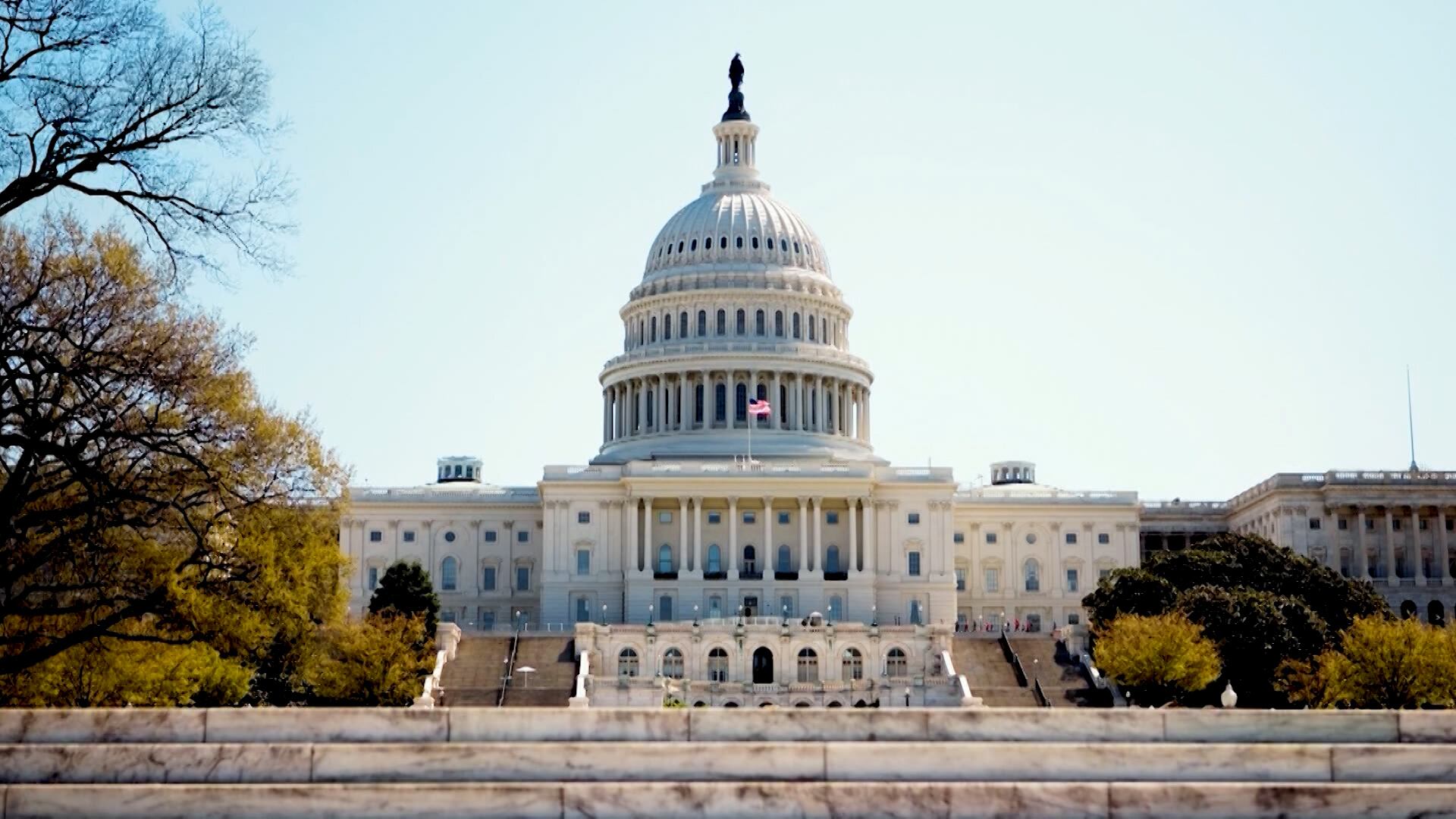
Standing near the steps of the U.S. Capitol for a news conference ahead of a meeting with Senate Majority Leader Chuck Schumer, the Democrats promised to “stay out and kill this bill.”
However, state Rep. Chris Turner, the leader of the Texas Legislature’s House Democrats, predicted that their efforts would ultimately be futile unless congressional Democrats take bolder action to overcome a Senate Republican blockade of the sweeping federal voting bill. The legislation, known as the For the People Act, would create national standards for voting that could roll back some of the restrictions that have been approved or are advancing in the Republican-led states, including Texas.
“We can’t hold this tide back forever. We’re buying some time. We need Congress and all of our federal leaders to use that time wisely,” Turner said.
Several states have enacted new voting restrictions, and others are debating them, as the GOP has seized on Trump’s false claim of massive voter fraud in the 2020 election as a rationale for curtailing ballot access.
“No other election has ever been held under such scrutiny, such high standards,” Biden said of the 2020 race.
Some GOP-led states have worked to roll back the vote-by-mail expansion that was put in place in the past presidential election due to COVID-19 fears. Others have tried to strengthen voter identification requirements and curtail hours and locations for early voting and ballot drop-offs.
Texas Republican Gov. Greg Abbott said he would keep calling special sessions through next year if necessary to pass his state's legislation, and raised the possibility of Democrats facing arrest upon returning home.
Biden’s speech in Philadelphia, to be delivered at the National Constitution Center, is intended as the opening salvo of a public pressure campaign, White House aides said, even as legislative options to block voting restrictions face significant obstacles.
“He’ll lay out the moral case for why denying the right to vote is a form of suppression and a form of silencing,” White House press secretary Jen Psaki said Monday. “He will redouble his commitment to using every tool at his disposal to continue to fight to protect the fundamental right of Americans to vote against the onslaught of voter suppression laws.”
Asked whether Biden thinks the Texas legislators are doing the right thing by leaving the state, White House deputy press secretary Karine Jean-Pierre said “he applauds their courage." She said that in the administration's view, the Texas bill is an “assault on democracy.”
Democrats on Capitol Hill have already tried to respond with a sweeping federal voting and elections bill that Senate Republicans have united to block. Most Republicans have similarly dismissed a separate bill, the John Lewis Voting Rights Advancement Act, which would restore sections of the Voting Rights Act that the Supreme Court has weakened.
Those roadblocks have increased focus on Senate filibuster rules, which, if left in place, would seem to provide an insurmountable roadblock, requiring 60 votes in the evenly split, 100-member chamber to even bring up controversial legislation. Republicans have been unanimous in opposition to eliminating the filibuster, and it would take elimination or at least modification for the bills to have a chance of passage.
Moderate Democrats including Sens. Joe Manchin of West Virginia and Kyrsten Sinema of Arizona also have so far expressed reluctance to changing the Senate rules.
Many Democrats have expressed frustration with the lack of a greater White House push to change the filibuster, with civil rights activists stressing that Biden was elected with broad support from Black people whose votes are often put at risk by voting restrictions. House Majority Whip Jim Clyburn, a longtime Biden ally, urged this week that the filibuster be modified for voting rights legislation.
Biden, himself a veteran of the Senate, has offered some support for filibuster changes. But he has not put his full political weight behind the issue, believing it counterproductive in both the legislative and political fights over voting. He and Vice President Kamala Harris, who is leading the administration’s efforts on voting rights, met last week with some of the civil rights leaders, who made clear that they expected a legislative solution.
Harris is to meet with the Texas lawmakers this week, her office said.
“Our backs are against the wall. This is the moment. We have no more time,” said Sherrilyn Ifill, president of the NAACP Legal Defense Fund, after the meeting. “I told the president: We will not be able to litigate our way out of this threat to Black citizenship.”
Although not abandoning hope of legislative action, the West Wing has been shifting focus to other measures to protect voting, including legal remedies pursued by the Justice Department and action in individual states, according to officials. There also will be an emphasis on boosting voter turnout, with aides pointing to success Democrats had in getting out votes last year during the height of the pandemic.
Officials concede, though, that turning out voters is always harder in a nonpresidential election year. Some frustrated aides, seeing the reality in the Senate, believe too much of a focus has been placed on federal legislative measures and think that civic and business groups can also play a role in fighting the voting restrictions. They note that an outcry in Georgia helped water down some of the GOP’s proposed plans there.