The death of Supreme Court Justice Ruth Bader Ginsburg, a trailblazer for women's rights, has left many inspired and ready to continue the work championed by the late justice, including Fatima Goss Graves, president and CEO of the National Women's Law Center.
"I will keep her memory with me as we forge extraordinary fights ahead and I am, again, buoyed by her last words, which to me are a meaningful and real reminder that the best way to respect her legacy is to fight for this court and this institution," Graves told Cheddar, referring to reports that Ginsburg requested she not be replaced on the Court until the next president is sworn in. Despite the wish, Republicans are planning to move forward quickly.
For Graves, her own mission and life's work, she said, would not be at all possible without Ginsburg's efforts in court.
"The National Women's Law Center as an organization would not have existed but for that landmark Reed decision that Justice Ginsburg argued," she stated.
In the case of Reed v. Reed, as then-head of the Women's Rights Project at the ACLU, Ginsburg successfully argued that not appointing a woman as the administrator of an estate solely based on sex was unconstitutional. The Supreme Court decision in the case led the way for other gender discrimination cases and subsequent changes to hundreds of laws that discriminated against women.
Graves said that while Ginsburg's death was felt immensely across many demographics, the loss is particularly hard for female lawyers.
"She is an icon broadly, but for women lawyers in this country and for those who deeply understand justice and what it means, she's really a hero," she continued.
Ginsburg was known for using her judicial platform to acknowledge legal difficulties faced by the disenfranchised and underrepresented, often pointing out to her peers, particularly on the Supreme Court, that their decisions have real-life consequences.
"People saw her as a champion for real people at the Court. And she ensured that the Court didn't seem too disconnected, including in her very last term," Graves explained.
While the justice may have been 87 years old, the impact of her work, according to Graves, is even connecting with children.
"There are drawings and flowers and art in her memory and people are coming and using it as an opportunity to tell their children not only about Justice Ginsburg and her life but about her legacy. Her legacy for justice and her legacy for the people," she said.
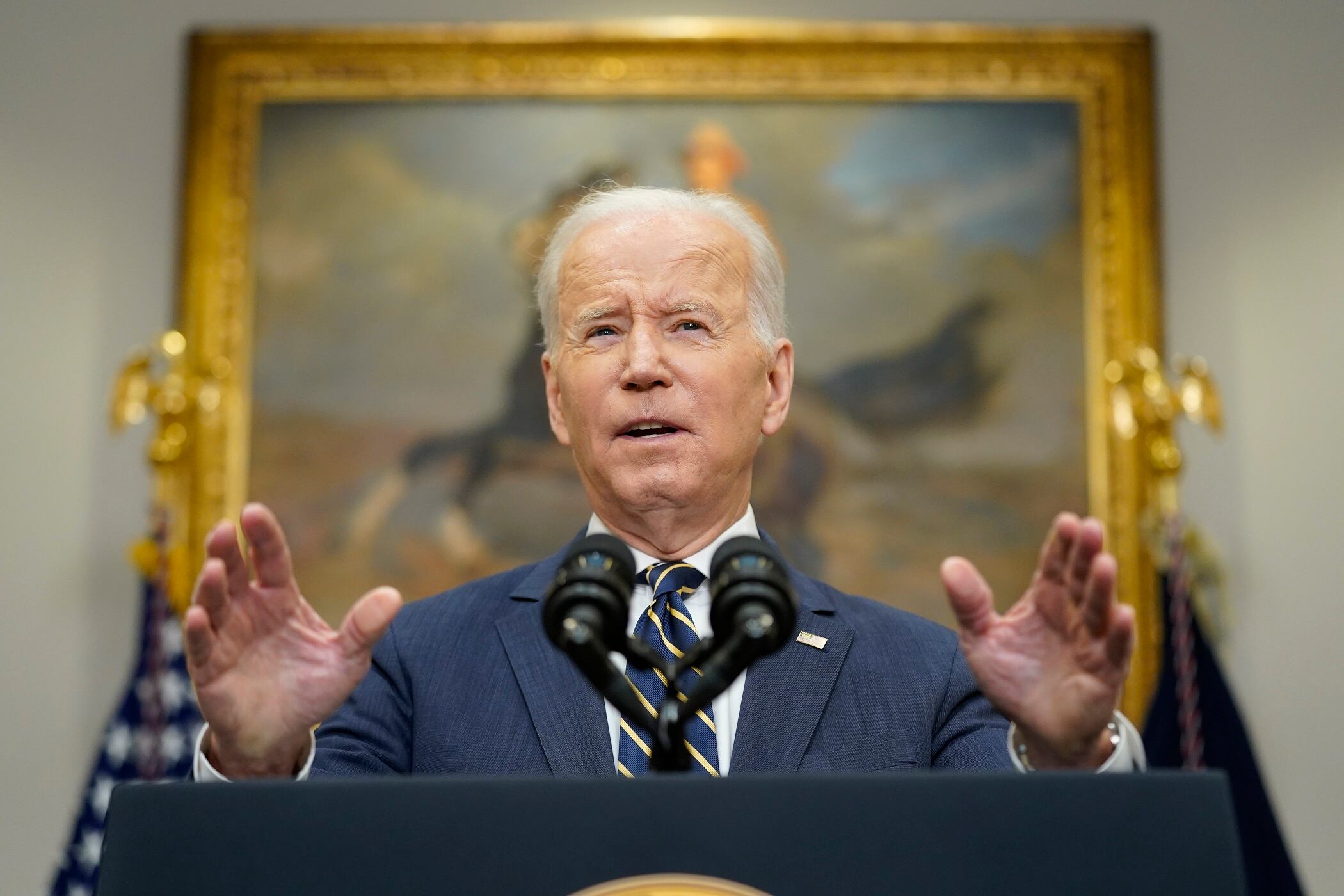
President Joe Biden announced Friday that along with the European Union and the Group of Seven countries, the U.S. will revoke “most favored nation” trade status for Russia over its invasion of Ukraine.
The consumer price index jumped 7.9 percent in February, marking a 40-year high for inflation in the U.S. This report comes less than a week ahead of the Fed's all important meeting. Kayla Bruun, Economic Analyst, Morning Consult, joined Cheddar's Opening Bell to discuss.
Markets opened lower amid hotter-than-expected inflation data, which surged to its highest level in nearly 40 years. Lisa Erickson, Senior Vice President and Co-Head, Public Markets Group, U.S. Bank joined Cheddar's Opening Bell to discuss the significance of this figure ahead of the Federal Reserve's FOMC meeting.
As the Russia-Ukraine war disrupts the global economy, sending markets on a roller coaster ride, gold remains hovering around $2,000 an ounce. Often seen as a safe haven in times of economic crisis, Jason Cozens, founder and CEO of gold-as-currency platform Glint Pay, joined Cheddar’s Opening Bell to discuss the latest gold rush, how the war is impacting prices, and how people can use Glint to trade in the precious metal. “You know the stock markets and cryptocurrencies are risky investments," he stated. "Whereas gold is just reliable money. It's no one else's liability if you own."
As Western sanctions weigh on Russia's economy, the country is at the risk of defaulting on its debt. Fitch ratings agency has downgraded Russia's debt for the second time in a week, warning a "sovereign default is imminent." Jesse Wheeler, Economic Analyst at Morning Consult, explains what that means, and how it could have ripple effects across the global economy.
Uber Lyft and Doordash are all set to spend $1 million dollars on a campaign and efforts to stop lawmakers from classifying their gig workers as employees. The campaign features TV and online ads highlighting Washington area workers who say they prefer the flexibility of being an independent contractor rather than following the model of a company employee. Professor at NYU. Stern School of Business and author of the sharing economy, Arun Sundararajan, joined Cheddar to discuss more.
President Biden is looking at unlikely partners to buy oil, after banning all Russian energy imports. Among them is Venezuela, a regime that has been sanctioned by the U.S. since 2019. Ariel Cohen of the Atlantic Council explains to Cheddar News why that might not be a bad choice.