By Najib Jobain, Samya Kullab and Joseph Krauss
Palestinians in besieged Gaza crowded into hospitals and schools on Monday, seeking shelter and running low on food and water. More than a million people have fled their homes ahead of an expected Israeli ground invasion aimed at destroying Hamas after its fighters rampaged through southern Israel.
As the enclave’s food, water and medicine supplies dwindled, all eyes were on the Rafah crossing between Gaza and Egypt, where trucks carrying badly needed aid have been waiting for days as mediators press for a cease-fire that would allow them enter Gaza and allow foreigners to leave.
Hundreds of thousands of Palestinians sheltering in U.N. facilities are on less than 1 liter (1 quart) of water per day. Hospitals warn they are on the verge of collapse, with emergency generators that power machines like ventilators and incubators down to about one day of fuel and supplies of medicine almost exhausted
The Gaza Health Ministry said 2,750 Palestinians have been killed and 9,700 wounded since the fighting erupted, more than in the 2014 Gaza war, which lasted over six weeks. That makes this the deadliest of the five Gaza wars for both sides.
More than 1,400 Israelis have died, the vast majority civilians killed in Hamas' Oct. 7 assault. The Israeli military said Monday that at least 199 hostages were taken back in Gaza, higher than previous estimates. The military did not specify whether that number includes foreigners.
Israeli airstrikes have pulverized entire neighborhoods as Palestinian militants continue to fire rockets into Israel. Israel is widely expected to launch a ground offensive in order to kill Hamas leaders, recover captives and destroy he group's military infrastructure, much of which is in residential areas.
Street-by-street fighting would likely cause mounting casualties on both sides.
Israel has ordered more than 1 million Palestinians — almost half the territory’s population — to leave Gaza City and the surrounding area for the enclave's south. The military says it is trying to clear away civilians ahead of a major campaign against Hamas in the north, where it says the militants have extensive networks of tunnels and rocket launchers.
Hamas has urged people to stay in their homes, and the Israeli military on Sunday released photos it said showed a Hamas roadblock preventing traffic from moving south.
For a third day, Israel's military announced a safe corridor for people to move from north to south between the hours of 8 a.m. and noon. It said more than 600,000 people have already evacuated the Gaza City area.
Hospitals in Gaza are expected to run out of generator fuel in the next 24 hours, endangering the lives of thousands of patients, according to the U.N. Gaza’s sole power plant shut down for lack of fuel after Israel completely sealed off the 40-kilometer (25-mile) long territory following the Hamas attack.
The World Health Organization said hospitals are “overflowing” as people seek safety. "We are concerned about disease outbreaks due to mass displacement and poor water and sanitation,” it said. Four hospitals in northern Gaza are no longer functioning and 21 have received Israeli orders to evacuate. Doctors have refused, saying it would mean death for critically ill patients and newborns on ventilators.
The WHO said water shortages caused by Israel's decision to cut off water supplies, combined with a lack of fuel for pumps and desalination stations, put thousands of hospital patients at risk.
“Water is needed to ensure sanitary conditions on inpatient wards, in operation rooms, and emergency departments. It is essential for the prevention of hospital associated infections and for the prevention of outbreaks in hospitals," the WHO said.
The U.N. health agency said life-saving assistance for 300,000 patients is currently awaiting entry through Rafah.
The U.N. agency for Palestinian refugees, known as UNRWA, says over 1 million people — about half of Gaza's population — have been displaced in a little over a week. Half are sheltering in U.N.-run schools and other facilities, while others are staying with family or neighbors.
UNRWA said it has been forced to ration water, giving people just 1 liter (1 quart) a day to cover all their needs.
Israel has said the siege won’t be lifted until Hamas releases all the captives, but the country's water ministry said water had been restored at one “specific point” in Gaza, at a location outside the southern town of Khan Younis. Aid workers in Gaza said they had not yet seen evidence the water was back.
Meanwhile, the Israeli military ordered residents to evacuate 28 communities near the Lebanese border after increasing cross-border fire between Israel and the Lebanese militant group Hezbollah. The military order affects towns that are within 2 kilometers (1.2 miles) from the border.
Rear Adm. Daniel Hagari, a military spokesman, said the evacuation would allow Israeli forces to operate with greater latitude. “Israel is ready to operate on two fronts, and even more,” he said. "If Hezbollah makes the mistake of testing us, the response will be deadly.”
Hezbollah militants fired rockets and an anti-tank missile on Sunday, and Israel responded with airstrikes and shelling. The fighting killed one person on the Israeli side and wounded several on both sides of the border.
Hezbollah said it had fired rockets toward an Israeli military position in retaliation for Israeli shelling that killed Reuters videographer Issam Abdallah on Friday and two Lebanese civilians on Saturday. It said the increased strikes represented a “warning” and did not mean Hezbollah has decided to enter the war.
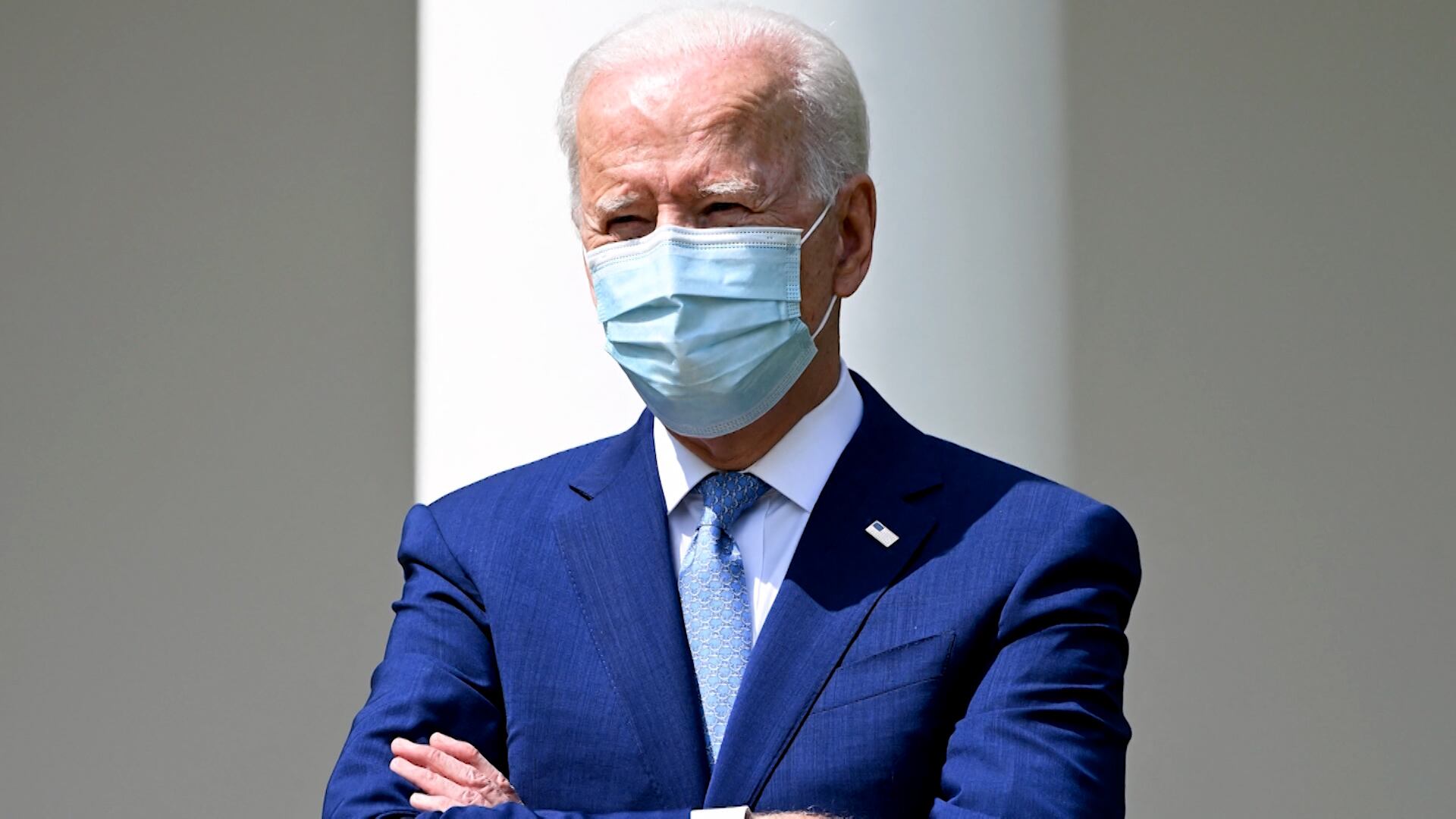
U.S. Secretary of State Antony Blinken returned to Israel for a second time in less than a week after a six-country tour through Arab nations aimed at preventing the fighting from igniting a broader conflict. President Joe Biden is also considering a trip to Israel, though no plans have been finalized.
In a television interview Sunday night, Biden, who has repeatedly proclaimed support for Israel, said he thought it would be a “big mistake” for the country to reoccupy Gaza.
Israel’s ambassador to the U.N., Gilad Erdan, told CNN the country does not want to occupy Gaza but will do “whatever is needed” to obliterate Hamas’ capabilities.
In Nasser Hospital, in southern Gaza, intensive care rooms were packed with wounded patients, most of them children under the age of 3. Hundreds of people with severe blast injuries have come to the hospital, said Dr. Mohammed Qandeel, a consultant at the critical care complex.
There were 35 patients in the ICU who require ventilators and another 60 on dialysis. If fuel runs out, “it means the whole health system will be shut down,” he said Sunday, as children moaned in pain in the background. “All these patients are in danger of death if the electricity is cut off."
Dr. Hussam Abu Safiya, the head of pediatrics at the Kamal Adwan Hospital in northern Gaza, said the facility did not evacuate despite Israeli orders. There were seven newborns in the ICU hooked up to ventilators, he said. Evacuating “would mean death for them and other patients under our care.”
Shifa hospital in Gaza City, the territory's largest, said it would bury 100 bodies in a mass grave as an emergency measure after its morgue overflowed. Tens of thousands of people seeking safety have gathered in the hospital compound.
Israeli forces, supported by a growing deployment of U.S. warships in the region and the call-up of some 360,000 reservists, have positioned themselves along Gaza’s border and drilled for what Israel said would be a broad campaign to dismantle the militant group. Israel said it has already struck dozens of military targets, including command centers and rocket launchers, and also killed Hamas commanders.
Kullab reported from Baghdad. Krauss reported from Jerusalem. Associated Press writers Julia Frankel and Amy Teibel in Jerusalem, Abby Sewell in Beirut and Samy Magdy in Cairo contributed to this report.
This article was updated at 5:33 a.m. Oct. 16 with new information.