By Lisa Rathke
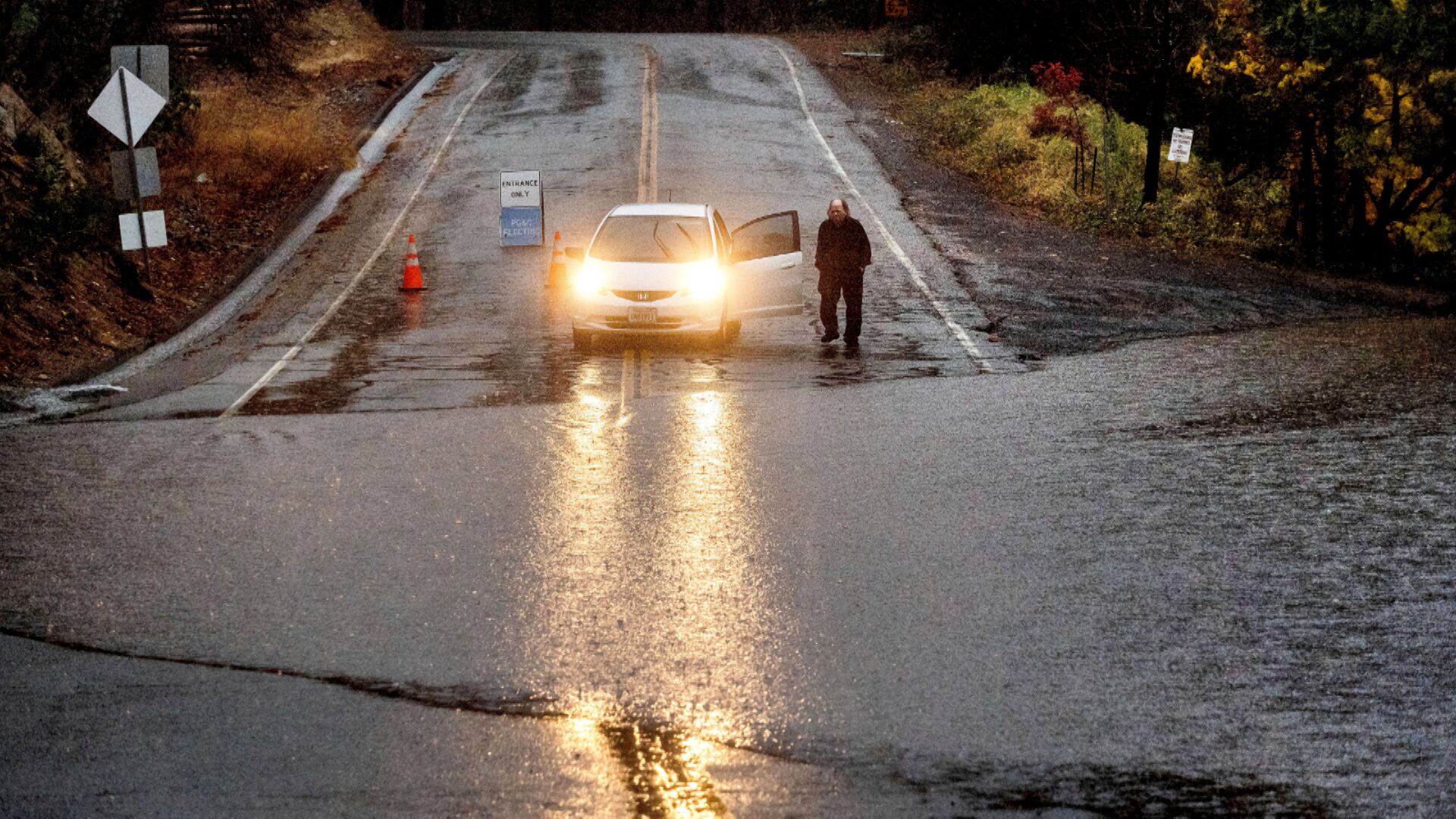
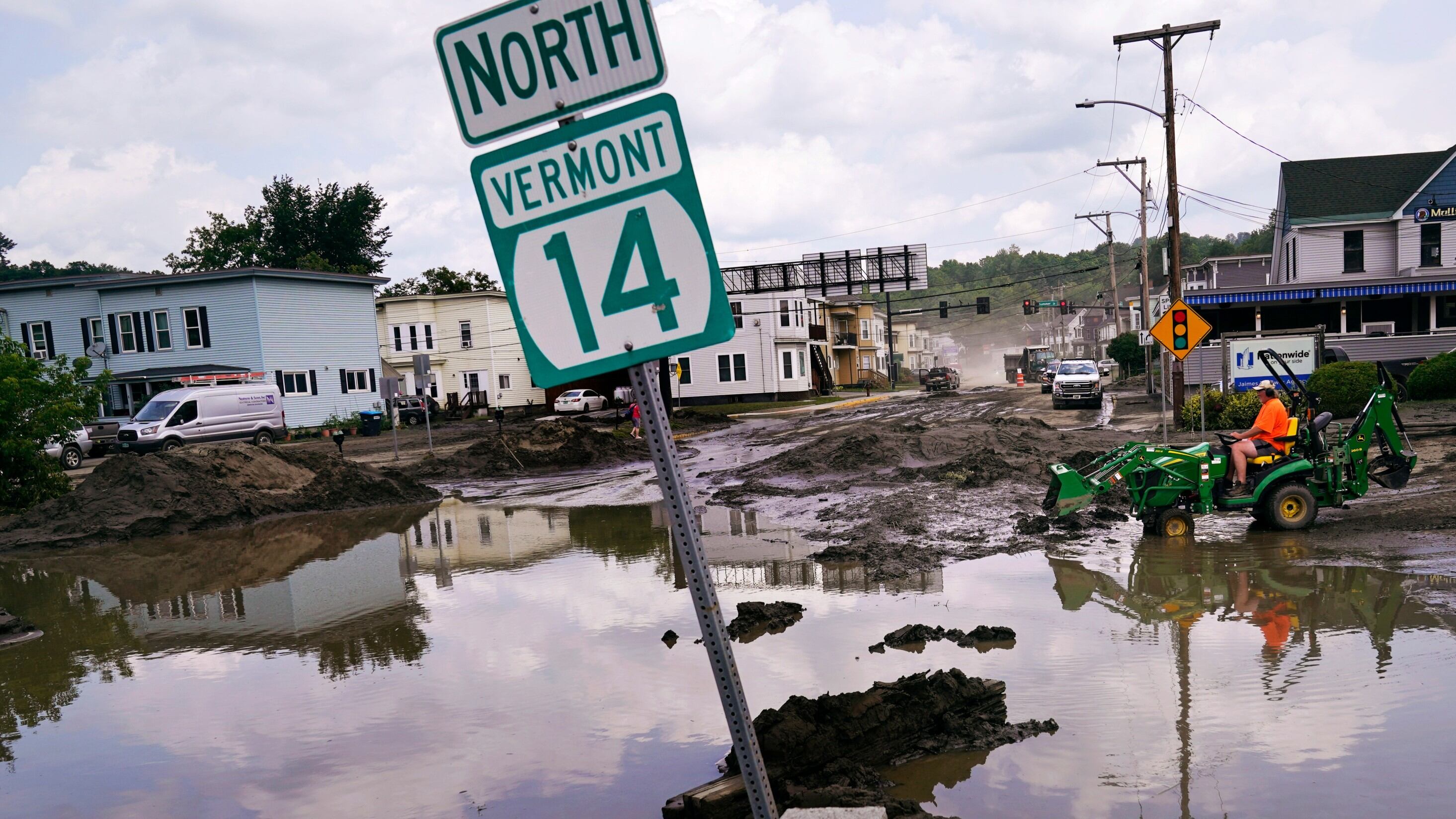
Floodwaters receded in Vermont cities and towns pummeled by a storm that delivered two months of rain in two days, enabling people to focus Wednesday on recovering from a disaster that trapped residents in homes, closed roadways and choked streets and businesses with mud and debris.
The water drained off in the capital city of Montpelier, where the swollen Winooski River flooded streets and basements, destroying merchandise and furniture across the picturesque downtown.
Other communities were starting to clean up, too. But with people still being rescued and more rain on the way, the crisis is far from over, according to state Public Safety Commissioner Jennifer Morrison.
“Vermonters, keep your guard up, and do not take chances,” she said.
Morrison said urban search and swift water rescue teams came to the aid of least 32 people and numerous animals Tuesday night in northern Vermont's Lamoille County, bringing the total to more than 200 rescues since Sunday, and more than 100 evacuations.
Bill Fraser, town manager in Montpelier, said the city of 8,000 has shifted into recovery mode, with public works employees removing mud and debris downtown and building inspections to come as businesses begin cleaning up their properties. Similar scenes played out in neighboring Barre and in Bridgewater, where the Ottauquechee River spilled its banks.
Gov. Phil Scott was touring areas impacted by the flooding with Deanne Criswell, administrator of the Federal Emergency Management Agency, on Wednesday, a day after President Joe Biden declared an emergency for Vermont and authorized federal disaster relief assistance. Teams began aerial and on-the-ground damage assessments.
“Our thoughts are with everyone across Vermont right now as they are experiencing the impacts of this truly historic and catastrophic flooding event,” Criswell said.
It was too early to estimate the total cost of the flooding damage, but it's likely to be substantial. According to to the National Oceanic and Atmospheric Administration, even before these floods, this year has seen 12 confirmed weather/climate disaster events with losses exceeding $1 billion in the United States.
“I think we all understand we are now living through the worst natural disaster to impact the state of Vermont since (the flood of) 1927,” U.S. Sen. Bernie Sanders said.
“What we are looking at now are thousands of homes and businesses which have been damaged, some severely, we're looking at roads and bridges, some of which have wiped out, and will need basic and fundamental repairs,” Sanders said.
Gov. Scott said floodwaters surpassed levels seen during Tropical Storm Irene. Irene killed six people in Vermont in August 2011, washing homes off their foundations and damaging or destroying more than 200 bridges and 500 miles (805 kilometers) of highway.
Atmospheric scientists say destructive flooding events happen more frequently as storms form in a warmer atmosphere, and the planet’s rising temperatures will only make it worse.
This slow-moving storm dumped between 7 and 9 inches (18 centimeters and 23 centimeters) of rain on the region. New York 's Hudson River Valley was hit hard, and towns in southwest New Hampshire and western Massachusetts also had heavy flooding and road washouts.
Massachusetts Gov. Maura Healey got a bird’s eye view of the damage in a helicopter ride to the small town of Williamsburg on Wednesday, where roads were washed out and some people had to be rescued from their homes. Even after two days of receding waters, the Connecticut River retained a muddy brown hue and farmland along the river remains saturated, the Democrat said.
Much of that water was flowing through Connecticut, carrying debris including entire trees south to Long Island Sound. Major waterways including the Connecticut River overflowed their banks, and were expected to crest Wednesday at up to 6 feet (2 meters) above flood stage, closing roads and riverside parks in multiple cities.
By mid-day Wednesday, all the rivers in Vermont crested and water levels were receding, although at least one was 20 feet above normal, said Peter Banacos, a meteorologist with the National Weather Service. Thunderstorms, gusty winds and hail were forecast for Thursday and Friday in Vermont, but Banacos said they'll blow through quickly enough that more flooding isn't likely.
There have been no reports of injuries or deaths related to the flooding in Vermont. One woman's body was found after she was swept away in Fort Montgomery, New York.
About 12 Vermont communities, including the state capital, were under a boil water alert due to the floods, but at least they were reachable again after being marooned by high water. The American Red Cross of Northern New England supported shelters in Rutland, White River Junction and Barre, where the city auditorium had 58 evacuees Wednesday morning, compared to more than 200 on Tuesday.
Many people were passing through to recharge their phones and get something to eat, said John Montes, regional disaster officer. Red Cross volunteers from across the Northeast were arriving to help with everything from disaster assessment to handing out clean-up kits to homeowners preparing for the next wave of rain.
This flooding was catastrophic for Bear Pond Books, a 50-year-old store in Montpelier, said co-owner Claire Benedict. Water about 3 1/2 feet deep ruined many books and fixtures. Staffers and volunteers piled waterlogged books outside the back and front doors on Wednesday.
“The floor was completely covered with soaked books this morning,” she said as they tried to clear the mud. “It’s a big old mess.”
In Ludlow, a central Vermont town of 1,500, residents focused on reopening roadways, checking on isolated homeowners and cleaning out mud and debris.
“We sustained catastrophic damage. We just really took the brunt of the storm,” Ludlow Municipal Manager Brendan McNamara said.
The town's water treatment plant was out of commission, the main supermarket and roadway through town remained closed, and McNamara couldn’t begin to estimate how many houses and businesses were damaged. The town’s Little League field and a new skate park were destroyed.
“Thankfully we got through it with no loss of life,” McNamara said. “Ludlow will be fine. People are coming together and taking care of each other."
Associated Press contributors include Kathy McCormack in Concord, New Hampshire; Pat Eaton-Robb in Hartford, Connecticut; Michael Hill in Albany, New York; and Mark Pratt, Michael Casey and Steve LeBlanc in Boston.
Related: