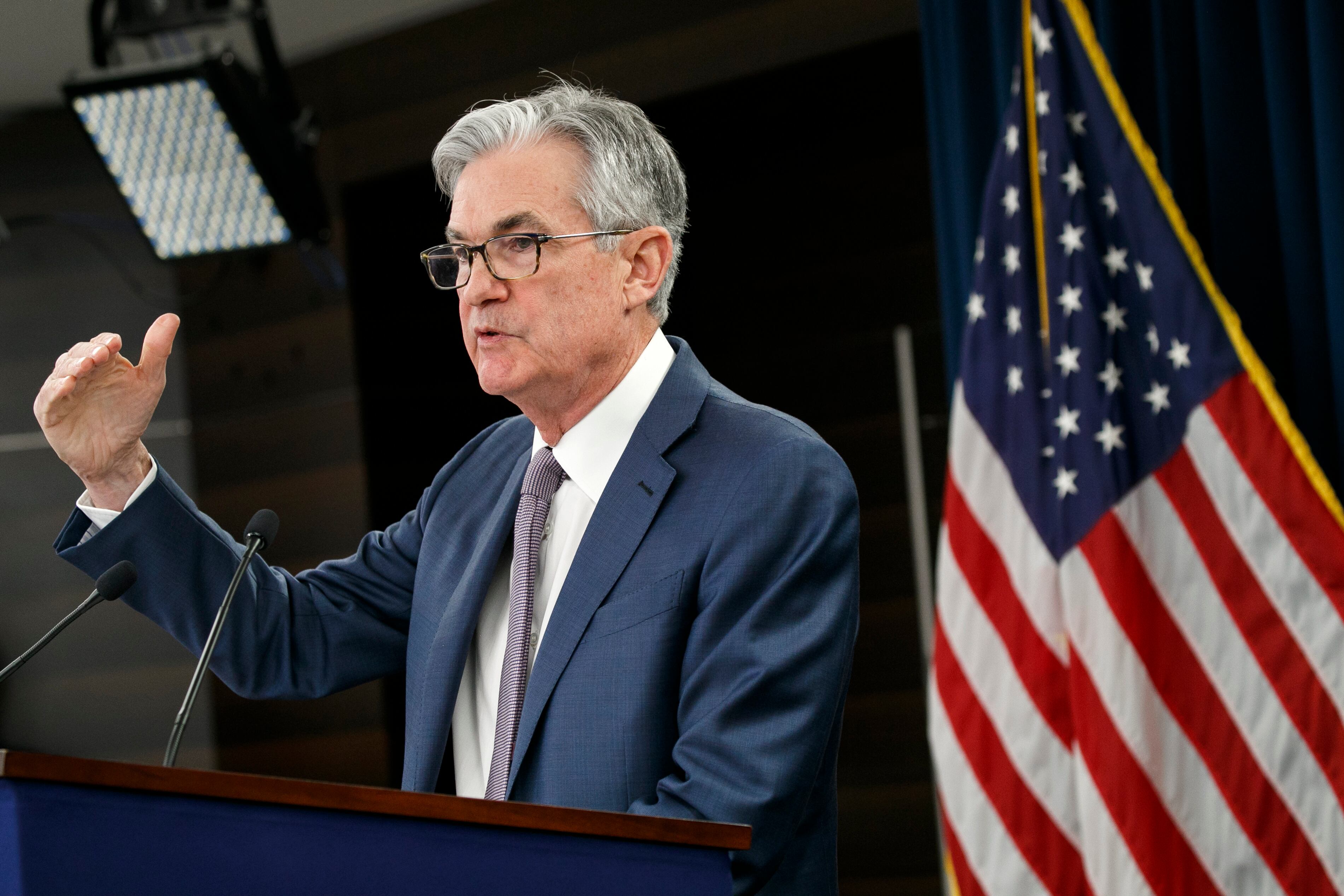
In this March 3, 2020 file photo, Federal Reserve Chair Jerome Powell speaks during a news conference to discuss an announcement from the Federal Open Market Committee, in Washington. (AP Photo/Jacquelyn Martin, File)
By Martin Crutsinger
The Federal Reserve announced a significant change Thursday in how it manages interest rates by saying it plans to keep rates near zero even after inflation has exceeded the Fed’s 2% target level.
The change signifies that the Fed is prepared to tolerate a higher level of inflation than it generally has in the past. And it means that borrowing rates for households and businesses — for everything from auto loans and home mortgages to corporate expansion — will likely remain ultra-low for years to come.
The new goal says that “following periods when inflation has been running persistently below 2%, appropriate monetary policy will likely aim to achieve inflation moderately above 2% for some time.”
The new Fed policy sought to underscore its belief that a low jobless rate was good for the economy by saying it would seek to assess the “shortfalls” in employment from the maximum level.
In a speech detailing the changes, Chairman Jerome Powell made clear that the policy change reflects the reality that high inflation — once the biggest threat to the economy — no longer appears to pose a serious danger, even when unemployment is low and the economy is growing strongly. Rather, Powell said, the economy has evolved in a way that allows the Fed to keep rates much lower than it otherwise would without igniting price pressures.
“The economy is always evolving,” Powell said. “Our revised statement reflects our appreciation for the benefits of a strong labor market, particularly for many in low- and moderate-income communities and that a robust job market can be sustained without causing an unwelcome increase in inflation."
In his speech, Powell said that the Fed's decision to allow unemployment to fall to a 50-year low before the pandemic had played an important role in lifting the fortunes of low-income workers.
Florists are dreading weekend pickups for this year's Valentine's Day, which lands on a Monday. Christina Stembel, founder and CEO of Farmgirl Flowers joined Cheddar News to discuss the challenges presented by shortages caused by supply chain issues, lack of labor, and climate change and how her company is preparing for this year's holiday. “A Monday delivery is just really hard for small businesses like us," said Stembel. "Larger companies have the scale that some of the large transportation carriers will provide a Sunday pick up for Monday delivery, but for small companies like us, that's not an option. So we have to try to convince people to order early."
Americans placing bets on the Super Bowl is expected to reach a record high due to multiple states legalizing sports gambling. Hana Ostapchuk, the host of Cheddar Bets, joined Baker Machado on Between Bells to discuss the action on the Big Game.
Chipotle posted its quarterly report showing a beat on earnings and revenue. The restaurant chain was able to stay ahead of inflation by raising prices and noted digital sales made up more than 40 percent of overall sales.
trivago reported its last earnings of 2021 yesterday, marking the end of a rollercoaster year. The online hotel search site was forced to cut costs during the pandemic as the travel industry shut down entirely, instead pivoting its strategy to meet customer demand in other ways. Matthias Tillmann, CFO of trivago, joined Cheddar's Opening Bell to discuss the company's results and why he's optimistic about the future of the travel industry in 2022.
PLAY, a low-cost airline headquartered in Iceland, is expanding service to New York Stewart International Airport, marking its third destination in the United States. PLAY is the latest affordable carrier to fly onto the scene, debuting its first flights a little more than six months ago. Birgir Jonsson, CEO of PLAY, joined Cheddar to discuss what this expansion means for the airline and what it's been like to lead a new airline during a pandemic. "For us to get into the market now, have the availability of great, brand new aircraft at historically low prices, and basically being able to secure a low operating cost base for the future is a completely rare opportunity," Jonsson said. "We can get into the market now when our competitors are also weak."